What Hawaiian Seaweeds Can Teach Us About Speciation
Published in Earth & Environment, Ecology & Evolution, and Genetics & Genomics
Explore the research
Reproductive isolation and differential introgression shape the genomic landscape of the red alga Amansia glomerata in the Hawaiian Archipelago
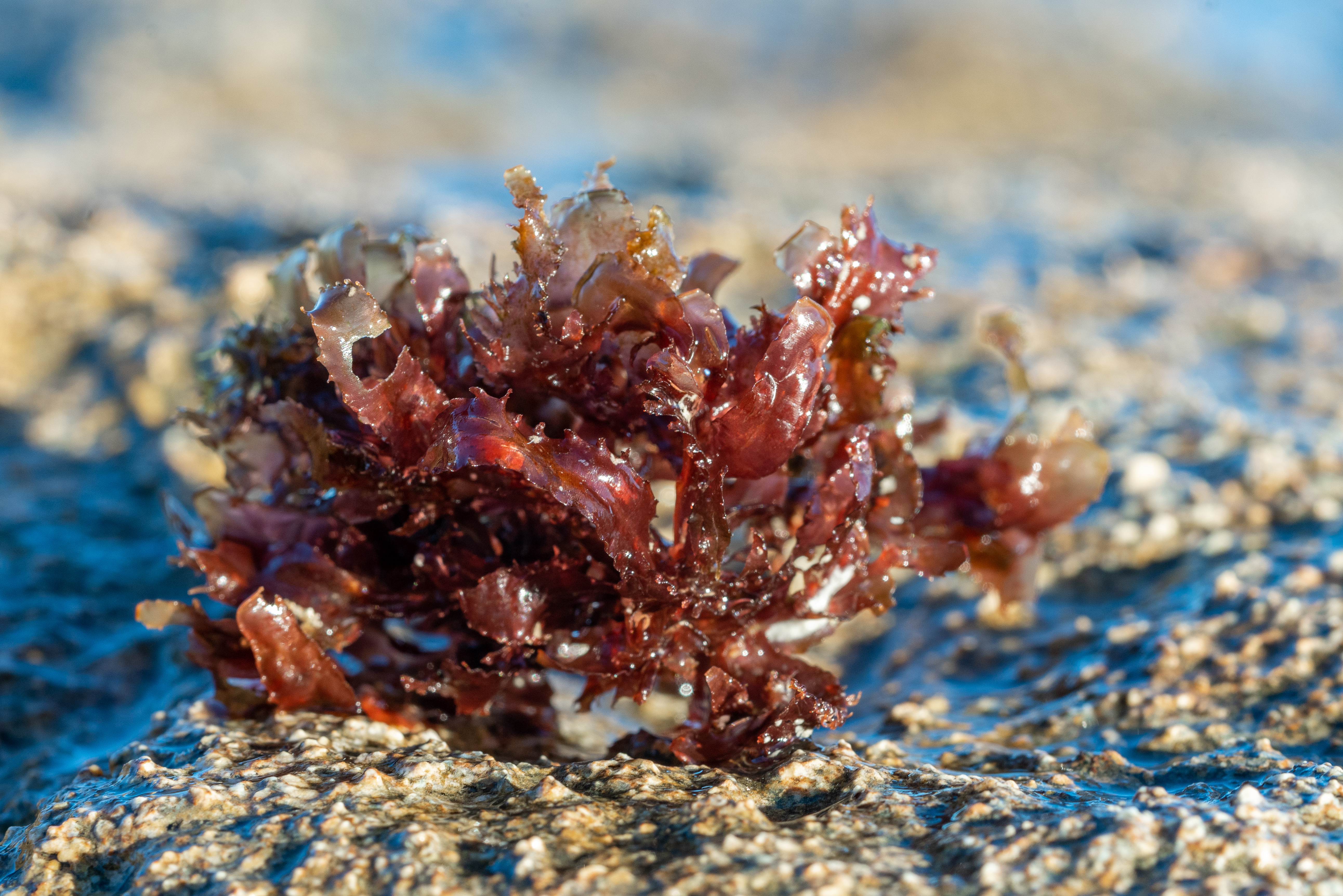
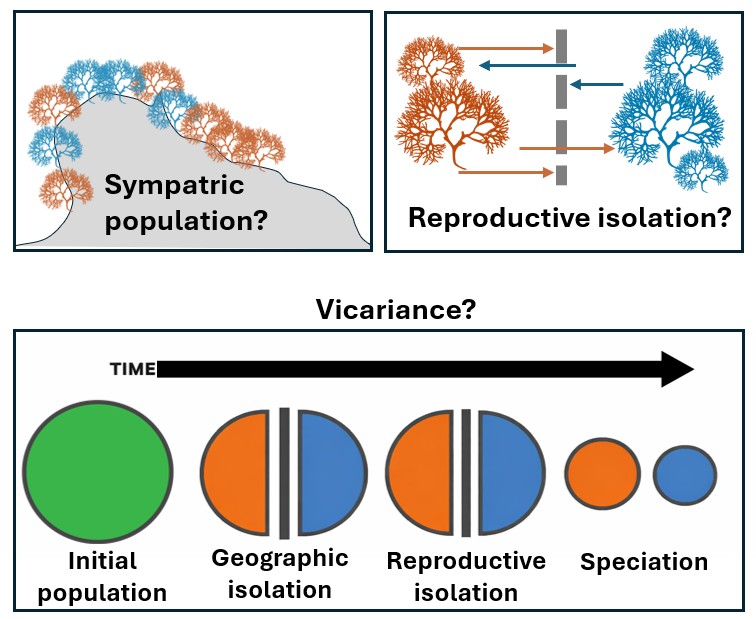
Speciation is the process through which natural populations diverge by accumulating reproductive barriers that restrict genetic exchange. Red seaweeds provide a valuable system for studying how these barriers evolve because of their unique triphasic life cycle, in which meiosis and syngamy occur in separate haploid and diploid phases. This unusual biology enables us to determine when reproductive barriers arise and identify the life-cycle stages at which genetic exchange is disrupted. Beyond their distinctive biology, the Hawaiian Archipelago provides a natural framework for studying speciation. Its geographic isolation and sequential island formation have generated a temporal gradient of population divergence across islands, offering an opportunity to investigate how reproductive isolation accumulates over time while minimizing the confounding effects of recurrent gene exchange with external populations.
-
-
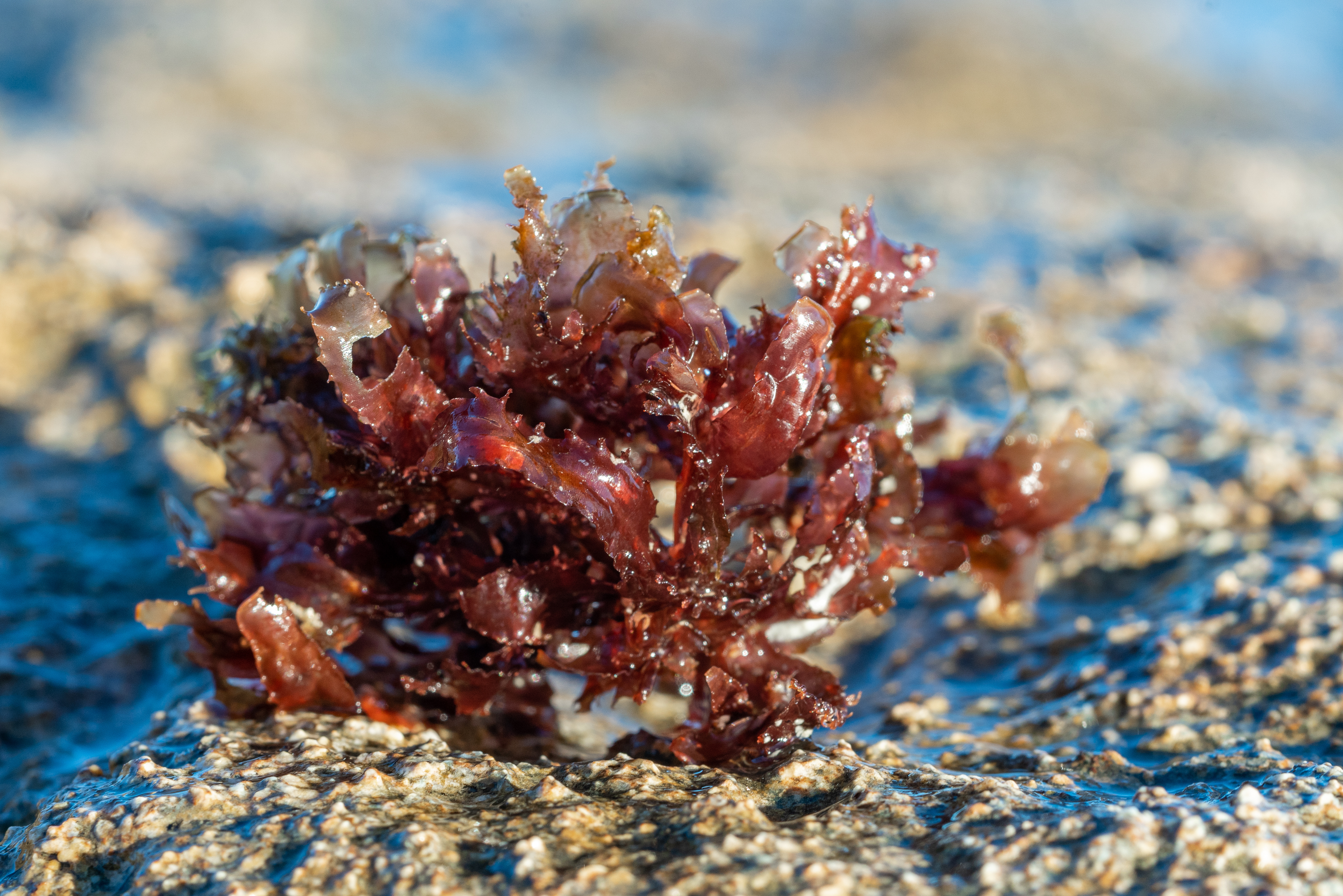
Do the two lineages coexist within the same populations (i.e., occur in sympatry)?
-
If they do, are they still connected by gene flow, or have they become reproductively isolated?
-
How has the geological history of the Hawaiian Archipelago shaped the origin and maintenance of these lineages?
-
From Hawaiian shores to genomic insights
Hawaiian shorelines can be challenging to access, with strong waves and complex coastal conditions requiring careful planning to ensure safe and effective fieldwork. Working with trained scuba divers from the University of Hawaiʻi, we surveyed the coastline of Oʻahu to locate populations suitable for sampling. These field surveys were essential for documenting the fine-scale distribution of A. glomerata populations before generating genomic data. We identified nine locations around the island where A. glomerata was present; however, in the absence of lineage-specific morphological characteristics, the lineage identity of each sampled population could only be determined through DNA barcoding and genomic ancestry analyses.
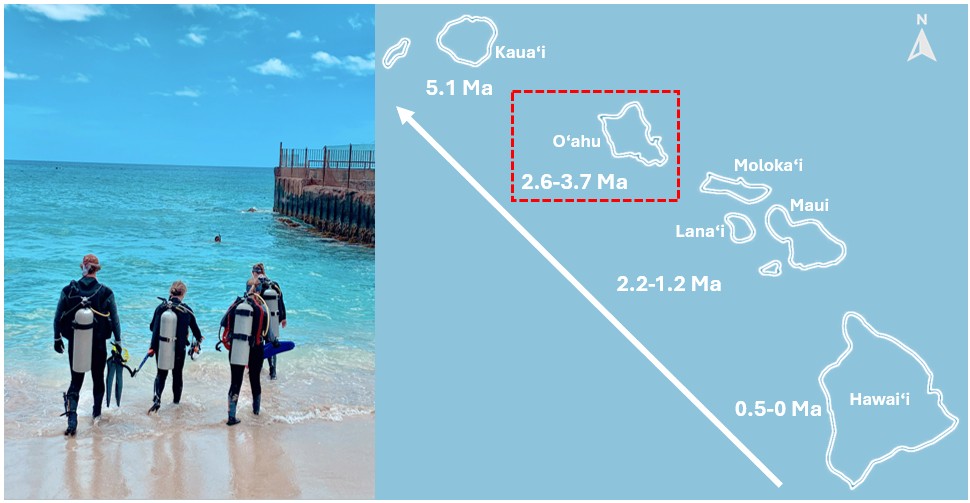
We sampled populations along 40-m transects and recorded the position of each individual along transects to further assess fine-scale patterns of lineage differentiation and spatial segregation. Each specimen was kept separately in individual compartments during transport to prevent cross-contamination before laboratory processing. Once back in the lab, we examined each specimen under the microscope to confirm that it belonged to the diploid phase by identifying its reproductive structures. Because haploid gametophytes were rarely observed during the sampling season, our genomic analyses focused exclusively on diploid individuals. Samples were flash-frozen before generating genome-wide DNA data (ddRAD), which allowed us to obtain a reduced representation of the genome for each sample and confidently recover their genotypes and infer genetic variation.
What algal genomes tell us about speciation?
We used genomic data to determine whether the two lineages were truly distinct and whether they were still exchanging genetic material. We found, somewhat unexpectedly, that gene flow between them is now extremely rare, indicating that they have become reproductively isolated despite coexisting in sympatry today. The discovery of a single first-generation (F1) hybrid and the absence of later-generation hybrids was consistent with this observation and suggests that reproductive barriers acting after fertilization likely prevent these hybrids from completing their life cycle and producing viable offspring. In red algae, this would prevent F1 hybrid tetrasporophytes from producing the next generation of gametophytes by disrupting meiosis or through genetic incompatibility expressed in the haploid phase.
To understand how reproductive isolation accumulated, we reconstructed the species' evolutionary history from their genomes. Our demographic modeling analyses suggest that the two lineages spent a long period separated geographically, potentially driven by historical changes in sea level that altered connectivity among Hawaiian islands. During this time apart, they gradually evolved barriers that prevented successful reproduction. When sea levels rose and the populations came back into contact, these barriers had already become strong enough to prevent most gene exchange. However, we found evidence that, despite little evidence of contemporary gene flow, a few regions of the genome were still exchanged between the two lineages, suggesting that reproductive isolation was not complete at the time of contact.
The clearest evidence came from genomic regions that retained signatures of past genetic exchange between the two lineages. We started by isolating a subset of lineage-diagnostic genetic variants, where each lineage carries a different version of the same genetic markers (alleles). In several places where the two lineages live side by side, we discovered that some genetic variants normally found only in Lineage 2 were also common in Lineage 1 (shown as the blue tract against the orange background in the figure below). Because this pattern is specific to the sympatric range and absent from populations containing only one of the two lineages, it is consistent with genetic exchange and suggests that genes have moved between lineages through a process known as introgression, whereby genetic material is transferred through hybridization.
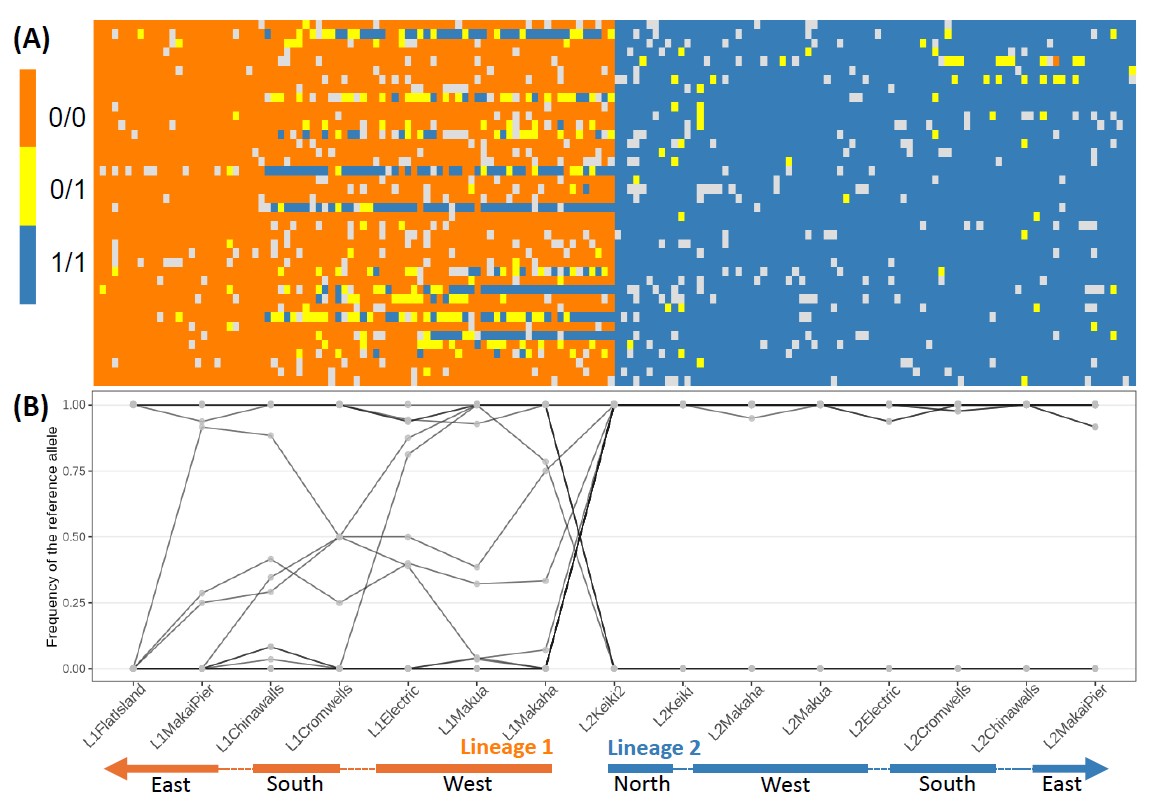
This pattern becomes even more striking when we mapped the genetic variants across the island. Rather than being randomly distributed among populations, they form a gradual geographic gradient from western to eastern Oʻahu, indicating that introgression was strongest on the island's western side. Altogether, our results suggest that introgression most likely originated when the two lineages came back into contact after evolving separately, allowing a small portion of their genomes to be exchanged before stronger reproductive barriers became established. In this study, we discussed several non-mutually exclusive hypotheses to explain why this pattern has persisted to the present day.
Looking ahead
Our findings provide a detailed genomic perspective on how reproductive isolation evolves and demonstrate the value of Hawaiian red algae as a system for studying how speciation unfolds. Moving forward, expanding this work across the Hawaiian Islands and across different life-cycle stages will allow us to test how island age, geological history, and ecological differences shape the evolution of reproductive isolation. Ultimately, this research will improve our understanding of the mechanisms that generate and maintain cryptic diversity in Hawaiian seaweeds. Because demographic histories differ among lineages, understanding evolutionary processes at the lineage level will also improve our ability to predict how Hawaiian seaweeds respond to future environmental change.
Written by Lauric Reynes, University of Hawaiʻi.
The research was supported by the U.S. National Science Foundation (DEB-2242142) and a postdoctoral fellowship from the Gordon and Betty Moore Foundation at the University of Hawaiʻi.
Reproductive isolation and differential introgression shape the genomic landscape of the red alga Amansia glomerata in the Hawaiian Archipelago

Follow the Topic
-
Heredity
The official journal of the Genetics Society, covering a broad range of topics within the field of genetics.