What national hospital data reveal about the growing burden of type 2 diabetes in Chile
Published in Social Sciences, Biomedical Research, and General & Internal Medicine

Behind the paper: Understanding diabetes hospitalizations in Chile
Type 2 diabetes has become one of the most pressing public health challenges of the twenty-first century. According to global estimates, more than 500 million adults are currently living with diabetes worldwide, and the number is expected to rise dramatically in the coming decades. While the epidemiology of diabetes has been widely studied, much less attention has been given to hospitalization patterns, particularly in Latin America.
Chile is no exception to this growing global trend. National surveys estimate that more than one in ten adults in the country lives with diabetes, making it one of the most prevalent chronic diseases in the population. However, despite this high prevalence, little research has examined how diabetes complications translate into hospital admissions and how these patterns evolve over time.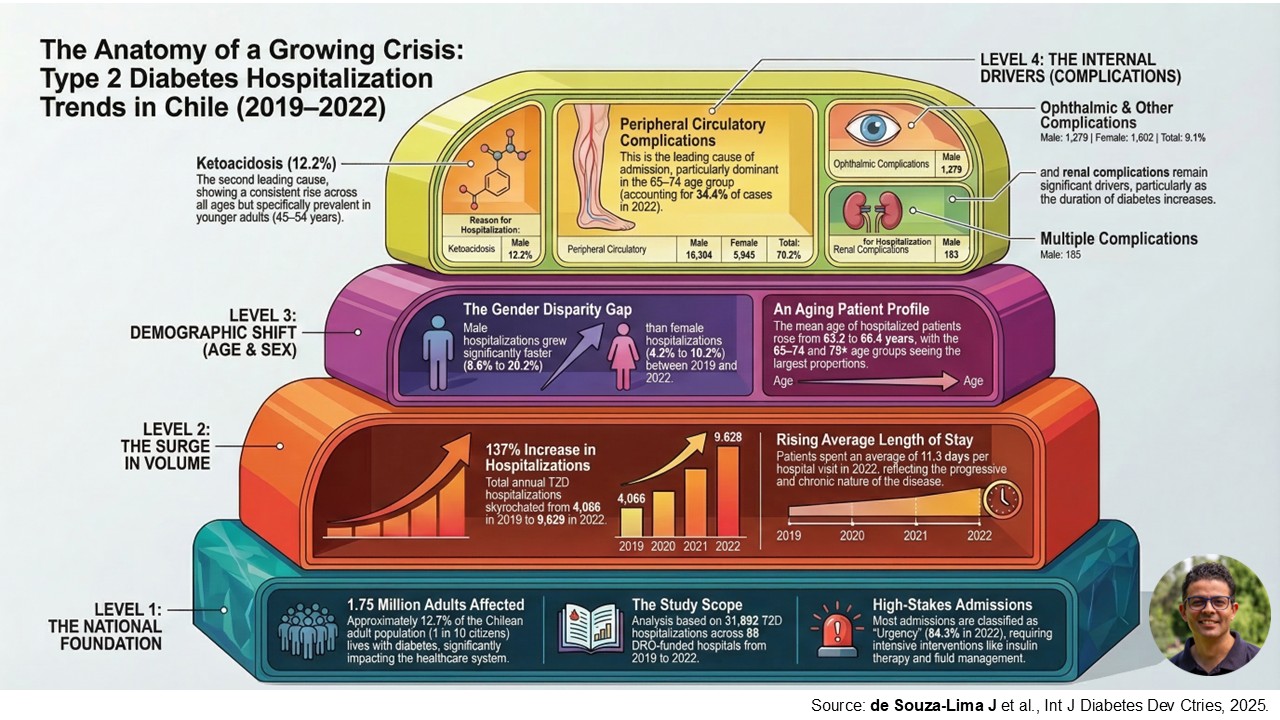
Our study sought to address this gap by analyzing national hospitalization data from Chile between 2019 and 2022. Using the FONASA Open Data platform, which includes records from 65 public hospitals funded through the Diagnosis-Related Groups (DRG) system, we analyzed more than 31,000 hospitalizations associated with type 2 diabetes.
The objective was simple but important: to understand who is being hospitalized, why they are being admitted, and how these patterns are changing over time.
One of the most striking findings of the study was the rapid increase in hospitalizations during the four-year period. The number of hospitalizations rose from just over 4,000 in 2019 to more than 9,600 in 2022, suggesting a substantial increase in the healthcare burden associated with diabetes.
Another important finding was the age profile of hospitalized patients. The average age of patients increased from approximately 65 years in 2019 to nearly 68 years in 2022, highlighting the strong relationship between aging populations and the burden of diabetes complications. Older adults, particularly those aged 65 and above, represented the largest proportion of hospitalizations.
Gender differences also emerged from the data. While both men and women experienced increases in hospitalizations over time, the growth in hospitalizations among men was particularly pronounced, suggesting potential differences in disease management, healthcare-seeking behavior, or underlying biological risk factors.
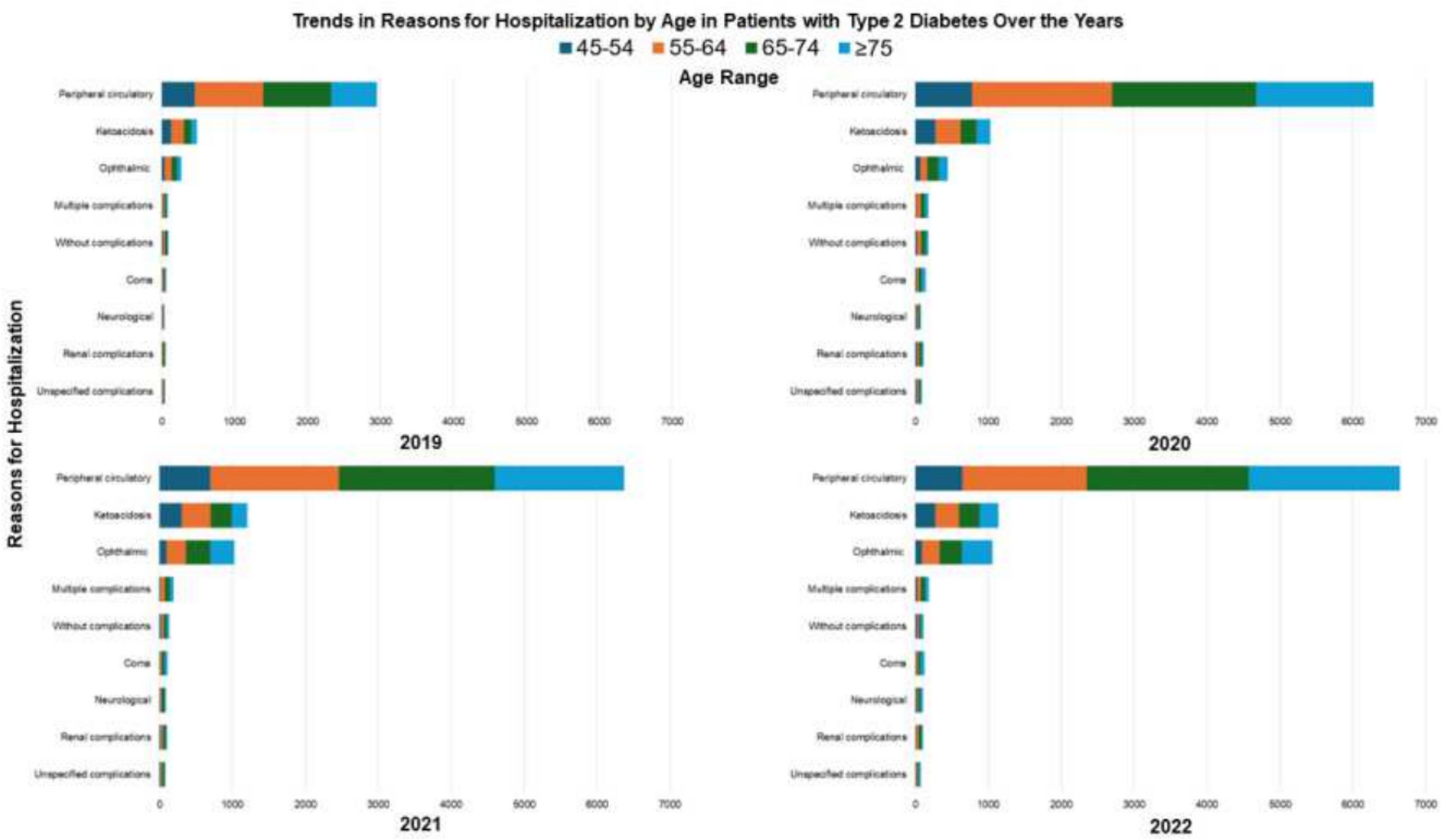
When we examined the reasons for hospitalization, one category clearly stood out: peripheral circulatory complications. These complications accounted for more than 70% of all diabetes-related hospitalizations during the study period. Conditions affecting blood circulation, particularly those linked to vascular damage caused by long-term hyperglycemia, appear to be a major driver of hospital admissions among patients with type 2 diabetes.
In addition to circulatory complications, diabetic ketoacidosis emerged as another important cause of hospitalization. Although traditionally associated with type 1 diabetes, our findings show that ketoacidosis is also an increasingly relevant complication among adults with type 2 diabetes. The data revealed a steady increase in ketoacidosis-related admissions, particularly among middle-aged adults.
Ophthalmic complications were another notable contributor to hospitalizations, particularly among older patients. These findings align with the well-known progression of diabetic retinopathy and other ocular complications that often occur after years of poorly controlled diabetes.
Taken together, these results highlight the complex and multifactorial nature of diabetes complications. Hospitalizations are not simply the result of a single factor but rather reflect the cumulative effects of aging, disease duration, comorbidities, healthcare access, and lifestyle factors.
From a public health perspective, these findings carry important implications. Hospitalizations represent one of the most costly and severe outcomes associated with diabetes. Preventing these hospital admissions requires stronger strategies for early detection, patient education, and continuous monitoring of glycemic control.
Our study also underscores the importance of using national administrative health data to understand disease burden. Public datasets, such as the FONASA Open Data platform, provide valuable opportunities to analyze real-world healthcare patterns and generate evidence that can inform national health policies.
Ultimately, the goal of this research is not only to describe hospitalization trends but also to contribute to a broader conversation about how health systems can better respond to the growing diabetes epidemic.
As diabetes prevalence continues to increase worldwide, understanding the drivers of hospitalizations will be essential for designing effective prevention strategies, optimizing healthcare resources, and improving patient outcomes.

Follow the Topic
-
International Journal of Diabetes in Developing Countries
This is a peer-reviewed journal focusing on the full spectrum of contemporary clinical and basic sciences related to diabetes.