What the Tamahere tūpuna taught us about food, place and partnership
Published in Arts & Humanities
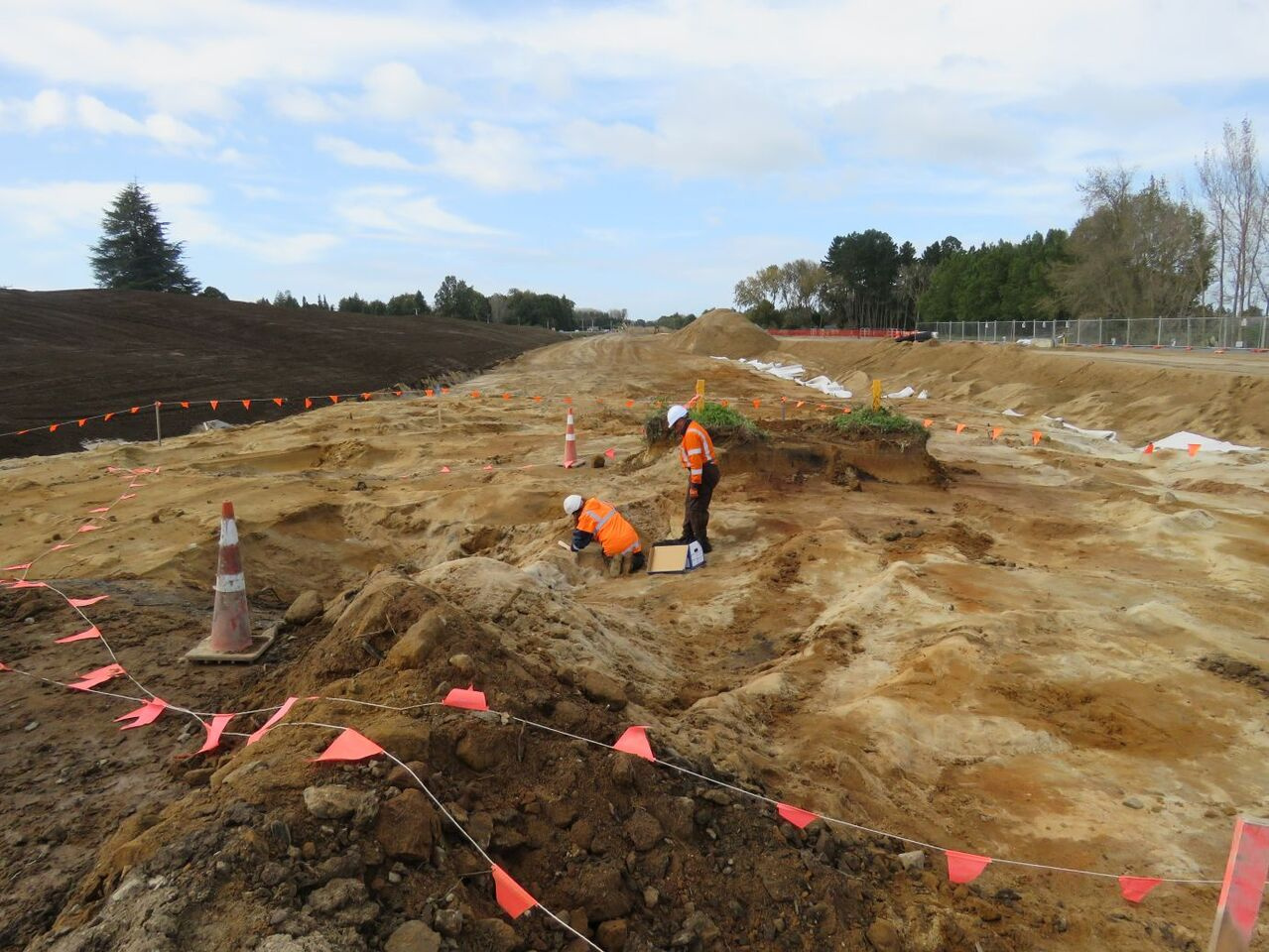




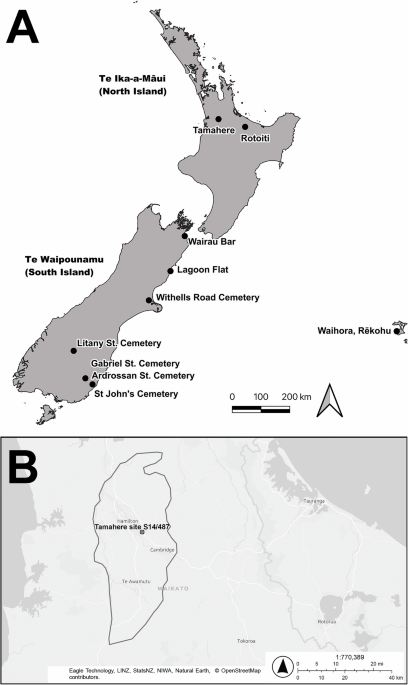

Across Aotearoa New Zealand, kōiwi tangata (human skeletal remains) are sometimes uncovered unexpectedly during earthworks and development. This is how the Tamahere kōiwi featured in our Nature Communications paper came to light in 2018, during construction of the Hamilton Section of the Waikato Expressway by the New Zealand Transport Agency Waka Kotahi.
When kōiwi are discovered, work stops immediately. The Tamahere site S14/487, near Kirikiriroa (Hamilton) was closed and mana whenua (local tribal authorities), supported by lead archaeologist Sian Keith (Sian Keith Archaeology) and the late bioarchaeologist Beatrice Hudson (ArchOs), whose expertise shaped the early stages of this project, recovered and assessed the kōiwi. Cultural protocols (tikanga) were followed to ensure the tūpuna (ancestors) were treated with care and respect before reburial.
In this case, the Tangata Whenua Working Group, made up of representatives from iwi (tribes) and hapū (subtribes): Ngāti Maahanga, Ngāti Wairere, Ngāti Koroki Kahukura, and Ngāti Hauā, decided that they wanted to learn as much as possible about the tūpuna. There were no known oral histories of a burial site in this specific location, so bioarchaeology offered an opportunity to reconstruct aspects of the lives of these ancestors.
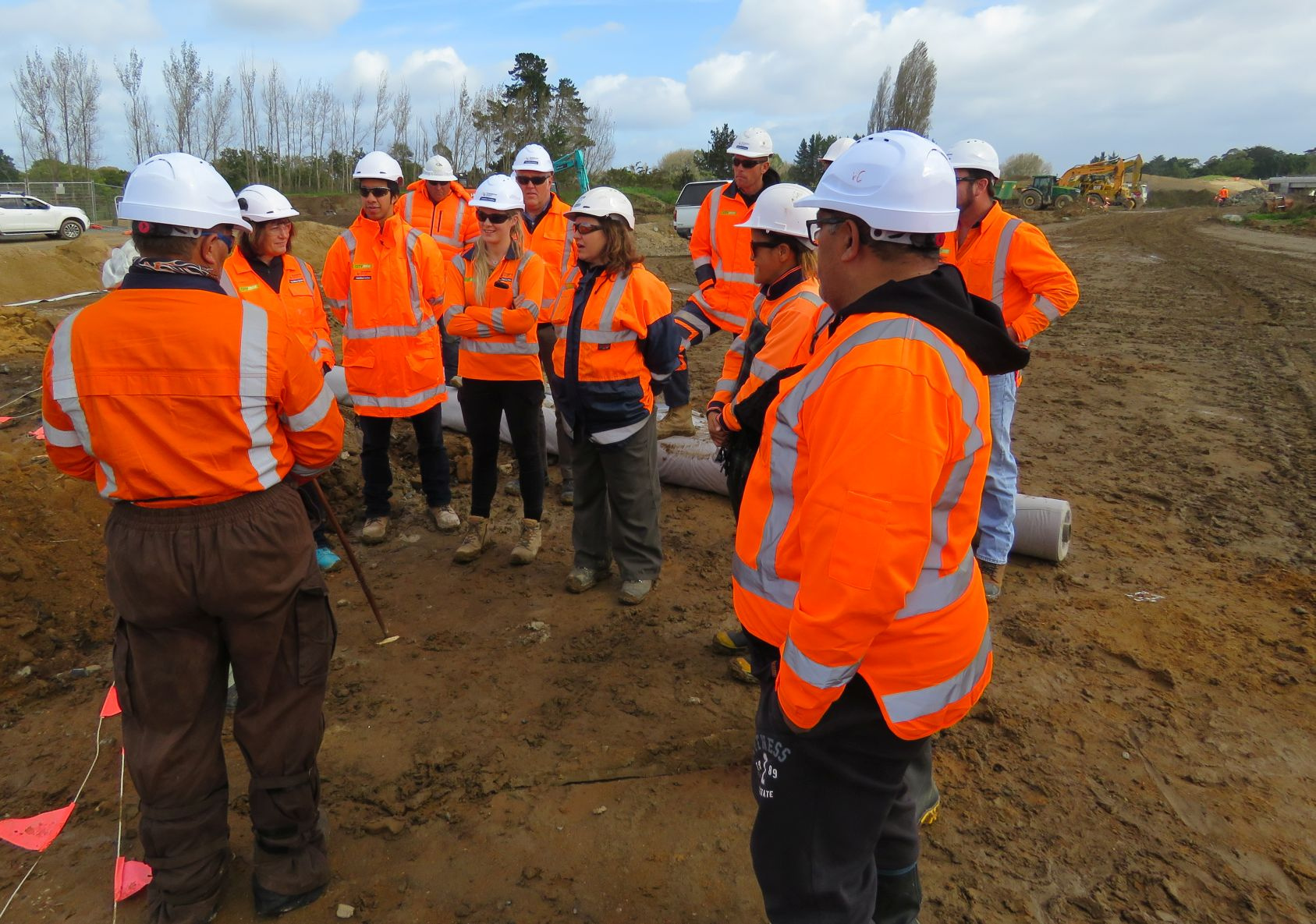
Lead archaeologist Sian Keith (centre) delivers a briefing following the accidental discovery of kōiwi at Tamahere site S14/487 (Photo credit New Zealand Transport Agency Waka Kotahi)
Science in partnership
In Aotearoa, any scientific analysis of kōiwi only happens with the explicit support of mana whenua (the local Māori group with ancestral authority over the land). For me as a bioarchaeologist, that means the direction of the research is shaped first by consultation, not in the lab. The level of analysis can vary widely and depends on community priorities. It may involve a simple description of the burial context with or without visual skeletal observations such as age at death, sex determination, signs of disease and trauma.
In some cases, at the direction of mana whenua, small samples of bone or tooth are taken for scientific analysis to investigate dates when people were alive, diet, place of childhood residency, sex determination, and ancestry. These analytical approaches fall within a field known as archaeological science. Our research involved collaboration with researchers across a range of technical fields based at Ōtākou Whakaihu Waka (University of Otago) laboratories in Ōtepoti, Aotearoa (Dunedin, New Zealand), including the Departments of Anatomy, Archaeology, and Geology, and the Centre for Protein Research.
For Tamahere, radiocarbon dating from the Te Whare Wānanga o Waikato (University of Waikato) showed the tūpuna likely lived between 250 and 170 years ago. Stable isotope analysis of bone and teeth revealed that all seven individuals, three adults and four children, were eating a predominantly plant-based diet. Their food likely centred on kūmara (sweet potato) and taro, along with other cultivated and wild plant foods.
One particularly intimate insight came from tiny samples taken along the tooth root of the first permanent molar. These teeth form in early childhood. By analysing isotopes along the growth axis, we can estimate when a child was breastfed and likely weaned. We found that weaning occurred at approximately two to three years of age in the two children assessed. This is the first time this type of child feeding information has been detailed for tūpuna and shows a long duration of breastfeeding, which is associated with positive child health outcomes.
We also used strontium isotope analysis to explore where the children may have spent their early years. Strontium isotope signatures in tooth enamel reflect the geology and environment of the place where a child grew up when their teeth were forming. By comparing these values to a national isoscape or strontium isotope map of Aotearoa (developed with collaborator Dr. Robyn Kramer), we found that two of the children, a boy and a girl (identified using enamel peptide analysis) were likely local to the Waikato region.
Interestingly, despite living close to the mighty Waikato River, with its abundant freshwater resources such as tuna (eels), crayfish, and waterfowl, these foods were not strongly reflected in their dietary isotopic signatures.
A different food story across regions and time periods
The Tamahere diet contrasts strongly with that of people buried at Wairau Bar, one of the earliest known sites in Aotearoa (around 1300 CE), where isotopes and archaeological animal remains showed a heavy reliance on marine and terrestrial (land-based) animals (https://journals.plos.org/plosone/article?id=10.1371/journal.pone.0064580).
Across much of Aotearoa, archaeological sites contain middens (ancient refuse piles) rich in shell and animal bone, known as faunal remains. At Tamahere, however, faunal remains were notably absent. While our study focuses on seven individuals, the wider archaeological landscape of the Waikato, such as extensive garden systems, storage pits and borrow pits, suggests that horticulture was central to life here.
Kūmara was especially important. As a hardy tuber, it grows well in many soil types and can be stored for months once harvested. In subtropical and temperate Aotearoa, successful kūmara cultivation required careful planning and storage to ensure year-round food supply. The scale of gardening features in the Waikato speaks to sophisticated knowledge of soils, seasons and landscape management.
Buried in a garden landscape
The Tamahere kōiwi were discovered in what is known as a borrow pit, a large pit originally dug to extract gravel and create the well-drained soils ideal for growing kūmara. The Waikato region contains thousands of Māori-era garden features: borrow pits, areas of enriched garden soils, large storage pits and the remains of small mounds, known as puke, that were used to grow kūmara.
Radiocarbon dating suggests that the burials may post-date the original use of the borrow pit as part of the garden system. The remains represent a secondary burial, meaning that the bones of at least seven people were gathered and interred together after initial burial or decomposition elsewhere. Secondary burial was a common practice in parts of Aotearoa, especially during the later Traditional Māori period and early Historic period following European arrival.
To modern eyes, placing burials in a former garden feature might seem to blur boundaries between food and death, areas that today are strictly separated by tapu (sacred restrictions). But culture is not static. Meanings may shift across time. It is also possible that the act of burial rendered the space tapu. Interpreting past cultural practices is not straightforward, especially when present-day values may differ from those of earlier generations.
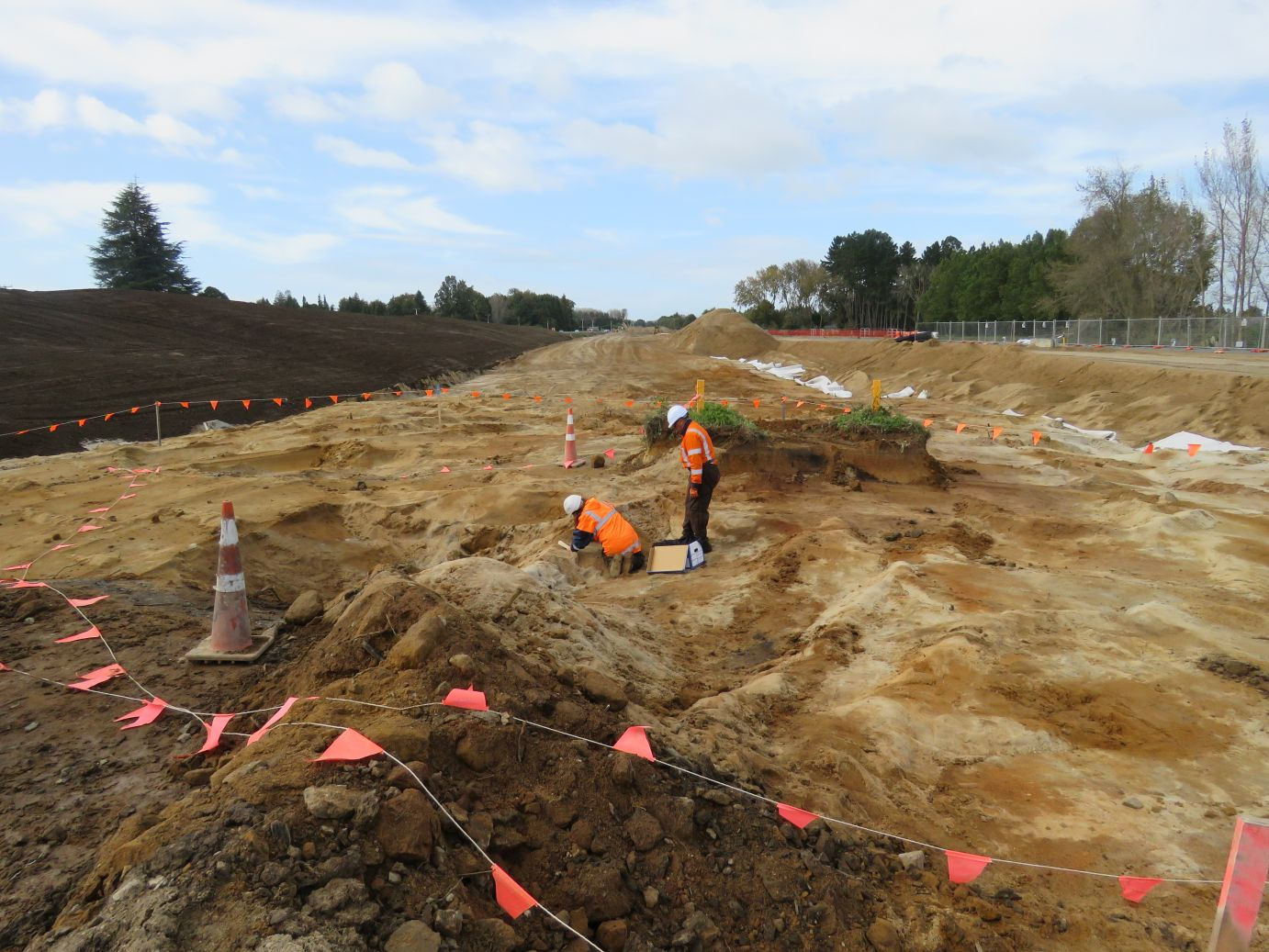
Recovery of the kōiwi at Tamahere site S14/487 during the construction of the Hamilton section of the Waikato Expressway. No kōiwi are visible in the photo (Photo credit New Zealand Transport Agency Waka Kotahi)
Climate change and the urgency of response
The Tamahere kōiwi discovery was unexpected during roading development; increasingly, however, kōiwi are being exposed by climate-driven extreme weather events. In 2023, Cyclone Gabrielle devastated parts of the Te Ika-a-Māui (the North Island), and storm events are increasing in severity and frequency every year. Climate change is not only threatening archaeological sites, it is exposing ancestors. That reality adds urgency and emotional weight to recovery work for mana whenua who are kaitiaki (guardians) of these vulnerable areas. Government support for climate response must include funding for kōiwi recovery and the recording of archaeological sites that face imminent destruction from storm erosion.
Research, trust and repatriation
It is important to acknowledge that bioarchaeology in Aotearoa has a difficult history. For much of the 19th and 20th centuries, kōiwi and kōimi (human remains of Moriori from Rēkohu/Chatham Islands) were disturbed, collected and exported under racist and colonial practices. Many remain in overseas institutions. The Karanga Aotearoa Repatriation Programme at Te Papa Tongarewa works to bring these stolen tūpuna home (https://www.tepapa.govt.nz/about/repatriation/karanga-aotearoa-repatriation-programme).
With careful partnership, archaeological science can assist in provenance studies, helping identify where ancestors likely belonged so they can be returned and reburied appropriately. But the research only happens because mana whenua decide it should.
Over the past 15 years, relationships between scientists and mana whenua have shifted. Increasingly, indigenous communities are choosing whether and how bioarchaeological research may proceed, for what purposes and how the information is shared. In 2021, mana whenua representatives from the Tangata Whenua Working Group and researchers jointly presented the Tamahere findings at the New Zealand Archaeological Association conference in Taupō, ensuring that the results were shared in a way that reflected the partnership at the heart of the project.
Behind paper are years of conversations, hui, trust-building and shared decision-making. Many of the most important discussions happened during consultation and hui, far from excavation sites or laboratory benches. The scientific results are only part of a much larger story. Equally important are the relationships that made this research possible and that will help guide future archaeological and bioarchaeological research in Aotearoa through whanaungatanga (kinship and relationships), manaakitanga (care and respect for others), and kaitiakitanga (guardianship and stewardship).

Kia ora, I’m Dr Rebecca Kinaston, a bioarchaeologist and archaeologist and Director of BioArch South studying the lives of past peoples in the Asia-Pacific.
Follow the Topic
-
Nature Communications

An open access, multidisciplinary journal dedicated to publishing high-quality research in all areas of the biological, health, physical, chemical and Earth sciences.
Related Collections
With Collections, you can get published faster and increase your visibility.
Women's Health
Publishing Model: Hybrid
Deadline: Ongoing
Biosensing
Publishing Model: Hybrid
Deadline: Jun 30, 2026


Please sign in or register for FREE
If you are a registered user on Research Communities by Springer Nature, please sign in