


Across Africa and Asia, pangolins are disappearing at an alarming rate. Often called the world’s most trafficked mammal, these shy, nocturnal animals face relentless pressure from illegal wildlife trade, habitat loss, electrocution on fences, and increasing human disturbance. Yet, despite their conservation importance, we still know remarkably little about their biology, particularly how they physiologically respond to stress.
Our recent study focused on a deceptively simple question: how can we measure stress in a pangolin without causing additional stress to the animal itself?
At first glance, that may sound straightforward. In many animals, stress hormones can be measured using blood samples. However, pangolins are exceptionally sensitive animals. Capturing, restraining, and repeatedly handling them can itself trigger profound physiological stress responses. For threatened species already struggling to survive, invasive procedures are not always ethical, practical, or safe.
This challenge forced us to think differently.
Rather than relying on blood sampling, we used a non-invasive approach to measure hormone metabolites in pangolin faeces. These hormone metabolites provide insight into the activity of the hypothalamic-pituitary-adrenal (HPA) axis, the system responsible for the physiological stress response in vertebrates. Importantly, faecal samples can often be collected without disturbing the animal, allowing researchers to monitor stress over time while minimising human interference.
But there was another complication. Hormone-monitoring tools cannot be transferred from one species to another. Pangolins metabolise and excrete hormones differently from other mammals, meaning we first had to validate which laboratory assay could reliably detect meaningful changes in stress hormone metabolites in this species.
That validation process became the heart of our study.
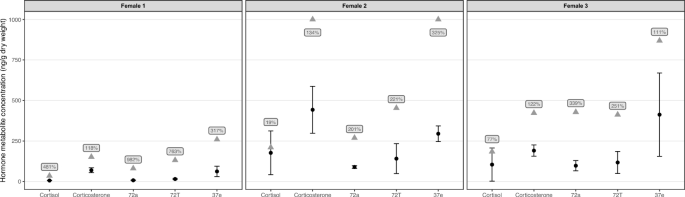
Because experimental stress tests are not possible in pangolins, we relied on a rare opportunity provided through rehabilitation centres caring for confiscated Temminck’s pangolins rescued from illegal wildlife trafficking. These animals were already undergoing veterinary assessments and rehabilitation procedures as part of their care. By collecting faecal samples before and after naturally occurring stressors, such as transport, handling, veterinary examinations, and movement between facilities, we could determine whether specific hormone assays detected biologically meaningful changes in stress levels.
Working with rehabilitated pangolins is unlike working with almost any other species. Every sample matters. Every observation matters. Pangolins are elusive, nocturnal, and highly stress-prone. Sample collection is entirely opportunistic. Sometimes days pass before a fresh sample can be obtained. In many ways, the study required patience above all else.
One of the most memorable aspects of the project was how collaborative it became. Veterinarians, rehabilitation staff, conservationists, laboratory specialists, and researchers all contributed to the work. Conservation science often appears highly technical in publications, but behind every dataset lies enormous coordination and dedication from people deeply invested in protecting species on the brink.
Our results showed that a specific enzyme immunoassay, the 72a assay, consistently detected strong increases in stress hormone metabolites across all study participants. This means we now have a validated, non-invasive tool for monitoring physiological stress in Temminck’s pangolins.
That may sound highly specialised, but the implications are surprisingly broad.
For rehabilitation centres, this provides a way to evaluate how stressful particular procedures or environments may be for rescued pangolins. Human interaction, transport, and even movement between holding facilities all triggered substantial physiological stress responses in our study animals. Understanding these responses can help refine rehabilitation protocols to minimise stress and potentially improve survival after release.
The findings also highlight something conservationists often discuss but rarely quantify directly: surviving is not necessarily the same as thriving.
Animals can appear outwardly healthy while experiencing substantial physiological strain. Stress physiology allows us to look beneath the surface and identify hidden welfare challenges before they become visible through illness, reproductive failure, or mortality. In endangered species conservation, this type of early-warning system can be invaluable.
Beyond rehabilitation, the validated assay also offers opportunities to monitor wild pangolin populations. As climate change, habitat transformation, and human expansion continue to alter African landscapes, conservationists urgently need tools that can assess how animals are coping physiologically with environmental change.
Importantly, this study also reinforces the growing importance of non-invasive conservation physiology. Modern wildlife conservation increasingly requires methods that reduce disturbance while still providing meaningful biological information. Non-invasive hormone monitoring is one example of how advances in physiology can directly contribute to animal welfare and conservation management.
For me, one of the strongest takeaways from this project was how much remains unknown about pangolins. Despite their global conservation importance, even basic physiological information is still lacking for many species. That knowledge gap makes every successful study feel significant, not only scientifically, but also practically for conservation.
There is also something deeply humbling about working with pangolins. They are ancient, unique animals, unlike anything else in the mammalian world. Watching a rehabilitated pangolin slowly recover, forage, and eventually prepare for release is a reminder of why conservation research matters in the first place.
Ultimately, this study was never just about hormones. It was about developing better ways to understand, care for, and protect one of the world’s most threatened mammals.
And sometimes, saving a species begins with learning how to listen to what its physiology is trying to tell us.

Follow the Topic
-
Discover Conservation
A fully open access, peer-reviewed journal supporting multidisciplinary research and policy developments across the field of conservation science.

Related Collections
With Collections, you can get published faster and increase your visibility.
Conservation Frontiers outside Protected Areas: Strategies, Challenges, and Opportunities
Conservation efforts have traditionally focused on protected areas, yet the majority of global biodiversity persists in landscapes shaped by human activities. With increasing habitat fragmentation, climate change, and land-use pressures, conservation outside protected areas has become essential to ensure the long-term survival of species and ecosystem functions. This Collection, “Conservation Frontiers Outside Protected Areas: Strategies, Challenges, and Opportunities”, aims to showcase innovative research and practical solutions that bridge the gap between human-dominated landscapes and biodiversity conservation.
We invite contributions that examine landscape-scale conservation approaches, particularly those investigating how mosaic and multifunctional landscapes can sustain species populations and ecological processes. We are especially interested in studies conducted in production lands—including agroecosystems, forestry, and pastoral systems—where biodiversity-friendly practices are employed to reconcile human needs with ecosystem integrity. We also encourage research that integrates conservation physiology, offering insights into species’ physiological responses to environmental stressors and their adaptive traits in unprotected or human-altered habitats. Equally important are studies on human–wildlife interactions, particularly strategies aimed at mitigating conflicts and fostering coexistence in landscapes beyond formal reserves. In addition, we welcome investigations of ecological connectivity, such as the design and effectiveness of corridors, stepping stones, and other mechanisms that enhance functional linkages across fragmented habitats. Finally, we seek research addressing species survival within matrix environments, including degraded areas and traditional cultural landscapes, where innovative management approaches can complement formal conservation efforts.
This Collection provides a platform for interdisciplinary contributions that advance our understanding of conservation beyond protected boundaries, offering strategies that integrate ecological, social, and economic dimensions to build resilient landscapes.
Keywords: Biodiveristy conservation, landscape ecology; traditional agroecosystems; human–wildlife interactions; coexistence strategies; wildlife management and conservation; community-based conservation; ecological connectivity; matrix habitats; conservation physiology.
This Collection supports and amplifies research related to SDG 15.
Publishing Model: Open Access
Deadline: Jul 31, 2026
Conserving Endangered Tree Species: Strategies for Protection in a Changing Climate
Forests are central to regulating the Earth’s climate, sustaining biodiversity, and supporting human well-being. However, a growing number of tree species particularly those classified as Critically Endangered or Endangered under the IUCN Red List criteria are facing an unprecedented convergence of threats. Climate change, habitat fragmentation, unsustainable harvesting, invasive species, pests and diseases, land-use transformation, and socio-political instability are accelerating extinction risks for these highly vulnerable species. The loss of such threatened trees represents not only an irreversible erosion of global biodiversity but also a direct challenge to ecosystem resilience and the livelihoods of forest-dependent communities.
This Collection focuses specifically on decision-making under climate uncertainty for endangered tree species, moving beyond retrospective accounts of biodiversity decline toward forward-looking, risk-informed conservation science. We invite contributions that assess vulnerability, adaptive capacity, and future risk trajectories of IUCN-listed endangered and critically endangered tree species, emphasizing how uncertainty can be incorporated into conservation planning, adaptive management, and policy responses.
A central objective of the Collection is to advance species-level conservation science, with particular emphasis on studies that integrate genetic diversity, population structure, gene flow, and adaptive potential. Submissions employing genomic and population-based approaches are especially encouraged, as these perspectives remain underrepresented in current environmental collections and are essential for distinguishing endangered tree conservation from broader ecosystem-scale forest studies. The Collection prioritizes methodological innovation, welcoming research that applies high-resolution remote sensing, species distribution modeling, genomic tools, and AI-assisted monitoring explicitly to rare, threatened, or range-restricted tree species. Studies should demonstrate how advanced analytical tools improve detection, monitoring, forecasting, or management effectiveness for endangered trees under changing climatic and socio-environmental conditions.
We also explicitly welcome contributions that evaluate conservation actions along a restoration-to-conservation continuum, including assisted natural regeneration, reintroduction, enrichment planting, and ex-situ conservation transitioning into self-sustaining wild populations. Long-term assessments of restoration success, population viability, and ecological integration are particularly encouraged.
Recognizing that endangered tree conservation is inherently socio-ecological, the Collection seeks studies that link biological outcomes with livelihoods, governance systems, land tenure arrangements, conflict dynamics, and institutional capacity, especially in biodiversity hotspots and politically or environmentally fragile regions. Contributions that engage indigenous and local knowledge systems, community-based stewardship, and equity-focused conservation approaches are strongly encouraged.
To enhance global relevance and policy impact, we invite comparative and cross-regional studies that synthesize conservation strategies across countries, biomes, or continents, reducing reliance on highly localized case studies. Authors are also expected to articulate clear policy translation pathways, demonstrating how scientific findings can inform national conservation strategies, legal protection frameworks, climate adaptation plans, and international biodiversity commitments such as the Convention on Biological Diversity and the Global Biodiversity Framework.
Manuscripts focused on general forest management, plantation forestry, or non-threatened tree species fall outside the scope of this Collection. By maintaining a sharp focus on IUCN-listed endangered tree species and future-oriented conservation challenges, this Collection aims to advance scientific understanding, inform policy, and catalyze coordinated global action to safeguard the world’s most threatened trees under accelerating climate and socio-environmental change.
Keywords: Endangered tree species; Forest conservation; Biodiversity loss; Habitat restoration; Climate change resilience
This Collection supports and amplifies research related to SDG 15.
Publishing Model: Open Access
Deadline: Oct 31, 2026


Please sign in or register for FREE
If you are a registered user on Research Communities by Springer Nature, please sign in