When Strategy Outpaces Theory: What Sri Lanka's Facebook Health Posts Taught Us About NCD Communication
Published in Social Sciences, Public Health, and Arts & Humanities



The Question That Started It All
Every day, millions of Sri Lankans scroll past health messages on Facebook posted by government health institutions. These posts warn about sugar, promote physical activity, and encourage healthy diets. They look professional, they reach large audiences, and they are produced with good intentions. But are they actually designed to change behaviour?
That was the question that set this study in motion. Not whether the posts were visually appealing, and not whether they reached a large number of people, but whether they were built on the kind of theoretical foundations that decades of health communication research tells us are necessary to actually shift what people think, feel, and do about their health.
Two Frameworks, One Big Gap
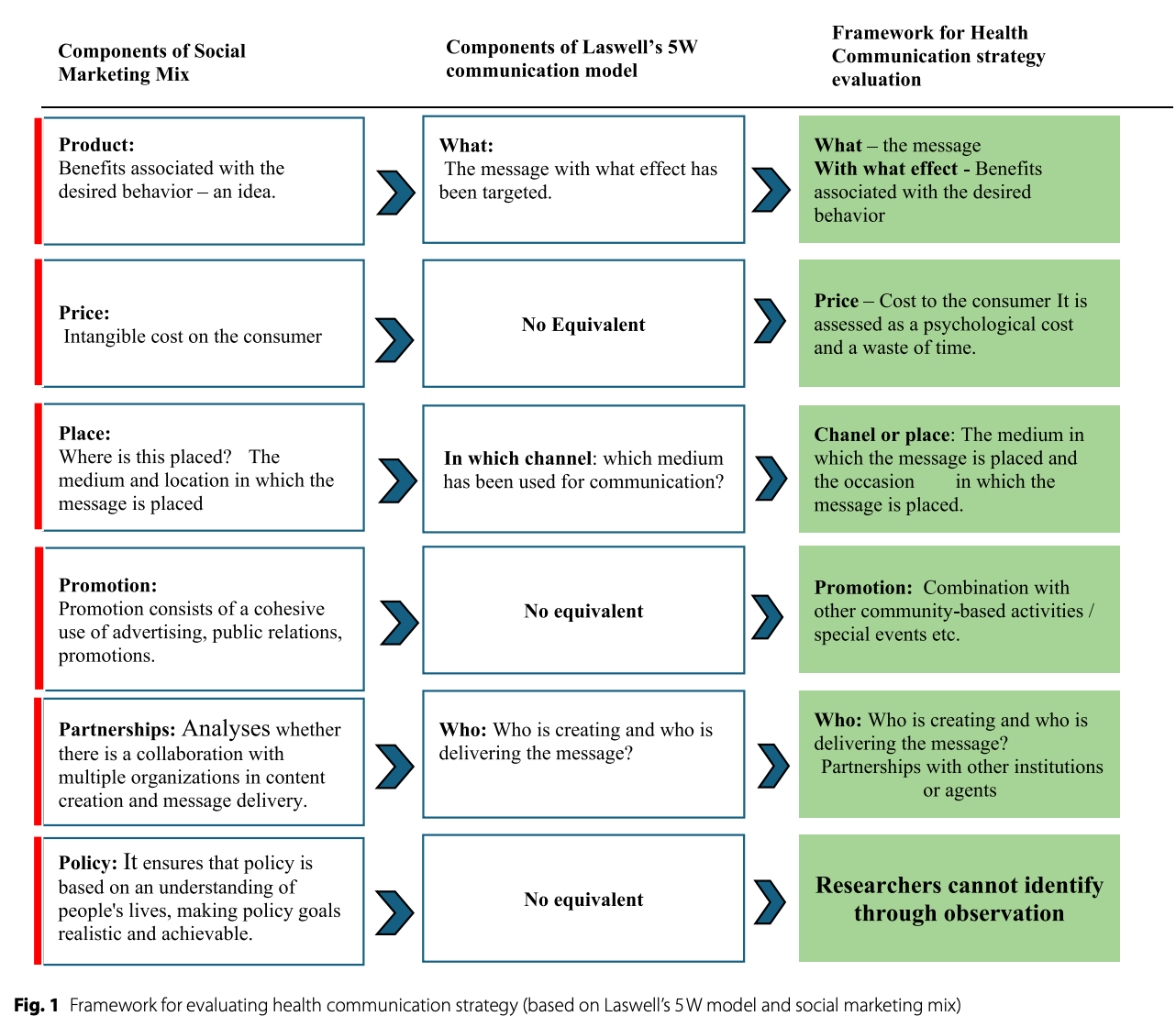
To answer this question, we needed a way to evaluate Facebook health content that went beyond counting likes. So we developed two evaluation frameworks: one based on the Health Belief Model (HBM), which examines whether content addresses perceived susceptibility, severity, benefits, barriers, cues to action, and self-efficacy; and another combining Lasswell's 5W model with the Social Marketing Mix, which evaluates how strategically the message is structured, targeted, and delivered.
We applied these frameworks to 15 purposively selected Facebook posts from three official Ministry of Health pages in Sri Lanka: the NCD Unit, the Health Promotion Bureau, and the Nutrition Division. The posts covered physical inactivity and unhealthy diet, the two leading modifiable NCD risk factors in the country.
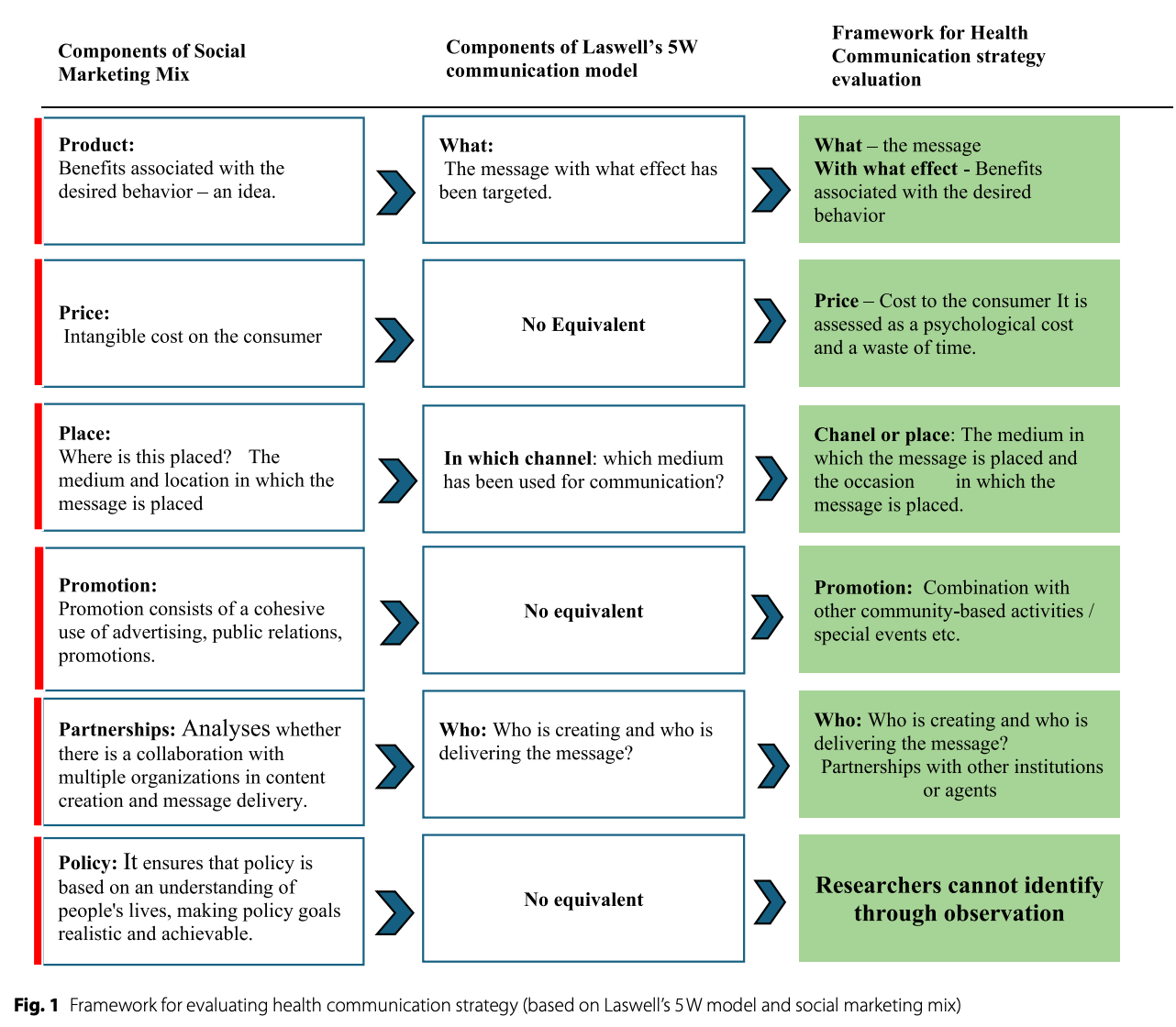
Framework for evaluating health communication strategy (based on Laswell’s 5 W model and social marketing mix)
The finding was clear and a little uncomfortable. The posts were generally strong strategically: they targeted audiences, used appropriate visuals, and structured their messages around clear health topics. But they were significantly weaker in their application of health communication theory. Most posts failed to engage the psychological constructs of the Health Belief Model in any meaningful way, particularly perceived barriers and self-efficacy, which are the dimensions most directly linked to behaviour change.
The Animated Video Exception
There was one content type that stood out: animated videos. These consistently achieved the highest theory scores, ranging from 88.8% to 94.4%, and also performed better strategically. The highest-scoring post of all was a paid animated video on unhealthy diet, which scored 94.4% on the theory evaluation framework.
But here is the catch. That same post reached 132,000 people and generated only 93 engagements. A still image posted organically on the same page reached 51,776 people and generated 8,441 engagements. This tells an important story: theoretically sound content does not automatically generate engagement. And high engagement does not mean the content is theoretically grounded.
This challenges a common assumption in digital health communication: that engagement is a proxy for effectiveness. It is not. A post can go viral for reasons that have nothing to do with whether it will change the dietary habits of the people who saw it.
What Was Missing: Physical Inactivity
A second finding that surprised us was the near-absence of physical activity content. Of the 137 posts we screened across four years and three Facebook pages, only a small proportion addressed physical inactivity, despite it being one of the most significant modifiable risk factors for NCDs in Sri Lanka. Unhealthy diet dominated the content landscape almost entirely.
This likely reflects a practical communication challenge: diet-related messages translate easily into visually appealing formats. A plate of colourful food, a recipe, a label guide. Physical activity is harder to communicate compellingly in a static image or short video without production investment. The result is a structural imbalance in the NCD prevention communication landscape that mirrors trends observed in the UK and other countries, and that deserves deliberate policy attention.
A Study Born Out of a PhD
This research sits within my doctoral work at the University of Kelaniya, Sri Lanka, supported by the NIHR Global Health Research Unit on Health Communication in South Asia, in partnership with Imperial College London. The study emerged from a straightforward observation: Sri Lanka has a sophisticated public health infrastructure, a significant NCD burden, and a government that is genuinely committed to prevention. Yet the digital communication produced by that infrastructure had never been systematically evaluated against the theoretical standards the field has developed over decades.
The frameworks we built in this study were developed from an extensive scoping review of health communication theories and strategies, the full methodology of which is reported in a companion manuscript currently under review at BMC Public Health. Together, these two papers form the core of my doctoral research on how theoretical grounding and strategic design can make digital health communication more effective for NCD prevention.
Health communicators, content creators, and policymakers in Sri Lanka and across the South Asian region now have a practical, evidence-based set of frameworks they can use to evaluate and improve their own digital health content. The frameworks are not complex, and they are not proprietary. They are built on theories that have been developed and validated over decades, applied to a context where they have rarely been used systematically.
The message from this study is not that Sri Lanka's health communication is failing. It is that it has the foundations of something genuinely effective, and that closing the gap between strategic strength and theoretical depth is both achievable and important. With the right training for content creators, the right policy mandate for theory-informed communication, and the right evaluation mechanisms, social media can become a far more powerful tool for NCD prevention than it currently is.
The posts are already reaching people. Now we need them to change behaviour.

I am Thilak Wanasinghe, a PhD candidate in Health Communication at the University of Kelaniya, Sri Lanka, and a researcher with the NIHR Global Health Research Unit South Asia- NIHR, in partnership with Imperial College London. My research sits at the intersection of health communication theory, Behaviour Change Communication, and Digital Determinants of Health, with a particular focus on how social media shapes NCD prevention in low- and middle-income country settings. Before my PhD, I spent time at Imperial College London's Centre for Health Economics and Policy Innovation as a Global Development Hub Fellow, working directly with the GHRU team on community health research in Sri Lanka. I also teach Mass Communication and Creative Media at NIBM and work as a farmer, which keeps my research grounded in the everyday realities of the communities I write about. My goal is to bridge the gap between health communication evidence and practice, so that the messages reaching people about their health are not just accurate, but genuinely designed to change behaviour.
Follow the Topic
-
BMC Public Health
An open access, peer-reviewed journal that considers articles on the epidemiology of disease and the understanding of all aspects of public health.

Related Collections
With Collections, you can get published faster and increase your visibility.
Monitoring, preventing, and managing type 2 diabetes
BMC Public Health is calling for submissions to our Collection on Monitoring, preventing, and managing diabetes at the population level. With rates of type 2 diabetes rising globally, especially in low- and middle-income countries and underserved communities, prevention strategies are critical. As the disease progresses people with diabetes are at increased risk of complications such as cardiovascular and kidney diseases, neuropathy and visual loss.
This Collection seeks submissions that explore population-level approaches to monitoring rates of diabetes, preventing or delaying the development of type 2 diabetes, and system-wide efforts to improve the management of the disease and reduce rates of complications, with a focus on improving health outcomes and reducing healthcare burdens.
Submissions are encouraged on primary prevention initiatives and culturally adapted, community-level interventions to reduce the risk of diabetes. Research aimed at improving systems for monitoring rates of diabetes and its complications through routinely-collected health data, or for improving management by enhancing patient engagement with healthcare systems or better identifying those in need, are encouraged. Research on diabetes education and support systems is also welcomed, with a focus on empowering individuals to adopt and sustain healthier lifestyles and avoid known causes of diabetes.
Additional topics of interest include (but are not limited to):
Access to healthcare and diabetes management
The impact of food insecurity on diabetes outcomes
Community-based interventions for low-income populations
Interventions to reduce exposure to environmental causes of diabetes
Financial barriers to diabetes medication and treatment
Housing instability, employment status and type 2 diabetes
Health literacy, poverty, and diabetes management
Policies to reduce poverty-related health disparities in diabetes
This Collection supports and amplifies research related to SDG 3: Good Health & Well-Being.
All manuscripts submitted to this journal, including those submitted to collections and special issues, are assessed in line with our editorial policies and the journal’s peer review process. Reviewers and editors are required to declare competing interests and can be excluded from the peer review process if a competing interest exists.
Publishing Model: Open Access
Deadline: Jul 16, 2026
Endocrine disruption as a public health issue
BMC Public Health invites submissions to our new Collection, Endocrine disruption as a public health issue. Endocrine disruption has emerged as a growing public health challenge, characterized by the interference of certain chemicals with the normal functioning of the endocrine system. Endocrine disrupting chemicals (EDCs) can mimic, block, or alter hormone signaling, leading to a range of adverse health outcomes. Common sources of EDC exposure include everyday products such as plastics, pesticides, and personal care items, all of which can release substances like bisphenols and phthalates into the environment and human body. Understanding the links between exposure to EDCs and eventual health outcomes is vital for assessing their implications for population health.
We welcome submissions that delve into various aspects of endocrine disruption. Key topics of interest include, but are not limited to:
Role of EDCs in metabolic, endocrine and immune-related disorders
Effect of EDCs in consumer products including personal care products
The links between EDC exposure and male and female reproductive health problems
The links between EDC exposure and certain cancers
Insights into the long-term consequences of early-life EDC exposure and transgenerational effects
Methodological advances in assessing the health impacts of EDC mixtures and cumulative exposures
Development and application of statistical approaches to better estimate the health effects of chronic and/or concurrent exposure
Validating models of cumulative exposure with measurement of combinations of EDCs in human tissues
Individual- and policy-level interventions to address health impacts of EDC exposures
The search for substitutes lacking endocrine disrupting properties
All manuscripts submitted to this journal, including those submitted to collections and special issues, are assessed in line with our editorial policies and the journal’s peer review process. Reviewers and editors are required to declare competing interests and can be excluded from the peer review process if a competing interest exists.
Publishing Model: Open Access
Deadline: Aug 26, 2026



Please sign in or register for FREE
If you are a registered user on Research Communities by Springer Nature, please sign in