When ten becomes the burning number
Published in Earth & Environment
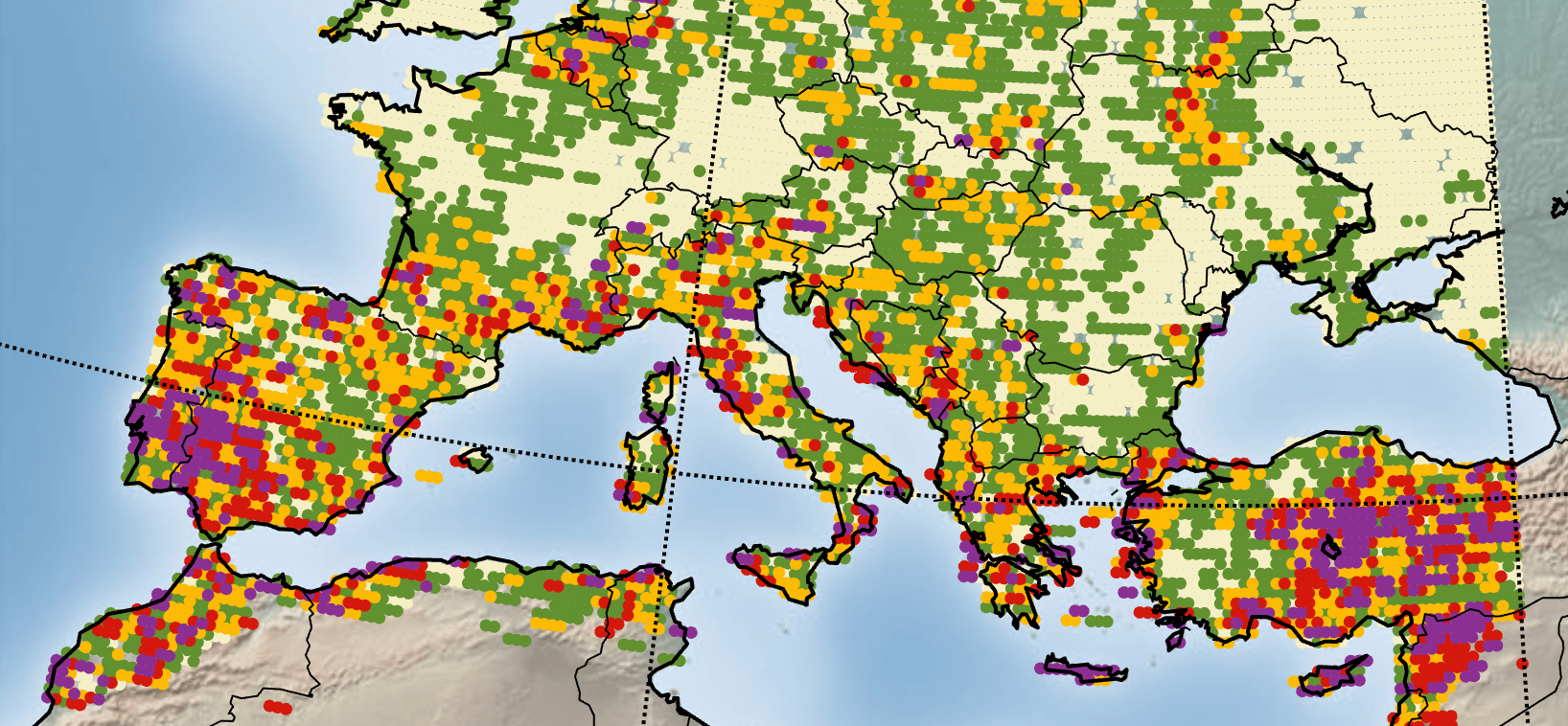




Fire is a complex phenomenon that occurs when three conditions are met: there is an ignition source, fuel is available, and the fuel has low moisture. The influence of the first two ingredients does not change much from year to year, but fuel moisture explains most of the variations in fire activity. Extreme fire seasons are usually associated with warm climate conditions that dry out vegetation and create flammable landscapes. Strong winds can amplify the fire potential, and this can be measured using the fire-weather index. In recent years, there has been an alarming increase in the frequency and intensity of wildfires worldwide, highlighting the urgent need to understand how climate change may be driving these catastrophic events.
The study "Europe faces up to tenfold increase in extreme fires in a warming climate" focuses on the potential impact of changing temperature and precipitation patterns on the intensity and duration of extreme fires across Europe. Fires depend on many unpredictable factors at a local level. To account for these uncertainties and identify overall trends, the data needs to be aggregated over larger areas, such as continents or countries. However, aggregating fires based on geopolitical borders is not always the most relevant approach to assess natural risks. This is especially true in Europe, which is diverse in terms of climate, vegetation, and human activities. Therefore, we suggest using a machine learning clustering algorithm based on fire-weather index. Within each cluster, we used a perturbation approach to quantify the influence of temperature and precipitation changes on the intensity and duration of extreme fires. We compared a baseline of fire danger with a range of climate change projections using a 30-year ERA5 reanalysis. The goal is to understand how Europe's fire landscape may transform under different climate scenarios.
One of the study's notable findings is the increased vulnerability of southern Europe to catastrophic fires. Under a moderate CMIP6 scenario, areas in southern Europe could experience a tenfold increase in the probability of such devastating fires occurring annually. This projection raises concerns about the resilience of ecosystems and communities in this region. While southern Europe is of particular concern, the study also warns that if global temperatures reach the critical threshold of +2°C, central and northern Europe will not be immune to escalating wildfire risks during droughts. This shift highlights the far-reaching consequences of climate change, extending the threat of wildfires beyond traditionally susceptible regions. The study also projects an extension of the fire season by ten days in at least 68% of southern Europe in the near future.
Without mitigation or adaptation measures, this expansion may overwhelm national fire suppression capacities and have significant social and ecological impacts.

Follow the Topic
-
npj Climate and Atmospheric Science
This journal is dedicated to publishing research on topics such as climate dynamics and variability, weather and climate prediction, climate change, weather extremes, air pollution, atmospheric chemistry, the hydrological cycle and atmosphere-ocean and -land interactions.

Related Collections
With Collections, you can get published faster and increase your visibility.
Atmosphere-Biosphere Interactions
Publishing Model: Open Access
Deadline: Oct 31, 2026
AI-Driven Innovation in Atmospheric Chemistry and Composition–Climate Interactions
Publishing Model: Open Access
Deadline: Oct 31, 2026


Please sign in or register for FREE
If you are a registered user on Research Communities by Springer Nature, please sign in