When Veterinary Research Becomes Public Health Research: Reflections from the Animal–Human Interface
Published in Biomedical Research and Public Health
Explore the Research
vms3.1381?utm_campaign=related_content&utm_source=HEALTH&utm_medium=communities
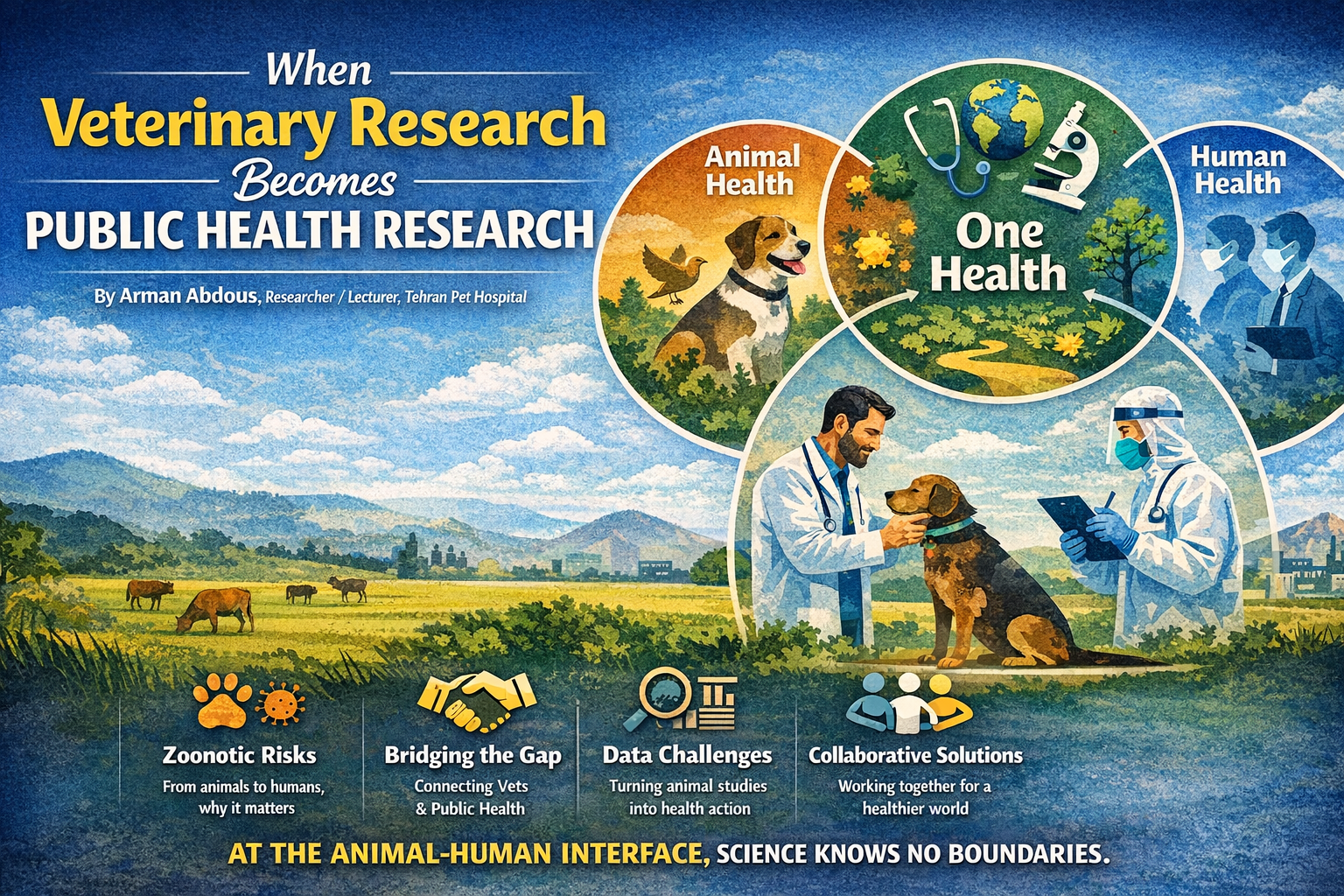
Veterinary research is often introduced as a discipline devoted to animal health, clinical reasoning, and species specific care. Yet the moment we begin to explore patterns of disease in animal populations, the scope quietly widens. Questions that start in a clinic or laboratory begin to touch households, communities, and ecosystems. At that point, veterinary research no longer belongs solely to veterinary medicine. It becomes part of public health.
I began to appreciate this shift while working on studies of vector borne and bacterial infections in dogs. What initially felt like a focused epidemiological question gradually revealed broader implications. In our systematic review and meta analysis examining the prevalence of Anaplasma, Ehrlichia, and Rickettsia infections in dogs in Iran, we identified measurable circulation of pathogens with clear zoonotic relevance (Abdous et al., 2024). These findings were not only about canine infection rates. They spoke to shared environments, shared vectors, and shared vulnerability. Dogs live alongside humans, often within the same physical and ecological spaces. Understanding infection patterns in one species inevitably informs risk awareness in another.
This perspective resonates strongly with the One Health framework, which recognises that human, animal, and environmental health are deeply interconnected. Many emerging infectious diseases originate in animal hosts before affecting human populations. In this context, veterinary surveillance is not a parallel activity running beside public health. It is an integral component of it. When veterinary researchers map prevalence patterns or analyse transmission risk, they are contributing to a broader system of health intelligence that extends beyond species boundaries.
Yet recognising this connection does not automatically translate into seamless collaboration. Veterinary and public health research often develop within different professional cultures. Veterinary studies may focus on clinical outcomes, diagnostic performance, or herd level management. Public health research often centres on population level burden, prevention strategies, and policy implications. Even when investigating the same pathogen, the framing of questions can differ. As a result, insights that could inform one another sometimes remain confined within disciplinary spaces.
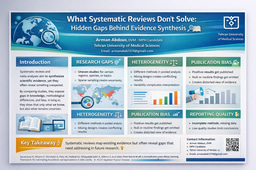
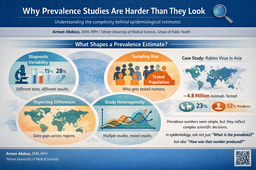
Methodological diversity adds another layer of complexity. Diagnostic approaches, sampling strategies, and reporting standards vary across regions and research traditions. In our own synthesis work, heterogeneity among primary studies significantly influenced pooled prevalence estimates (Abdous et al., 2024). Rather than viewing this variability as a weakness, I came to see it as a reflection of real world diversity in practice and infrastructure. At the same time, it reinforces the importance of careful interpretation when extending veterinary findings into broader public health narratives.
There is also a structural separation between professional communities. Veterinary researchers and public health professionals often publish in different journals, attend different conferences, and operate within distinct regulatory frameworks. These separations can unintentionally reinforce disciplinary silos. Pathogens, however, are indifferent to such divisions. Zoonotic transmission unfolds within ecological systems that connect species continuously and dynamically.
Despite these challenges, the potential benefits of integration are substantial. Animal surveillance can provide early signals of ecological shifts that precede detectable changes in human disease patterns. Monitoring vector borne infections in dogs, livestock, or wildlife may offer insight into environmental changes that influence transmission dynamics. Strengthening communication between veterinary and public health sectors enhances preparedness and supports coordinated responses to emerging threats.
This broader view also reshapes professional identity. Looking at veterinary research through a public health lens encourages us to think beyond individual cases. A diagnosis in a clinic can represent more than a single encounter. It can serve as a data point within a larger epidemiological landscape. Recognising this possibility expands the meaning of everyday veterinary practice and deepens its societal relevance.
Education plays a crucial role in nurturing this perspective. Integrating epidemiology and public health principles into veterinary training supports population level thinking early in professional development. Likewise, public health education that meaningfully engages with animal health sciences fosters interdisciplinary understanding. When researchers share conceptual frameworks and language, collaboration becomes more natural and productive.
Evidence synthesis frameworks, including systematic review methodologies, offer practical tools for bridging disciplines. By emphasising transparency, critical appraisal, and structured reporting, these approaches support the integration of findings across species and contexts. In my own work, engaging deeply with synthesis methods reinforced the importance of communicating uncertainty alongside results. Responsible interpretation strengthens trust and ensures that veterinary data is translated thoughtfully into public health discussions.
When veterinary research becomes public health research, the questions themselves evolve. Instead of asking only whether a treatment improves outcomes for an individual animal, we begin to ask how disease prevalence varies geographically, how environmental factors shape transmission, and how surveillance data might inform prevention strategies. This shift does not reduce the value of clinical expertise. Rather, it situates it within a network of interconnected health systems.
The animal human interface is not a dividing line but a shared space of interaction. Within this space, collaboration becomes essential. Veterinary researchers contribute detailed knowledge of species biology, field conditions, and ecological context. Public health professionals bring expertise in surveillance design, risk communication, and policy implementation. Together, these perspectives create a more comprehensive understanding of health challenges that affect communities across species.
Reflecting on my own journey, I have come to see veterinary epidemiology as inherently linked to population health. The movement from clinic to community, from individual animal to ecosystem, feels less like a transition and more like a natural expansion of perspective. Recognising this connection enriches research questions, deepens interpretation, and strengthens societal impact.
Ultimately, integrating veterinary research and public health thinking benefits both fields. It enhances preparedness, encourages methodological rigor, and fosters interdisciplinary dialogue. By acknowledging that health is shared across species and environments, we move toward a more coherent and resilient approach to disease prevention and health promotion.
Reference
Abdous A, Rahnama M, Shams F, Jokar M, Rahmanian V, Farhoodi M, Abbassioun A, Kamjoo MS. Prevalence of Anaplasma, Ehrlichia and Rickettsia infections in dogs in Iran: A systematic review and meta analysis. Veterinary Medicine and Science. 2024.

I am a veterinary researcher with a strong interest in clinical sciences, veterinary epidemiology, and public health. My experience includes working with clinical data, conducting literature-based research, and contributing to systematic reviews and analytical studies related to animal health and disease. I am particularly interested in the intersection of clinical veterinary practice and population-level health, with a focus on improving diagnostic, therapeutic, and preventive approaches. I enjoy engaging with the scientific community through research, peer discussion, and continuous learning, and I am keen to contribute to collaborative and interdisciplinary research initiatives.