White Hydrogen Could Disrupt the Entire Green Hydrogen Narrative
Published in Chemistry and Sustainability

The Electrolysis Bottleneck: Manufacturing vs. Mining
The global hydrogen conversation has long been dominated by a relatively simple, highly funded narrative: global decarbonization requires the massive, scaled-up production of green hydrogen through renewable-powered electrolysis. This framework has shaped industrial strategy, energy policy, and billions of dollars in academic research funding.
But this narrative suffers from a fundamental thermodynamic reality: the energy penalty. Electrolysis is incredibly energy-intensive. Despite remarkable advances in electrocatalysts and electrolyzer design, manufacturing green hydrogen requires massive, continuous inputs of renewable electricity. In many regions, the economics simply do not scale.
However, a quieter, potentially disruptive alternative is beginning to attract serious scientific attention. What if the future of the hydrogen economy relies not on manufacturing hydrogen, but on mining it?
The Geological Disruptor
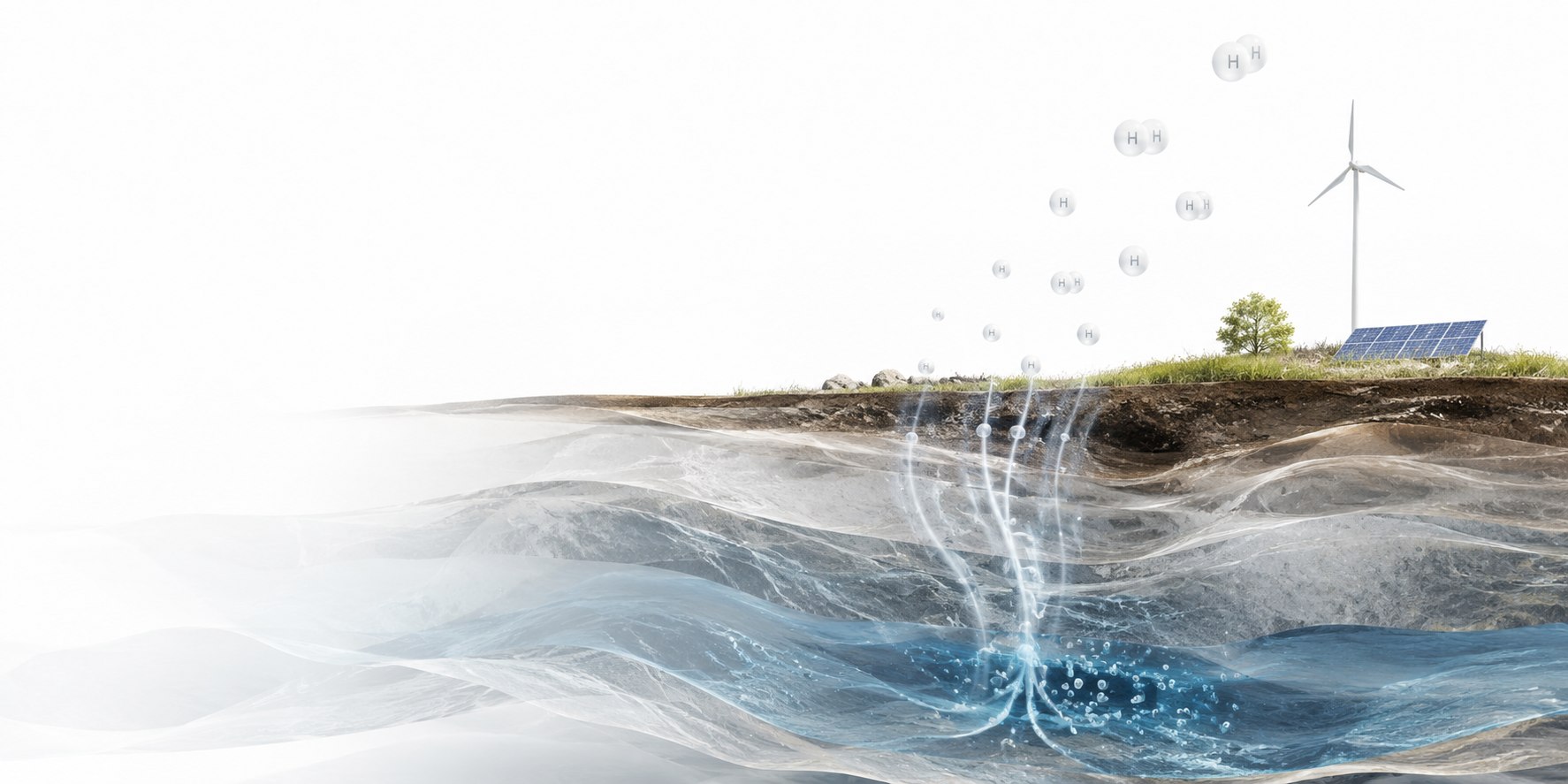
Naturally occurring "white hydrogen" (also known as geological or natural hydrogen) refers to molecular hydrogen generated beneath the Earth’s surface through continuous geochemical processes like serpentinization, radiolysis, and deep water-rock interactions.
Unlike green hydrogen, white hydrogen does not require continuous external energy input for generation. Recent discoveries of vast reservoirs in Mali, France, Australia, and the United States have shattered the long-held geological assumption that pure hydrogen cannot accumulate in the subsurface.
This distinction alone has the potential to alter long-standing assumptions about energy economics. If economically recoverable natural hydrogen reservoirs exist at a large scale, the energy intensity associated with global hydrogen supply could plummet. We would shift from a high-cost electrochemical manufacturing model to a traditional subsurface extraction model.
Will This Make Electrolyzer Research Obsolete?
For electrochemists and materials scientists, this emerging transition presents a fascinating tension. If white hydrogen becomes commercially viable at scale, will electrolysis research lose its central funding position?
Not necessarily. Rather than replacing electrochemistry, white hydrogen will likely redirect it toward downstream system optimization.
Naturally occurring hydrogen does not come out of the ground perfectly pure. It is frequently mixed with methane, nitrogen, helium, and other geological gases. If white hydrogen is to fuel proton-exchange membrane (PEM) fuel cells—which are notoriously sensitive to impurities—we will need massive breakthroughs in:
-
Electrochemical separation systems
-
Ultra-selective membrane technologies
-
Catalytic purification
-
Advanced, real-time gas sensing platforms
The scientific challenge simply moves from generating the molecule to purifying it.
The Hype Cycle and Subsurface Reality
While the enthusiasm is justified, caution is necessary. The current excitement surrounding white hydrogen risks entering a familiar "hype cycle" often observed in emerging energy technologies.
Significant scientific uncertainties remain. We lack reliable data on reservoir size estimation, extraction economics, and production continuity (does the geology regenerate hydrogen as fast as we extract it?). Furthermore, hydrogen is a highly mobile, leak-prone gas that acts as an indirect greenhouse gas in the atmosphere by extending the lifetime of methane. The environmental impacts of subsurface extraction, reservoir management, and fugitive emissions must be rigorously modeled.
Conclusion: A Diversified Future
The most productive path forward is not framing white hydrogen and green hydrogen as direct competitors. The future hydrogen economy will likely be highly diversified—relying on electrolysis in regions with excess renewable capacity, and geological extraction in regions sitting on natural reservoirs.
But for researchers, white hydrogen serves as a powerful reminder: disruptive geological discoveries can rapidly alter our technological assumptions. The future hydrogen economy may ultimately become far broader—and far less electrolysis-centric—than the current narrative suggests.
If white hydrogen proves to be scalable, which technology do you believe will become the critical bottleneck: deep subsurface exploration, or downstream membrane purification? Let's discuss.

Dr. Akeem Adeyemi Oladipo is a globally recognized Research Professor of Materials and Environmental Chemistry at Eastern Mediterranean University. Ranked among the world's Top 2% Scientists, his expertise bridges nanotechnology, renewable energy, and electro-analytical chemistry. He specializes in advanced materials synthesis for wastewater treatment, highly sensitive electrochemical biosensors, and solar energy conversion. By integrating machine learning and artificial neural networks, his research drives scalable deep-tech innovations in environmental sustainability and energy storage.
Follow the Topic
-
Photochemical & Photobiological Sciences
Photochemical & Photobiological Sciences is an international peer-reviewed journal publishing comprehensive research in the fields of photochemistry and photobiology.

Related Collections
With Collections, you can get published faster and increase your visibility.
A Life in Light: Celebrating the Scientific Legacy of Miguel Ángel Miranda
In the sad and unfortunate event of the decease of Miguel Ángel Miranda it is the right moment to honor the scientific legacy of this very re-known photochemist.Professor Miranda’s multifaceted research program covered mechanistic photochemistry, photobiology, and applied aspects of light-induced processes. The collection is intended to highlight these aspects in the broadest sense.
Publishing Model: Hybrid
Deadline: Nov 30, 2026
A special collection of papers to honour Prof. Eric Vauthey, pioneer in Photochemistry
This topical collection recognises and celebrates the career of Eric Vauthey, a passionate photochemist, an inspiring teacher and mentor, and an active member of the photochemistry community. Former President of the European Photochemistry Association, he has been investigating, extending our knowledge of and promoting photochemistry and photophysics locally and internationally for the past 30 years. The special collection is open for contributions from all colleagues wishing to pay tribute to Eric Vauthey and his dedication to the field of photochemistry and its community.
Publishing Model: Hybrid
Deadline: Dec 31, 2026