Stop Boiling the Broth: How Electrified Membranes Will Save Green Chemistry.
Published in Bioengineering & Biotechnology, Chemistry, and Earth & Environment

The Thermodynamic Nightmare of Downstream Processing
The global transition toward a circular bio-economy hinges on our ability to convert biomass into high-value platform chemicals—such as lactic acid, succinic acid, and volatile fatty acids (VFAs). Upstream, our fermentation and biocatalysis technologies are advancing beautifully.
But downstream, we hit a massive thermodynamic wall.
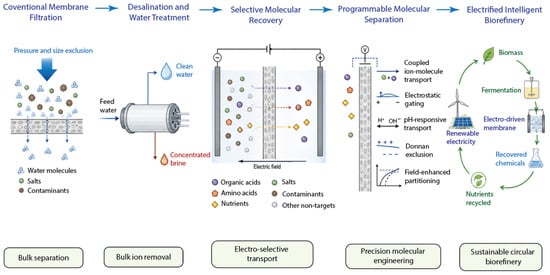
Fermentation broths are incredibly dilute, highly complex aqueous soups. Extracting a specific organic acid from this chaotic mixture using traditional Downstream Processing (DSP)—such as distillation, liquid-liquid extraction, or high-pressure reverse osmosis—is an energetic nightmare. These conventional processes attempt to separate the target chemical by boiling away or pressurizing the massive volume of water surrounding it.
When you spend 60% to 80% of your total operational expenditure (OPEX) just separating your product, your "green" chemical is no longer economically or environmentally viable. We are brute-forcing separations, and it is killing the commercialization of bio-based chemicals.
The Elegance of the Electro-Driven Shift
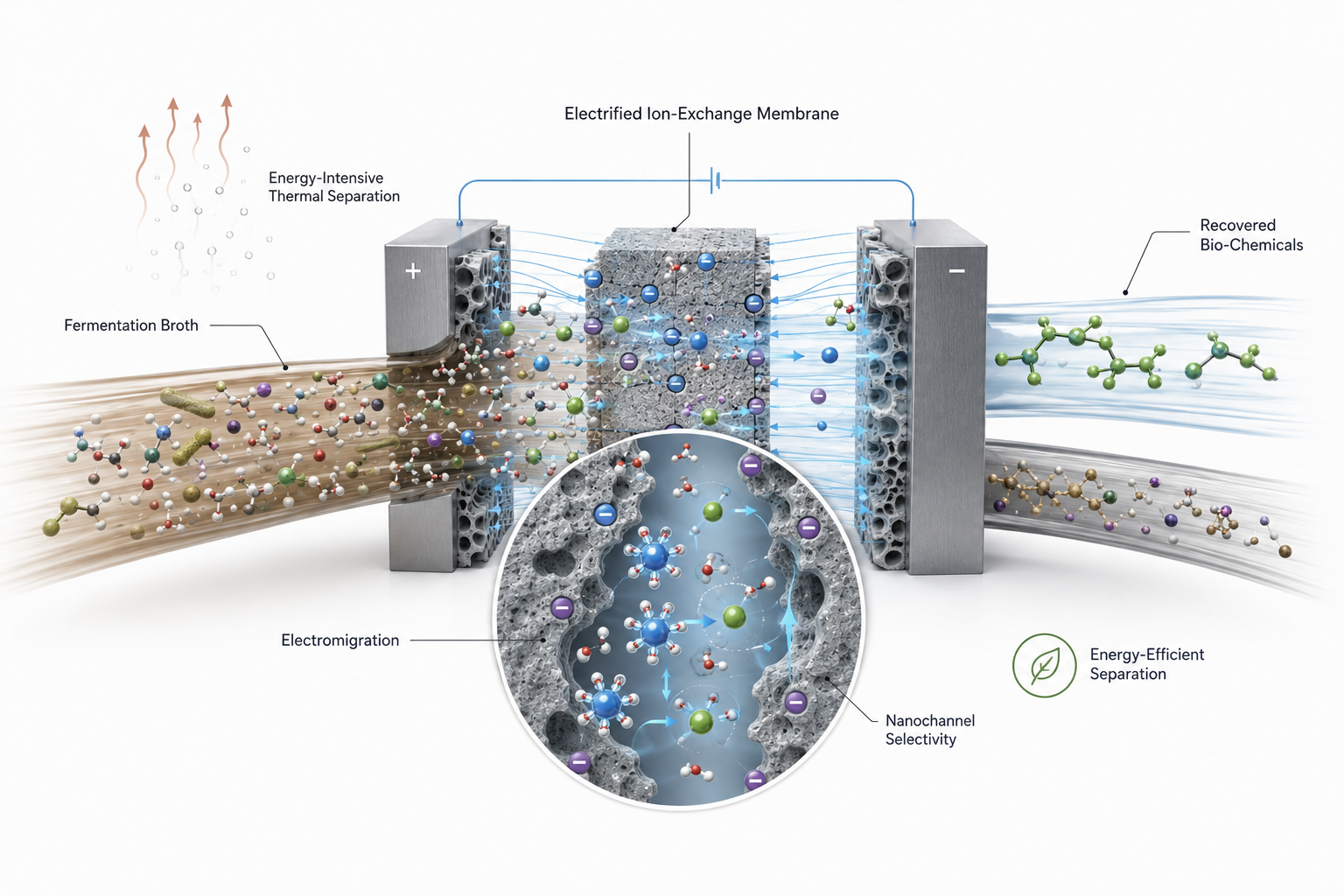
To achieve true industrial translation, we must invert the separation paradigm. Instead of using extreme heat or immense hydraulic pressure to push the water away from the chemical, we must use electrical potential to pull the chemical out of the water.
This is the promise of Electro-Driven Membrane (EDM) separations, encompassing technologies like electrodialysis and electrodeionization.
When an electric field is applied across a stack of ion-exchange membranes, targeted bio-based ions actively migrate through the perm-selective barriers. Because we are only moving the target ions—not the bulk water—the energetic efficiency skyrockets. EDMs operate at ambient temperatures and low pressures, preserving delicate bio-molecules while drastically slashing the carbon footprint of the recovery process.
The Next Frontier: Selectivity Engineering
However, replacing pressure with voltage is not a magic bullet. Real fermentation broths contain a highly competitive matrix of inorganic salts, unreacted sugars, amino acids, and multiple organic acids.
If we simply apply an electric field, monovalent and divalent ions race each other across the membrane. The critical bottleneck for the next decade of EDM research is selectivity engineering. We must move beyond generic ion-exchange membranes and design highly functionalized architectures capable of distinguishing between ions of the exact same charge but different hydration radii or valences.
By manipulating steric hindrance, membrane surface charge, and hydrophobicity, we can engineer membranes that act as molecular bouncers—allowing high-value VFAs to pass while rejecting background sulfate or chloride ions.
Confronting the Scale-Up Reality
While the lab-scale energetics of EDMs are spectacular, the path to full industrial translation is fraught with challenges.
Membrane scaling and biofouling remain severe operational threats when processing raw, unclarified broths. Furthermore, as we increase current density to maximize production rates, we inevitably trigger water splitting and increased electrical resistance—a delicate trade-off between energy consumption and separation efficiency.
To make EDMs the backbone of the future biorefinery, materials scientists, electrochemists, and process engineers must collaborate to balance these fundamental energetics. We need tougher membranes, smarter pulsed-electric-field anti-fouling protocols, and scalable stack designs.
Conclusion
We cannot build the sustainable industries of tomorrow using the brute-force separation technologies of yesterday. Electro-driven membrane separations represent our best opportunity to decouple bio-chemical recovery from massive energy penalties. By mastering selectivity engineering and conquering scale-up energetics, we can finally make the green bio-economy economically unstoppable. Read the comprehensive analysis exploring the exact energetics, selectivity engineering, and scale-up challenges of this transition here.
To my colleagues in chemical engineering and membrane science:
As we push EDMs toward industrial translation, what do you view as the most insurmountable scale-up challenge—the high CAPEX of customized ion-exchange membranes, or managing the complex fouling dynamics of raw fermentation broths?
#Biorefinery #GreenChemistry #MembraneScience #Electrodialysis #BioEconomy #ChemicalEngineering #DownstreamProcessing #Sustainability #AdvancedMaterials #ResearchCommunities
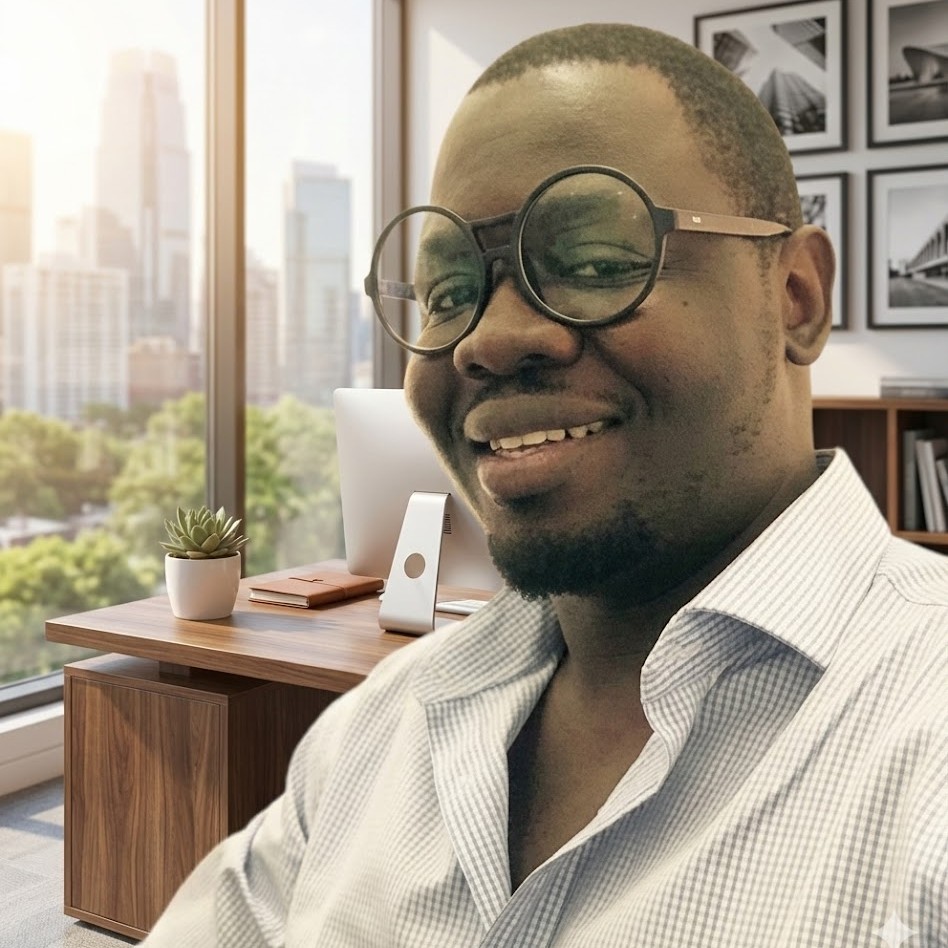
Dr. Akeem Adeyemi Oladipo is a globally recognized Research Professor of Materials and Environmental Chemistry at Eastern Mediterranean University. Ranked among the world's Top 2% Scientists, his expertise bridges nanotechnology, renewable energy, and electro-analytical chemistry. He specializes in advanced materials synthesis for wastewater treatment, highly sensitive electrochemical biosensors, and solar energy conversion. By integrating machine learning and artificial neural networks, his research drives scalable deep-tech innovations in environmental sustainability and energy storage.