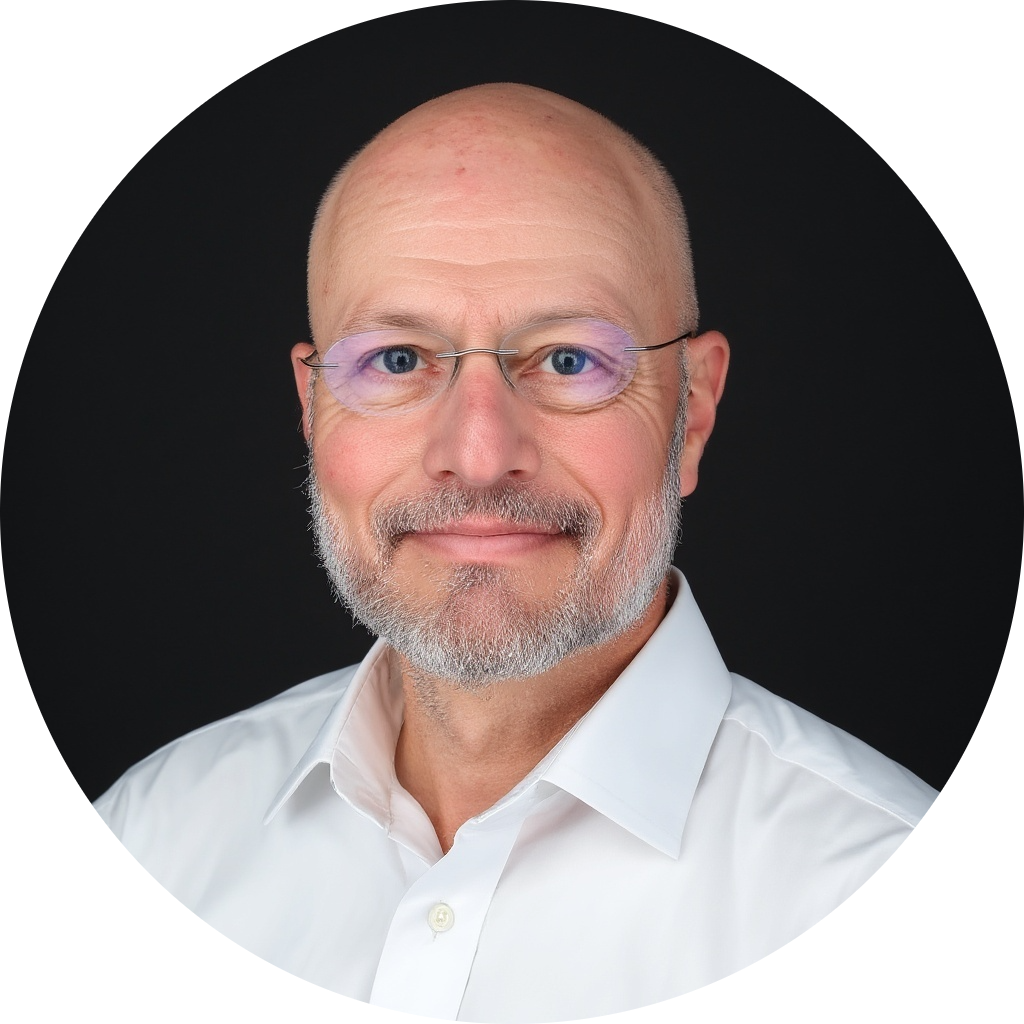
About D. Marshall Porterfield
Dr. Porterfield is a Professor of Biological Engineering and Space Biophysics at Purdue University, where his primary research focus is understanding the biophysical spaceflight environment at the molecular membrane/organelle stress level, translated through cellular signaling to whole organism responses. This work focuses on enabling the integration of bioregenerative life support systems (BLiSS), with controlled ecological agriculture, and precision medicine using computational systems genomics and differential transcriptomics (Biosystomics) to support deep space, long duration human exploration. This work also includes the development and application of biomimetic/biophysical sensor technology leveraging biosensors, bio-MEMS, bio-nanotechnology, and lab-on-a-chip systems to support novel research to understand how living systems adapt and respond to the biophysical spaceflight environment. He has worked on microgravity-based crop hydroponics and is the inventor of mycoponics for substrate free mycoproduction. Dr. Porterfield served NASA as Division Director (now BPS, NASA HQ, 2012-2016) overseeing the Human Research, Physical Sciences and Space Biology programs, while envisioning and enabling the GeneLab Open Science program, and the original Twins Study. Now back at Purdue he now serves as the Science PI for the Lunar Effects on Agricultural Flora (LEAF) Payload for the Artemis 3 Lunar Mission. His work includes 100s of peer reviewed manuscripts, papers, technical publications, patents, and book chapters; and he was recently recognized for his lifetime publication record (Top 2%) by the Stanford Survey. His leadership also includes service as President of the American Society for Gravitational and Space Biology/Research, and President for the Institute for Biological Engineering. He was elected a Fellow for the American Institute for Medical and Biological Engineering, an honor reserved for the top 2% of medical and biological engineers, cited for his work "bridging the interface between engineering and physiology through outstanding contributions to biosensor technology and fundamental cell biology." In 2025 he was honored as a Fellow of the American Society for Gravitational and Space Biology/Research.