Hello colleagues,
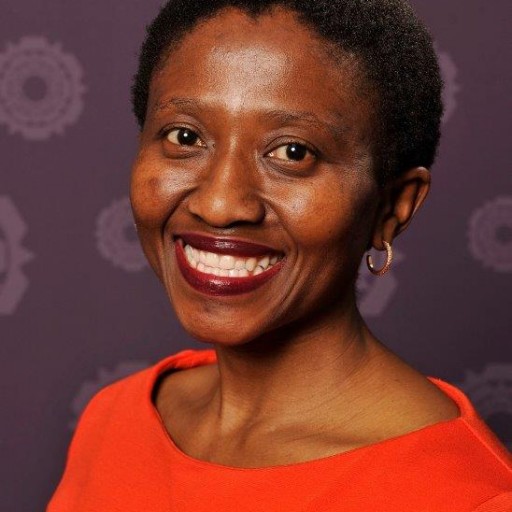
My name is Millicent Lindiwe Ndaba, and I am honoured to join the Springer Nature research community following the publication of my article:
🔗 https://doi.org/10.1007/s42087-026-00615-0
My work, “Beyond Fragmented Leadership Models: A Conceptual Integrated Theory of Leadership Effectiveness in a VUCA World,” introduces the Integrated Leadership Effectiveness Framework (ILEF), a holistic model designed to respond to the complexity, uncertainty, and dynamism facing modern organisations.
I bring over 25 years of experience in governance, risk management, internal audit, and leadership practice, currently serving as Chief Digital Governance & CAR Audits at the City of Cape Town.
Alongside my professional work, I am a doctoral researcher in business administration, with academic grounding in leadership and governance, and an enduring passion for bridging theory and practice.
My Research Focus
- Leadership effectiveness in VUCA environments
- Integrated leadership models (ILEF)
- Governance, ethics, and organisational resilience
- Cultural intelligence and human-centred leadership
What Drives My Work
My research is shaped by a central question:
How can leaders move beyond fragmented models to create sustainable, ethical, and adaptive organisations?
This builds on my broader body of work, including my book “The Reciprocal Relationship of Culture and Leadership,” and my ongoing efforts to develop practical leadership tools and frameworks for diverse audiences.
Looking Forward to Engaging With You
I look forward to:
- Collaborating with fellow researchers and practitioners
- Exploring interdisciplinary perspectives on leadership
- Contributing to conversations on governance, ethics, and innovation
Please feel free to connect, especially if your work intersects with leadership theory, innovation, governance, or transformation in complex environments.
Warm regards,
Lindiwe Ndaba
Recent Comments
I read Lindiwe Ndaba's (2026) story behind her paper on integrated leadership. She says: Leadership was never a position or a title. It was a lived reality. And she says: Leadership is stewardship.
But I see something she did not say. Lindiwe did not realize that she is describing (F).
The spirit of responsibility that grew in her at home as the eldest daughter, the big sister of the house this is (F) in its cradle. Internal sovereignty is not taught in a book. It is lived in relationships. In responsibility for others.
Then she carried it to her school. To her university. To her workplace. To her research. (F) does not change when the place changes. It remains itself. It travels with its bearer wherever she goes.
The ethical stewardship she speaks of is (F). Leadership as stewardship is (F) witnessing the other. Transformative resilience is (F) resisting (B).
Lindiwe did not name it (F). But she lived it. And this is the difference between writing about something from the outside, and writing it from within.
(B) is the position. (F) is the responsibility. (Nf) is the trace the leader leaves after she is gone.
Fatiha Nesrine Bouzid, Independent Existential Philosopher, Founder of the (B)+(F)=Nf Framework
Fatiha, thank you for this deeply insightful and generous reflection. I truly appreciate how you’ve given language to something that is often lived long before it is named.
At the heart of my story is precisely this journey, leadership shaped through lived experiences: responsibility in the home, carried into school, work, and scholarship. These were not just moments, but formative encounters that cultivated my leadership effectiveness over time. In that sense, what you describe as (F) resonates strongly as the continuity of that lived responsibility across contexts.
Your framing, particularly (F) as something that travels with the individual and (Nf) as the trace left behind, adds a rich philosophical layer to this conversation. It invites us to reflect more deeply on leadership not only as practice, but as imprint.
In this context, my recently published Integrated Leadership Effectiveness Framework (ILEF) can be understood as an emergent leadership theory that formalises this very journey we are exploring, leadership as a lived, evolving practice rather than a static construct. Grounded in pillars such as transformational agility, ethical stewardship, humanity and cultural intelligence, and innovation enablement, the framework integrates the formative power of lived experience with conscious leadership practice, highlighting how responsibility, identity, and context shape effectiveness over time. It is, in essence, an attempt to bridge what is lived and what is articulated, offering a structured yet deeply human approach to understanding how leaders grow, act, and ultimately leave a meaningful imprint.It would be valuable to hear from others: How have your lived experiences shaped the kind of leadership you embody today, and what trace do you believe it leaves behind?
Thank you again for expanding this dialogue so meaningfully.