A sprayed supramolecular film cuts down on pericardial adhesions
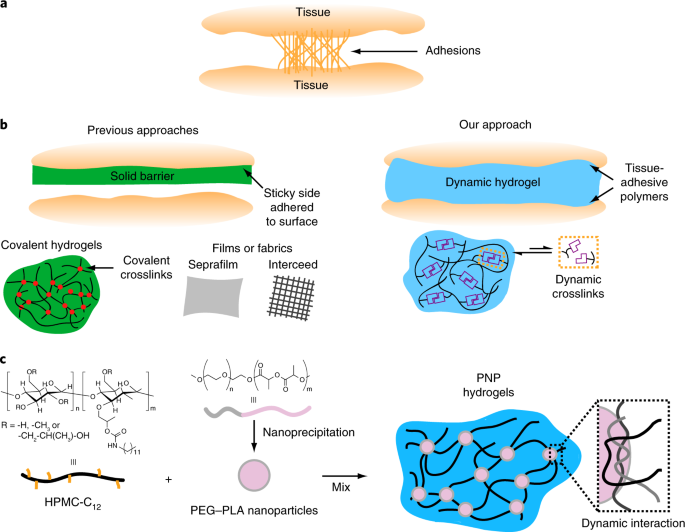
A sprayable dynamically crosslinked supramolecular polymer–nanoparticle hydrogel that robustly adheres to tissue reduces the severity of cardiac adhesions in rats and sheep.
Published in Bioengineering & Biotechnology
Preview


Chief Editor, Nature Biomedical Engineering, Nature Research
Follow the Topic
Biotechnology
Life Sciences > Biological Sciences > Biotechnology
-
Nature Biomedical Engineering
This journal aspires to become the most prominent publishing venue in biomedical engineering by bringing together the most important advances in the discipline, enhancing their visibility, and providing overviews of the state of the art in each field.

Related Collections
With Collections, you can get published faster and increase your visibility.
Implantable wireless communication technologies
This collection brings together research that addresses critical engineering challenges in implantable wireless communications. It demonstrates how electromagnetic, optical, acoustic, or hybrid methods can be engineered to achieve reliable wireless communications and power delivery through biological tissues.
Publishing Model: Hybrid
Deadline: Nov 28, 2026
Medical Ultrasound: Emerging Techniques and Applications
This cross-journal Collection showcases the broad and exciting field of emerging techniques and applications in medical ultrasound.
Publishing Model: Hybrid
Deadline: Jan 29, 2027