2-DG reprograms mitochondrial metabolism to rescue CD8 T cells impaired by HIV-1
Published in Biomedical Research


Type I interferons (IFN-I) are essential for early antiviral defense, yet their role in chronic infection is paradoxical. While transient IFN-I signaling restricts viral replication, sustained activation has been associated with immune dysfunction. In our previous studies, we showed that blockade of IFN-I signaling or depletion of plasmacytoid dendritic cells, the major IFN-I producing cells, in HIV-infected humanized mouse models restores CD8⁺ T cell function and reduces viral reservoirs. However, the mechanistic basis for this effect has remained unclear.
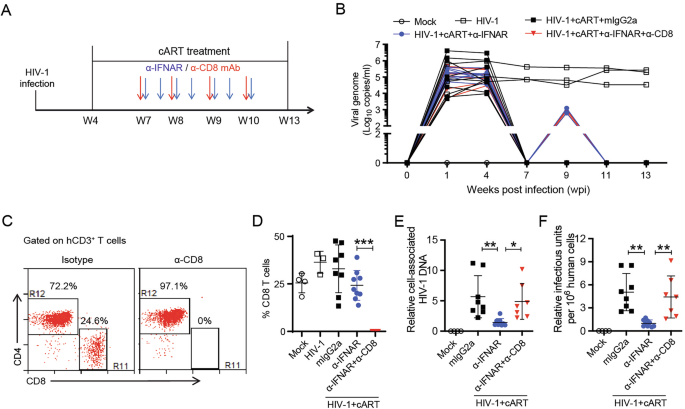
Using HIV-infected humanized mice under ART, we first confirmed that the reduction of viral reservoirs following IFN-I blockade is dependent on CD8⁺ T cells, highlighting their central role as effector cells in reservoir clearance.
To investigate the underlying mechanisms, we performed transcriptomic analyses of CD8⁺ T cells and observed a striking upregulation of mitochondrial metabolic pathways—including the tricarboxylic acid cycle, electron transport chain, and oxidative phosphorylation—upon IFN-I blockade. These findings suggested that IFN-I signaling may impose a metabolic constraint on CD8⁺ T cells.
Functional analyses supported this hypothesis. HIV infection led to a marked reduction in mitochondrial membrane potential in CD8⁺ T cells, a defect that was not corrected by ART alone. In contrast, combined ART and IFN-I blockade restored mitochondrial function. In vitro experiments further demonstrated that sustained IFN-I signaling directly suppresses mitochondrial metabolism in CD8⁺ T cells. Importantly, analysis of single-cell transcriptomic datasets from individuals living with HIV revealed a similar pattern: elevated interferon response signatures coupled with diminished oxidative phosphorylation, which persisted despite ART.
Together, these results identify a previously unappreciated mechanism whereby chronic IFN-I signaling drives CD8⁺ T cell dysfunction through suppression of mitochondrial metabolism.
We next asked whether this metabolic impairment could be therapeutically targeted. Screening a panel of metabolic interventions revealed that low-dose 2-deoxy-D-glucose (2-DG) uniquely restored CD8⁺ T cell function. Treatment with 2-DG enhanced the production of IL-2, IFN-γ, and TNF-α, and improved HIV-specific CD8⁺ T cell responses across multiple experimental systems.
In vivo administration of 2-DG (5mg/ml in drinking water) to ART-treated, HIV-infected humanized mice further demonstrated its therapeutic potential. 2-DG restored mitochondrial membrane potential, reduced aberrant activation markers, and rebalanced T cell subsets toward a central memory phenotype. Notably, expression of exhaustion markers such as PD-1 was decreased, accompanied by enhanced antigen-specific T cell responses.
Given that functional restoration of CD8⁺ T cells alone may be insufficient to eliminate latent reservoirs, we combined 2-DG with the latency-reversing agent poly(I:C). This combinatorial approach led to a significant reduction of viral reservoirs in both spleen and bone marrow, supporting a cooperative strategy in which reservoir reactivation is coupled with enhanced immune clearance.
To assess clinical relevance, we examined the effects of 2-DG on peripheral blood mononuclear cells from ART-treated individuals with HIV. 2-DG treatment enhanced CD8⁺ T cell effector function under both TCR-dependent and -independent stimulation conditions and upregulated transcriptional programs associated with mitochondrial biogenesis and effector cytokine signaling. Moreover, 2-DG suppressed ex vivo expansion of viral reservoirs, further supporting its translational potential.
Collectively, our findings establish a mechanistic link between chronic IFN-I signaling, mitochondrial dysfunction, and CD8⁺ T cell exhaustion. By identifying immunometabolic reprogramming as a key determinant of antiviral immunity, this study provides a conceptual framework for targeting metabolism to restore immune function in chronic infection.
Importantly, 2-DG has been previously evaluated in clinical settings, particularly in oncology, where it has demonstrated favorable safety and tolerability profiles. This raises the possibility of repurposing 2-DG as part of combination strategies aimed at achieving functional cure of HIV.
Looking ahead, integrating metabolic interventions with approaches that reactivate latent reservoirs and enhance immune effector function may represent a promising path toward durable HIV control.
Follow the Topic
-
Cellular & Molecular Immunology
A monthly journal from the Chinese Society of Immunology and the University of Science and Technology of China, covering both basic immunology research and clinical applications.