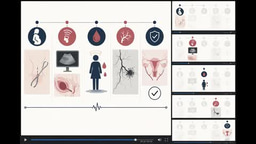
A Rare Neurological Twist in Preeclampsia: Isolated Hypoglossal Nerve Palsy
Published in Neuroscience and Biomedical Research

Case Overview
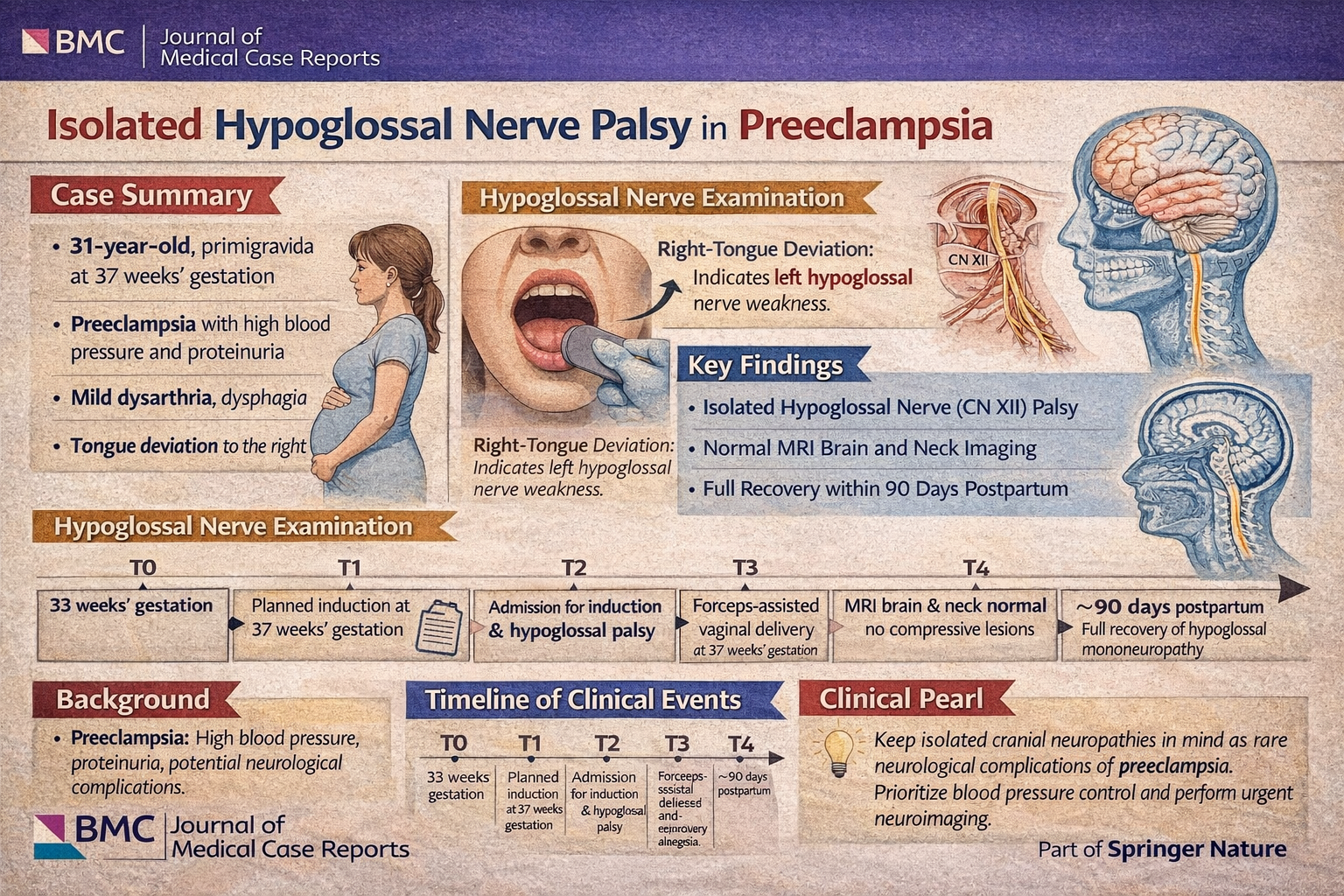
A 31-year-old primigravida at 37 weeks’ gestation with preeclampsia presented with mild dysarthria and dysphagia. Neurological examination revealed tongue deviation to the right, consistent with a left hypoglossal nerve palsy.
Extensive neuroimaging—including MRI brain, MR angiography, and contrast-enhanced imaging of the neck—demonstrated no infarction, hemorrhage, mass lesion, or compressive pathology, effectively excluding structural and vascular causes.
Management focused on blood pressure optimization and obstetric care, without nerve-specific therapy. The patient experienced complete resolution of symptoms within 90 days postpartum.
Why This Case Matters
Cranial mononeuropathies in preeclampsia are rare but increasingly recognized. This case reinforces several key clinical insights:
Diagnosis of exclusion: Normal imaging is essential to rule out brainstem stroke, skull base lesions, and vascular pathology
Likely mechanism: Microvascular ischemia, endothelial dysfunction, and vasospasm affecting the vasa nervorum
Favorable prognosis: Most cases resolve spontaneously with control of the underlying hypertensive disorder
Clinical vigilance: Bulbar symptoms in pregnancy should prompt urgent neurological and obstetric evaluation
Clinical Take-Home Message
Isolated cranial neuropathies—including hypoglossal nerve palsy—should be considered a rare but reversible neurological manifestation of preeclampsia, particularly in the presence of severe hypertension and normal neuroimaging.
Question
What is the most likely mechanism underlying hypoglossal nerve involvement in preeclampsia?
A. Direct viral infection of the nerve
B. Autoimmune demyelination
C. Microvascular ischemia due to endothelial dysfunction
D. Compressive tumor at the skull base
Correct Answer:
C. Microvascular ischemia due to endothelial dysfunction
Explanation: Preeclampsia is characterized by systemic endothelial dysfunction and vasospasm, which can impair perfusion of cranial nerves via the vasa nervorum, leading to transient, reversible mononeuropathies.
Final Thoughts
This case is a valuable reminder that not all neurological symptoms in preeclampsia are central. Recognition of reversible peripheral cranial neuropathies can prevent unnecessary interventions and guide appropriate management focused on timely blood pressure control and obstetric care.
Journal of Medical Case Reports is the world’s first international, PubMed-listed, medical journal devoted to publishing case reports from all medical disciplines and will consider any original case report that expands the field of general medical knowledge, and original research relating to case reports.
Richard Alan Rison is the interim Editor-in-Chief of Journal of Medical Case reports. He is also an associate neurology editor (editorial board) for BMC Neurology, and the former lead editor for case reports of BMC Research Notes (currently on the editorial board). His scholarly work focuses on medical case reporting, reporting standards, and editorial methodology. Dr. Rison participated in the development and dissemination of the CARE guidelines for clinical case reporting and has authored numerous publications addressing both neurological disorders and the role of case reports in advancing medical knowledge. Dr. Rison practices general neurology and served as the founding medical director of the PIH Health Hospital-Whittier Stroke Program and the PIH Health Hospital-Whittier Non-Invasive Vascular Laboratory, is a clinical assistant professor of neurology at the University of Southern California Keck School of Medicine and Los Angeles County Medical Center, and is a Fellow of the American Academy of Neurology, the American Neurological Association, and the American Association of Neuromuscular and Electrodiagnostic Medicine. Dr Rison is board-certified by the American Board of Psychiatry and Neurology in neurology and vascular neurology, and neurocritical care and neuroimaging by the United Council of Neurologic Subspecialties. He is also board-certified by the American Board of Electrodiagnostic Medicine in electrodiagnostic medicine. Dr. Rison is a former president of the Los Angeles Neurological Society.
Follow the Topic
-
Journal of Medical Case Reports
This journal will consider any original case report that expands the field of general medical knowledge, and original research relating to case reports.