Chemical Pharmacognosy in natural drug discovery-bridging folk wisdom and modern medicine
Published in Social Sciences, Biomedical Research, and Agricultural & Food Science
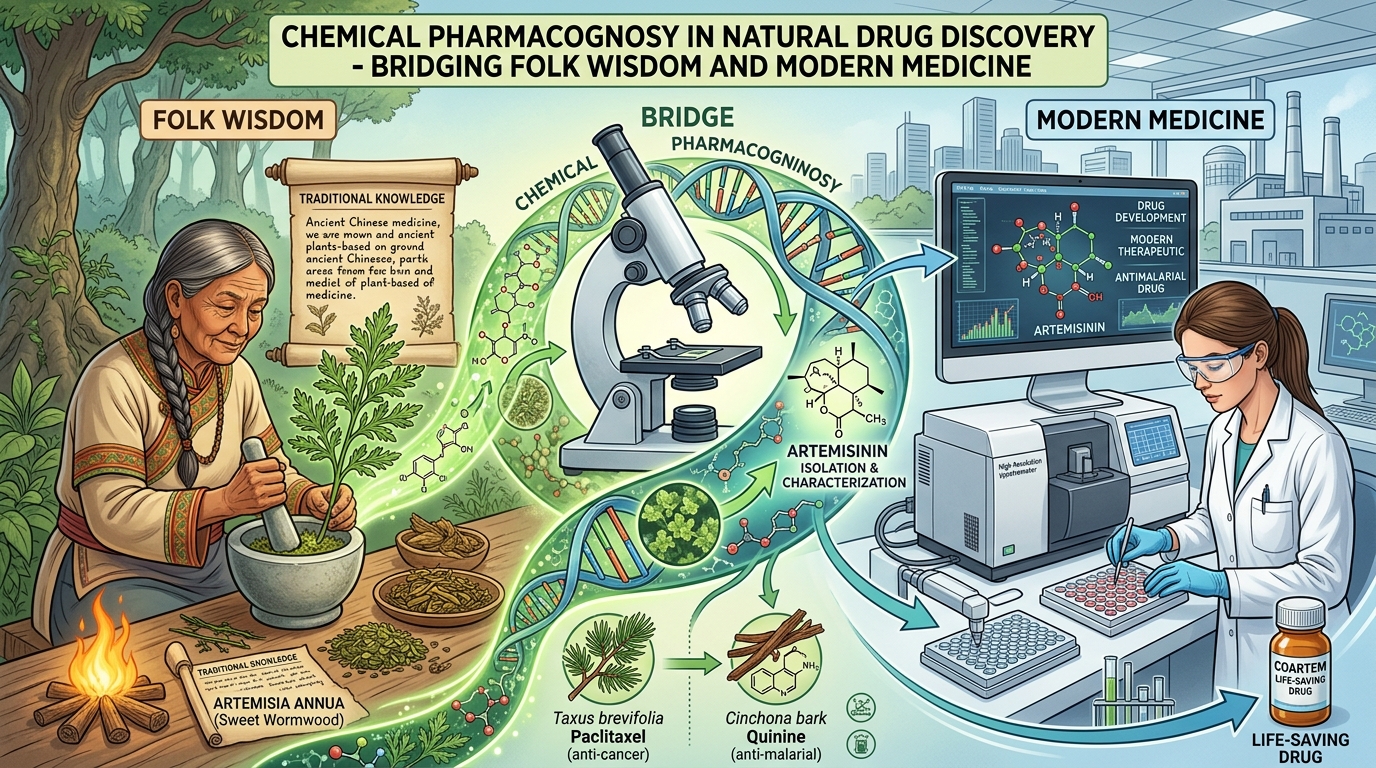

Chemical Pharmacognosy in Natural Drug Discovery: Where Folk Wisdom Meets the Lab Bench
My journey into chemical Pharmacognosy did not begin with a sophisticated instrument or a high-impact journal paper. It began much earlier—with stories.
Growing up, I was surrounded by traditional remedies. A plant decoction for fever, seeds chewed for digestion, herbal pastes for pain and inflammation. At the time, I accepted these practices without question. Later, as a student of science, I began to ask the questions that now define my research life: Why do these remedies work? Which compounds are responsible? And how can we validate them without losing their cultural roots?
Chemical Pharmacognosy became my bridge between those early experiences and modern medicine.
Discovering a Discipline That Connects Worlds
Chemical Pharmacognosy sits at a fascinating crossroads. It brings together botany, chemistry, pharmacology, and traditional knowledge. In simple terms, it is about understanding what chemicals nature makes, why they matter, and how they can help human health.
What drew me to this field was its balance. On one side, there is folk wisdom—knowledge passed down through generations, often without written records. On the other, there is rigorous science: extraction, isolation, structure elucidation, bioassays, and quality control. Chemical pharmacognosy allows both to coexist, each strengthening the other.
For me, it felt like learning a new language—one that translates tradition into evidence.
From Fieldwork to the Fume Hood
One of the most rewarding aspects of this work is its diversity. A single project might begin in the field, documenting how a community uses a plant, and end in the laboratory, analyzing molecular structures.
I still remember my first field collection trip. Holding a plant that local healers trusted for generations carried a sense of responsibility. It was not just a sample—it was a lived experience, belief, and history. Back in the lab, every chromatographic peak felt like a question: Is this the compound behind the healing?
This journey from soil to solvent taught me that drug discovery is not just technical—it is deeply human.
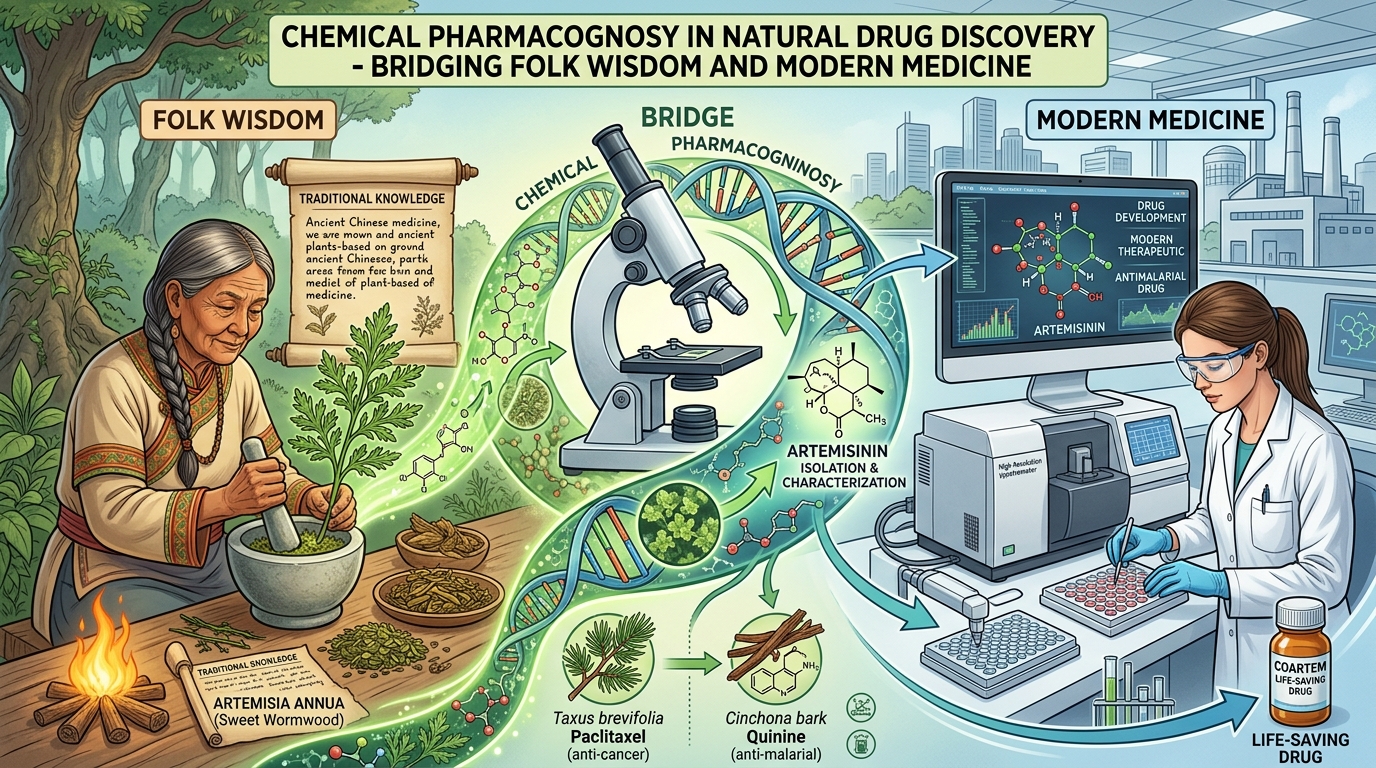
Why Chemical Pharmacognosy Still Matters
In an age dominated by synthetic chemistry and computational drug design, it is fair to ask: Why focus on natural products at all?
The answer is simple: nature remains our greatest chemist.
Many modern drugs trace their origins to natural sources. Even today, natural compounds continue to inspire new therapies, especially in areas like cancer, inflammation, infectious diseases, and metabolic disorders. Chemical Pharmacognosy helps us systematically explore this chemical diversity, rather than relying on chance discoveries.
It also plays a crucial role in addressing drug resistance, a growing global challenge. When conventional drugs fail, structurally unique natural compounds often offer new mechanisms of action.
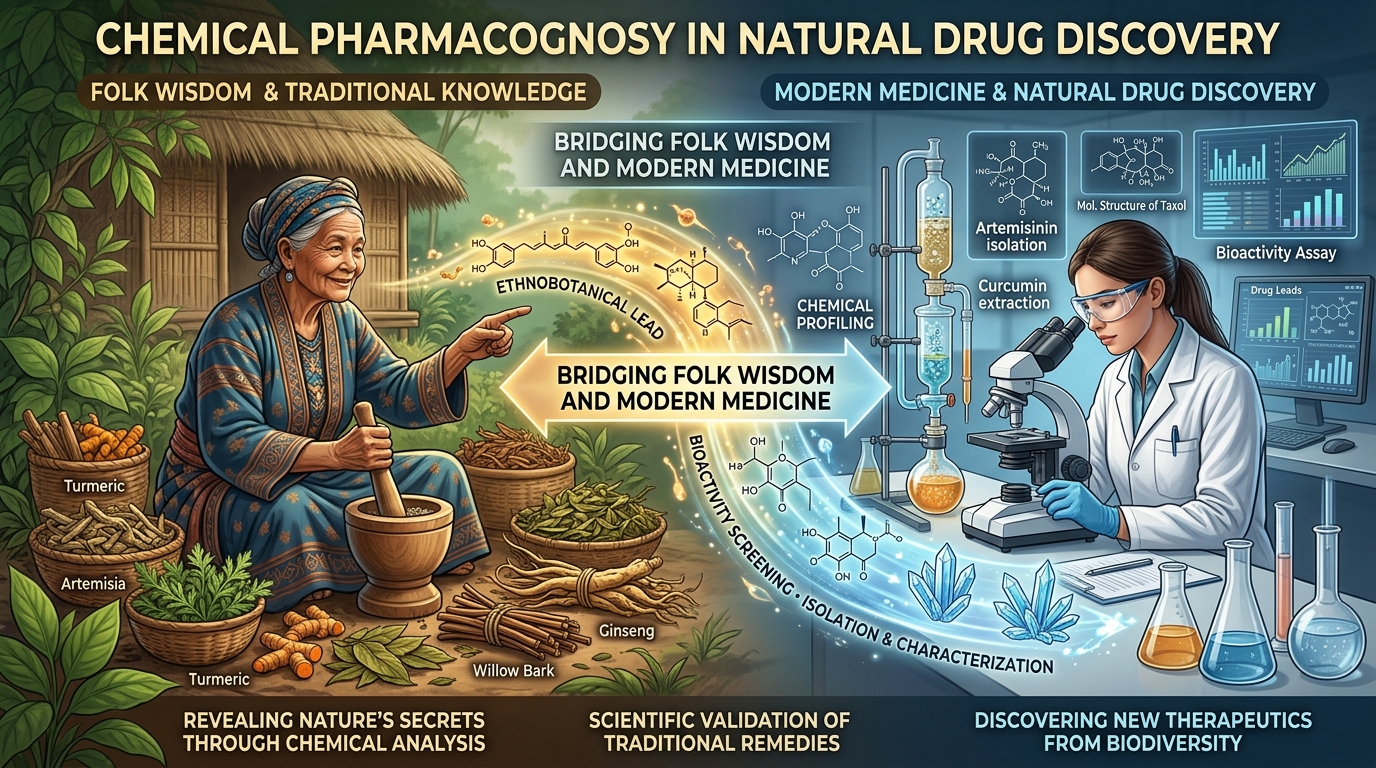
Validating Traditional Medicine—Respectfully
One of the most important lessons I have learned is that validation does not mean replacement.
Traditional, Complementary, and Alternative Medicine (TCAM) systems are often criticized for lacking evidence. Chemical Pharmacognosy provides a way forward—not by dismissing tradition, but by testing it carefully. Through phytochemical profiling, bioactivity-guided fractionation, and standardization, we can identify what works, how it works, and how to use it safely.
This process also protects communities. Proper quality control prevents adulteration, ensures consistency, and builds trust between traditional knowledge holders and modern healthcare systems.
Conservation: An Ethical Responsibility
As my research progressed, another reality became impossible to ignore: biodiversity loss.
Many medicinal plants are under threat due to overharvesting, habitat destruction, and climate change. Chemical pharmacognosy is not just about discovery—it is also about conservation and sustainability. By identifying active compounds, we can explore alternatives such as cultivation, tissue culture, or semi-synthesis, reducing pressure on wild populations.
Every plant studied carries an ethical obligation: to use knowledge responsibly and sustainably.
Teaching, Learning, and Mentorship
Chemical Pharmacognosy has also shaped how I teach and mentor students. I see how excited they become when theory connects with real-world relevance. When a student realizes that a plant extract can inhibit an enzyme or reduce inflammation, science stops being abstract.
I often encourage young researchers to remain curious and interdisciplinary. Some of the best insights in my work came from conversations across fields—from clinicians, ethnobotanists, and even farmers.
Research, I’ve learned, thrives in dialogue.
Looking Toward the Future
The future of chemical Pharmacognosy is both exciting and challenging. Advanced analytical tools, metabolomics, and bioinformatics are transforming how we study natural products. At the same time, we must ensure that innovation does not erase traditional voices.
I believe the next generation of natural drug discovery will be collaborative, inclusive, and globally connected—where indigenous knowledge, laboratory science, and clinical research move forward together.
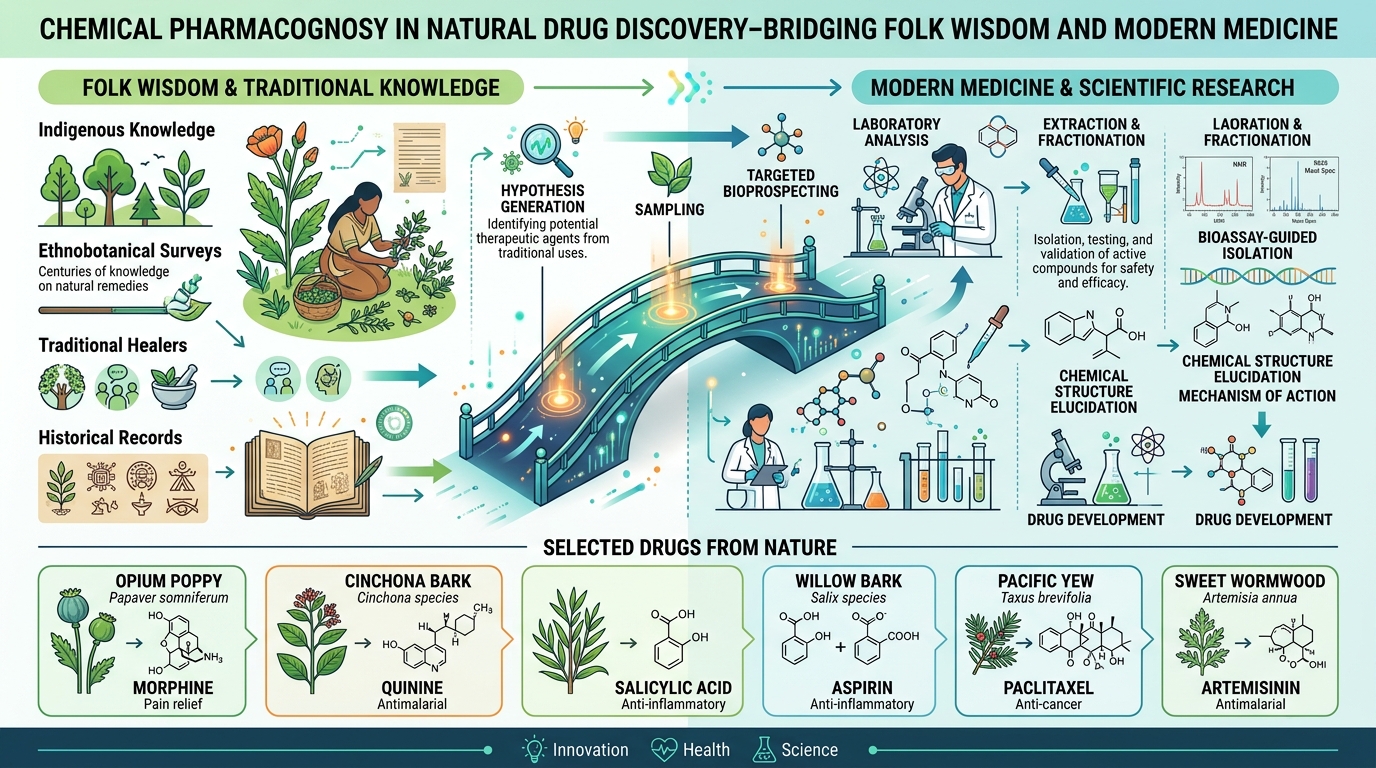
A Personal Reflection
Chemical Pharmacognosy is more than my field of study—it is my way of making sense of medicine, culture, and science as one continuum.
Every time I isolate a compound, I am reminded that it once existed quietly in nature, long before we named it or tested it. Our role as researchers is not to dominate that knowledge, but to understand it, refine it, and use it for the greater good.
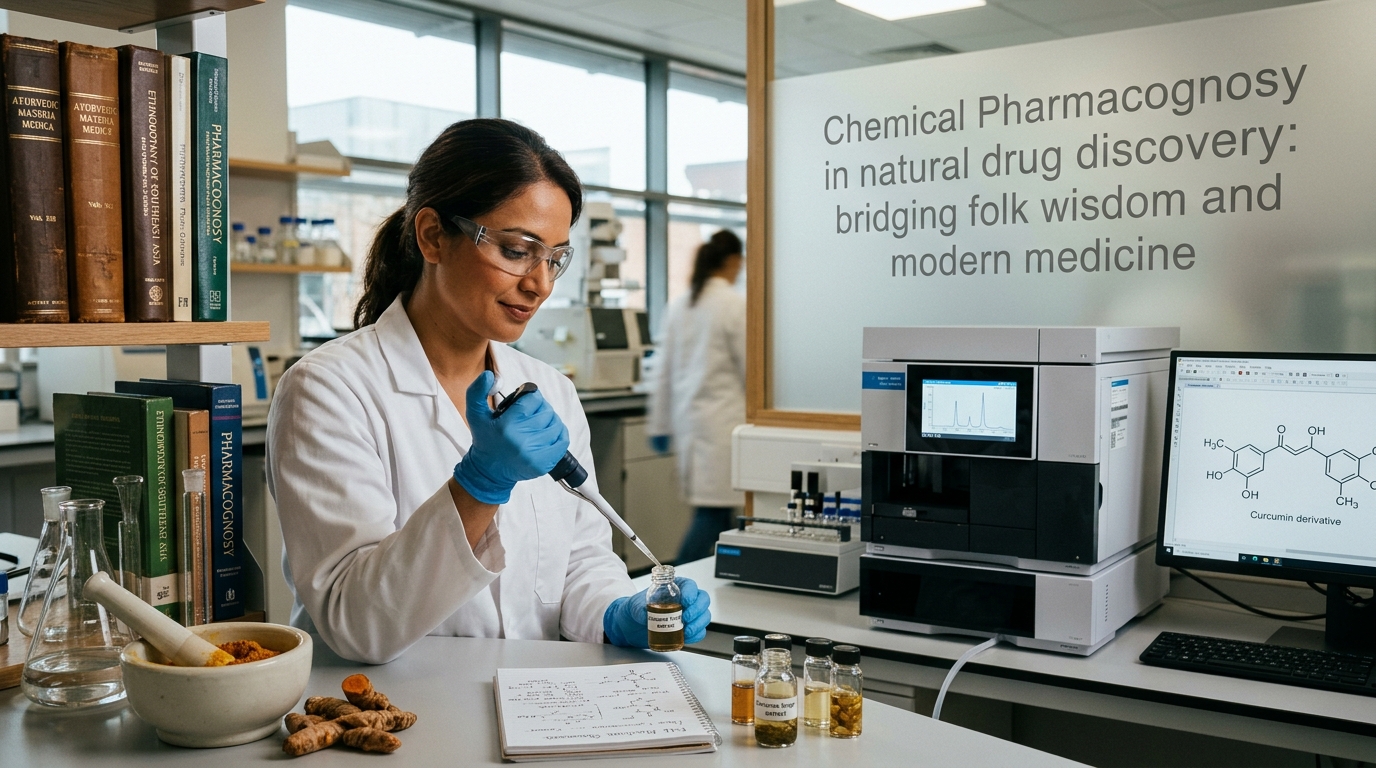
Bridging folk wisdom and modern medicine is not always easy. But when it works, it creates something powerful: therapies that are effective, respectful, and deeply rooted in both science and humanity.
And that, for me, is the true promise of chemical Pharmacognosy.

Salman Ahmed (ORCID: 0000-0003-2033-0181) holds a B.Pharm. degree from the University of Karachi, Pakistan, and a PhD and M.Phil. in Pharmacognosy from the same institution. He has gained valuable experience in the pharmaceutical industry, having worked at Helix Pharma, Pharm Evo (Pvt.) Ltd., and Searle Pakistan Ltd. Currently, he holds the position of Assistant Professor in the Department of Pharmacognosy at the Faculty of Pharmacy, University of Karachi, Pakistan.
Salman Ahmed has made significant contributions to the field with a decade-long career dedicated to teaching Pharmacognosy, also known as Natural Products Sciences. He has authored 125 research papers with an impact factor of 100 with 2297 citations, a h-index of 24, and an i10-index of 59. He has secured multiple research grants in Pharmacognosy (2021, 2018, 2016, and 2014) to study plants traditionally used for analgesic, anti-inflammatory, diuretic, and antidiarrheal purposes and their effects on digestive enzymes. Additionally, he has authored seven books and presented 16 posters at national and international conferences. Salman Ahmed's expertise is acknowledged by various esteemed journals published by Elsevier, Springer Nature, Wiley, MDPI, Hindawi, and Dove Medical Press Limited, as he serves as an invited reviewer for these publishers.
Scientific Achievements (2011–2015): He pioneered a cost-effective copper sulfate-induced chick emesis model for evaluating natural antiemetics. His research explores antiemetic, analgesic, and anti-inflammatory properties in Pakistani plants, herbs, and spices, reporting fixed oil's analgesic effects and discovering Bergenin as an antiemetic. He authored two state-of-the-art reviews on natural antiemetics, "Antiemetic effects of bioactive natural products" and "Natural antiemetics- an overview". He was awarded Nishan-e-Zafar by the University of Karachi in 2014.
Scientific Achievements (2016–2024): Dr Salman Ahmed pioneered glass slide models to grow Whewellite, Brushite, and Urate crystals for the evaluation of antiurolithiatic and anti-gout drugs, presenting key findings at international conferences such as MMDR-7, STEP-5, ISNPC-14, and ISNPF-2. His book “How to Grow Urinary Stone and Gouty Crystals on Glass Slide” provides detailed methodologies for replicating crystal growth in vitro and discusses the implications for understanding crystal morphologies, disease mechanisms and developing herbal treatment strategies.
Dr Ahmed's research highlights the antiurolithiatic potential of pentacyclic triterpenes and polyphenols. These compounds inhibit calcium oxalate crystallization, reduce oxidative stress, and modulate inflammation. They also promote nephroprotection, diuresis, and ACE inhibition, advancing natural therapeutics for kidney stone prevention.
His contributions include “Glossary of Globally Used Herbs and Animals for Urolithiasis” (2024), a comprehensive book exploring medicinal plants covering botanical families from A to Z and animal-based remedies covering their historical use, mechanism of action, and therapeutic spectrum against Whewellite, Brushite, and Urate crystals separately. His research on antiurolithiatic formulations compiles mono- and polyherbal remedies from diverse regions, including Appalachia, Canada, India, and the Middle East. His work provides critical data for future phytochemical, pharmacological, and toxicological studies, aiding in the discovery of safer, more effective treatments for kidney stones.
Additionally, he explores the anticancer potential of marine peptides against breast, ovarian, cervical, malignant melanoma, prostate, neuroblastoma, glioblastoma, leukemia and lymphoma, advancing natural therapeutics for cancer treatment.

Please sign in or register for FREE
If you are a registered user on Research Communities by Springer Nature, please sign in