Acute Psychosis and Convulsive Episodes Following Total Thyroidectomy: A Dual Metabolic Neuropsychiatric Emergency
Published in Neuroscience and Biomedical Research
Case summary
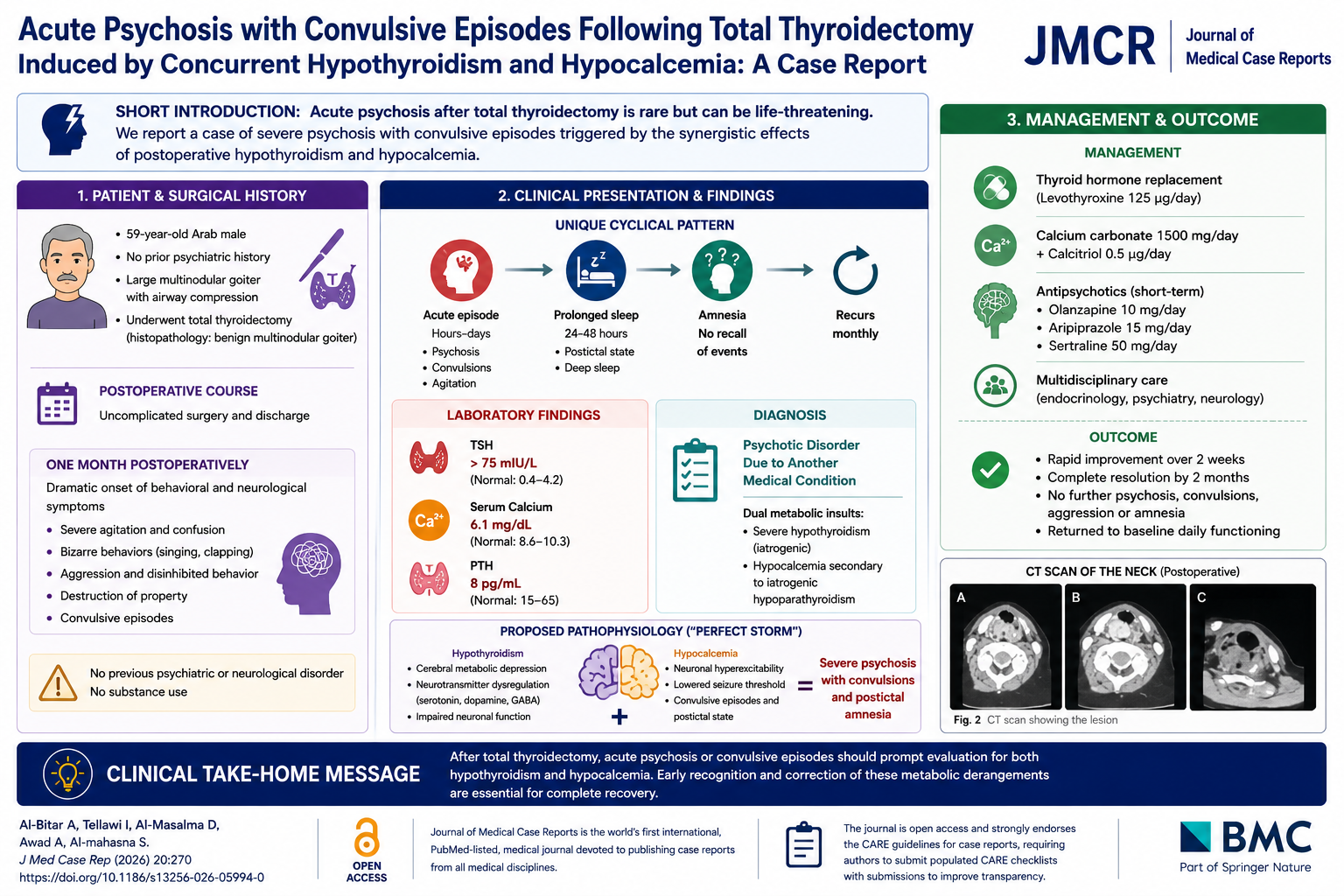
In this report, Al-Bitar and colleagues describe a 59-year-old Arab man with no psychiatric history who developed severe psychosis and convulsive episodes one month after total thyroidectomy performed for a large compressive multinodular goiter.
The patient initially underwent uncomplicated total thyroidectomy for a progressively enlarging thyroid mass causing airway compression. Histopathology confirmed benign multinodular goiter. One month postoperatively, however, he developed abrupt behavioral changes characterized by agitation, confusion, bizarre singing and clapping, aggression, destruction of property, and recurrent convulsive episodes.
A striking cyclical pattern emerged. Episodes recurred monthly and lasted hours to days, followed by prolonged sleep lasting up to 24–48 hours and complete amnesia for the events. Laboratory evaluation demonstrated profound metabolic derangements with thyroid-stimulating hormone (TSH) levels >75 mIU/L and severe hypocalcemia (6.1 mg/dL), consistent with concurrent iatrogenic hypothyroidism and hypoparathyroidism-induced hypocalcemia.
The authors diagnosed psychotic disorder secondary to another medical condition caused by dual metabolic insults. Treatment included levothyroxine, calcium carbonate, calcitriol, olanzapine, aripiprazole, and sertraline. Clinical improvement was rapid, with complete resolution of psychosis, convulsions, aggression, and cyclical episodes within two months.
The discussion emphasizes the synergistic neuropsychiatric effects of hypothyroidism-induced cerebral metabolic depression and hypocalcemia-induced neuronal hyperexcitability. The authors further propose that the cyclical episodes with postictal somnolence may represent an epileptiform process masquerading as primary psychosis.
Why this case matters
- Highlights a rare but severe neuropsychiatric complication after thyroidectomy
- Demonstrates synergistic CNS dysfunction from concurrent hypothyroidism and hypocalcemia
- Reinforces that metabolic disturbances can mimic primary psychiatric disease
- Suggests possible epileptiform mechanisms underlying cyclical psychosis with postictal features
- Emphasizes the importance of postoperative endocrine monitoring after thyroid surgery
Clinical Take-Home Message
Acute psychosis, agitation, or convulsive episodes following thyroidectomy should immediately prompt evaluation for severe hypothyroidism and hypocalcemia, as rapid metabolic correction can lead to complete neurological and psychiatric recovery.
Question:
What metabolic combination most likely precipitated this patient’s neuropsychiatric syndrome?
A. Hyperthyroidism and hypercalcemia
B. Hypothyroidism and hypocalcemia
C. Hypernatremia and hyperglycemia
D. Hypomagnesemia and hyperparathyroidism
Correct answer: B. Hypothyroidism and hypocalcemia
Explanation:
The patient developed concurrent severe hypothyroidism and postoperative hypocalcemia secondary to hypoparathyroidism after total thyroidectomy. The authors propose that the combination of cerebral metabolic depression and neuronal hyperexcitability produced the severe psychotic and convulsive presentation.
Journal of Medical Case Reports is the world’s first international, PubMed-listed, medical journal devoted to publishing case reports from all medical disciplines and will consider any original case report that expands the field of general medical knowledge, and original research relating to case reports. The journal is open access, and strongly endorses the CARE guidelines for case reports, requiring authors to submit populated CARE checklists with submissions to improve transparency in reporting.
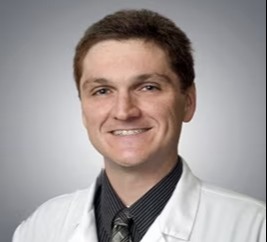
Richard Alan Rison is the interim Editor-in-Chief of Journal of Medical Case reports. He is also an associate neurology editor (editorial board) for BMC Neurology, and the former lead editor for case reports of BMC Research Notes (currently on the editorial board). His scholarly work focuses on medical case reporting, reporting standards, and editorial methodology. Dr. Rison participated in the development and dissemination of the CARE guidelines for clinical case reporting and has authored numerous publications addressing both neurological disorders and the role of case reports in advancing medical knowledge. Dr. Rison practices general neurology and served as the founding medical director of the PIH Health Hospital-Whittier Stroke Program and the PIH Health Hospital-Whittier Non-Invasive Vascular Laboratory, is a clinical assistant professor of neurology at the University of Southern California Keck School of Medicine and Los Angeles County Medical Center, and is a Fellow of the American Academy of Neurology, the American Neurological Association, and the American Association of Neuromuscular and Electrodiagnostic Medicine. Dr Rison is board-certified by the American Board of Psychiatry and Neurology in neurology and vascular neurology, and neurocritical care and neuroimaging by the United Council of Neurologic Subspecialties. He is also board-certified by the American Board of Electrodiagnostic Medicine in electrodiagnostic medicine. Dr. Rison is a former president of the Los Angeles Neurological Society.
Follow the Topic
-
Journal of Medical Case Reports
This journal will consider any original case report that expands the field of general medical knowledge, and original research relating to case reports.


Please sign in or register for FREE
If you are a registered user on Research Communities by Springer Nature, please sign in