Are jet streams just fast winds?
Published in Earth & Environment

Jet streams shape the weather we experience, from day-to-day variations to severe events like heatwaves and winter storms. Locating and tracking jets is therefore essential for understanding and predicting the atmosphere, but doing so is easier said than done.
The problem with defining jets
Jet streams are typically thought of as narrow bands of fast winds at high altitudes, around 10 kilometers. If we imagine pinwheels tall enough to reach these heights, we could say that the jets are located where the pinwheels spin the fastest at any given moment. This is the 'Eulerian' perspective.
The problem is, several pinwheels can be spinning fastest at the same time, each within their own local neighborhoods. Where is the jet stream, then? Moreover, from one hour to the next, the fastest-spinning pinwheels can appear in completely different regions thousands of kilometers apart, implying that the jet stream (if defined this way) is traveling at speeds that are not physically possible on Earth.
Something is missing in this definition: continuity in space and time. As a result, jet tracking methods based on it often require ad hoc heuristics (smoothing, filtering, and other manual corrections) to produce the desired output, which reduces robustness and reproducibility.
Why we needed an alternative definition
The project grew out of practical need: I needed reliable jet locations for another study. Specifically, I needed jet axes that consistently trace the dynamically active edge of evolving weather systems. At the time, I was a postdoctoral fellow at Harvard University, and a fortunate opportunity arose when Jezabel Curbelo visited from Universitat Politècnica de Catalunya.
A different way to look at the atmosphere
An expert in complex dynamical systems, Jezabel brought with her a view of the atmosphere not as a series of snapshots (as in the pinwheel analogy above), but rather as a large collection of paths shaped by the wind. This 'Lagrangian' view explicitly accounts for how the wind evolves over time, making full use of the information it contains.
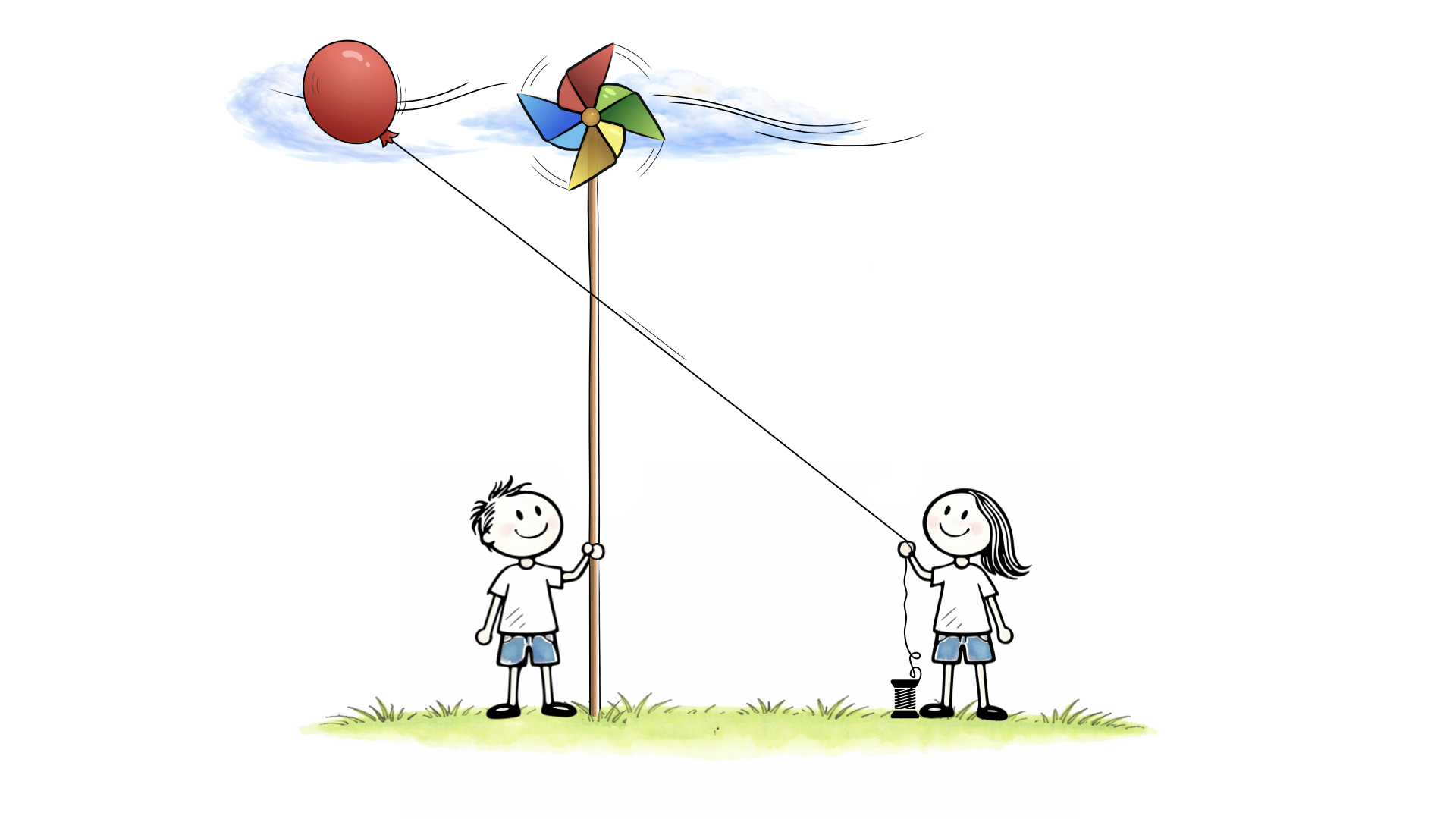
But once time enters the picture, the pinwheel analogy is no longer appropriate. Instead, imagine weightless balloons attached to very long strings. Once released into the wind at high altitude, the balloons are left to be carried by the wind over several days. In this view, the jet streams emerge as elongated air corridors within which balloons travel farthest.
Where things became difficult
The first task was to release and track over eight billion fictitious balloons within a historical reconstruction of the atmosphere. Though computationally expensive, these calculations can be performed on a high-performance computing system within days. The real challenge was to determine how jets could be extracted from the resulting data.
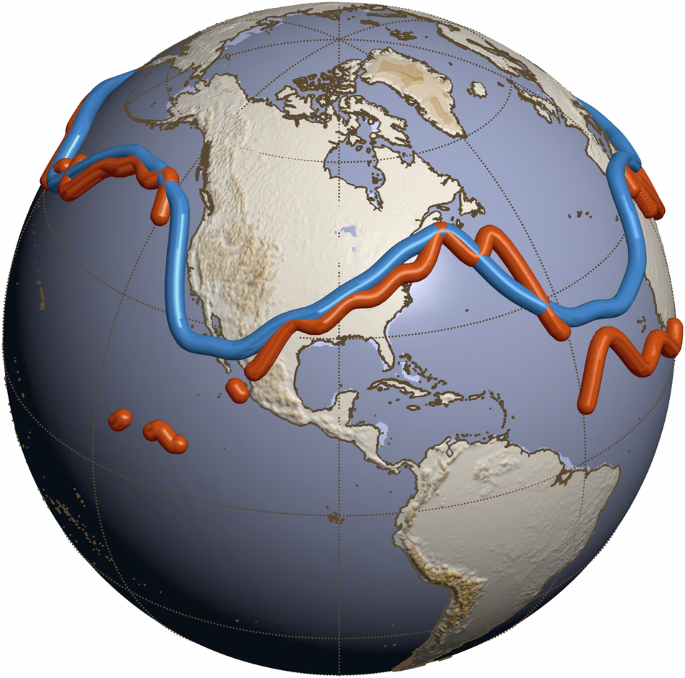
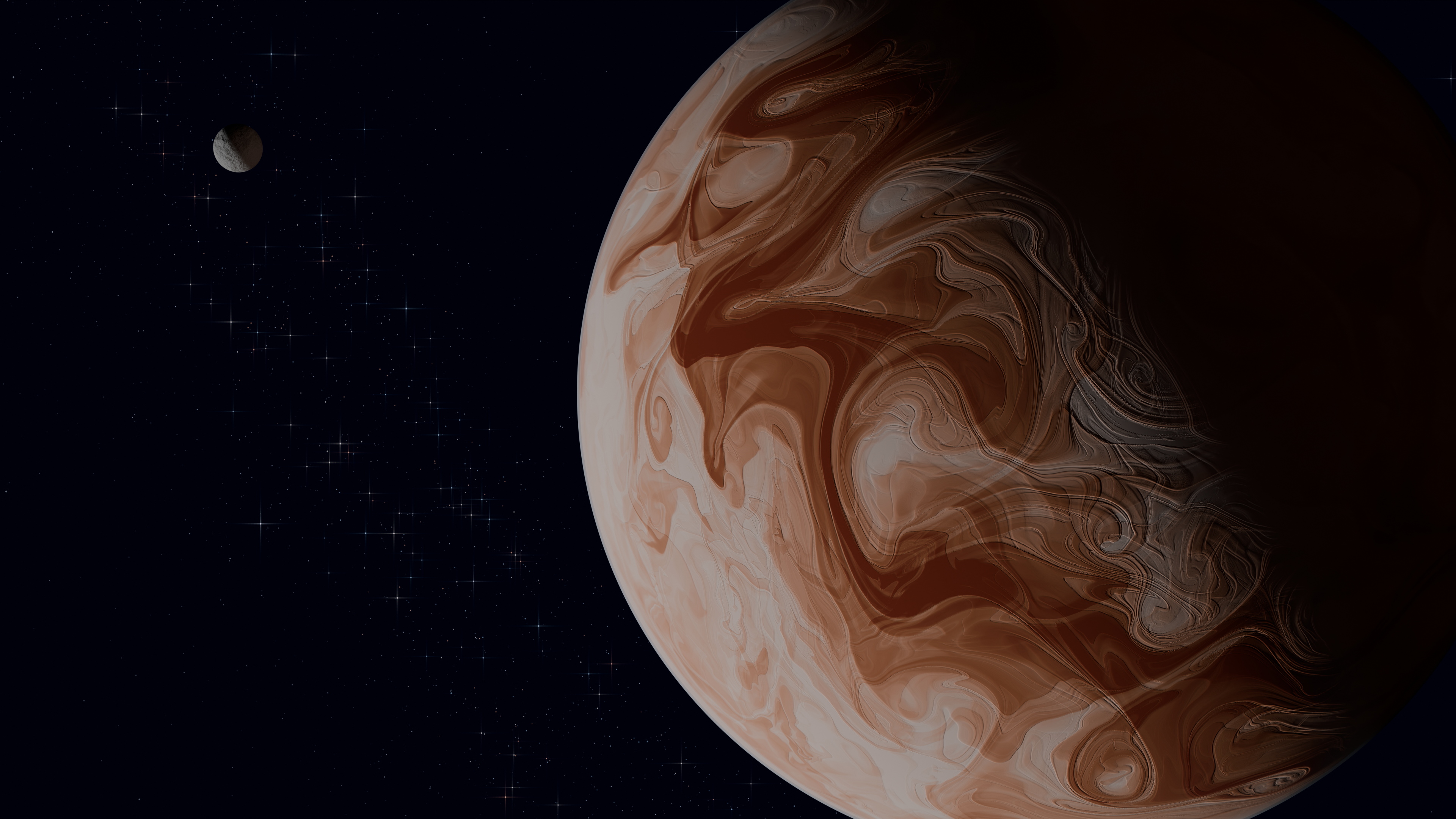
In the Lagrangian view, jets correspond to invisible ridges in the atmosphere that organize the movement of air—the 'backbone' of the atmosphere, in a sense. This backbone is easily identifiable by eye in visualizations like the one below, but identifying it algorithmically is another matter altogether.
©Louis Rivoire. All rights reserved. Please credit if shared.
We experimented with edge-detection and skeletonization techniques, hierarchical segmentation, shortest-path algorithms, and even hydrological software designed to trace watersheds. None reliably captured the structures we sought, and I started thinking that we would have to give up on a significant part of the innovation.
The key insight
I secured a grant to go work with Jezabel at the Centre de Recerca Matemàtica (CRM) near Barcelona, Spain, and hopefully find a breakthrough.
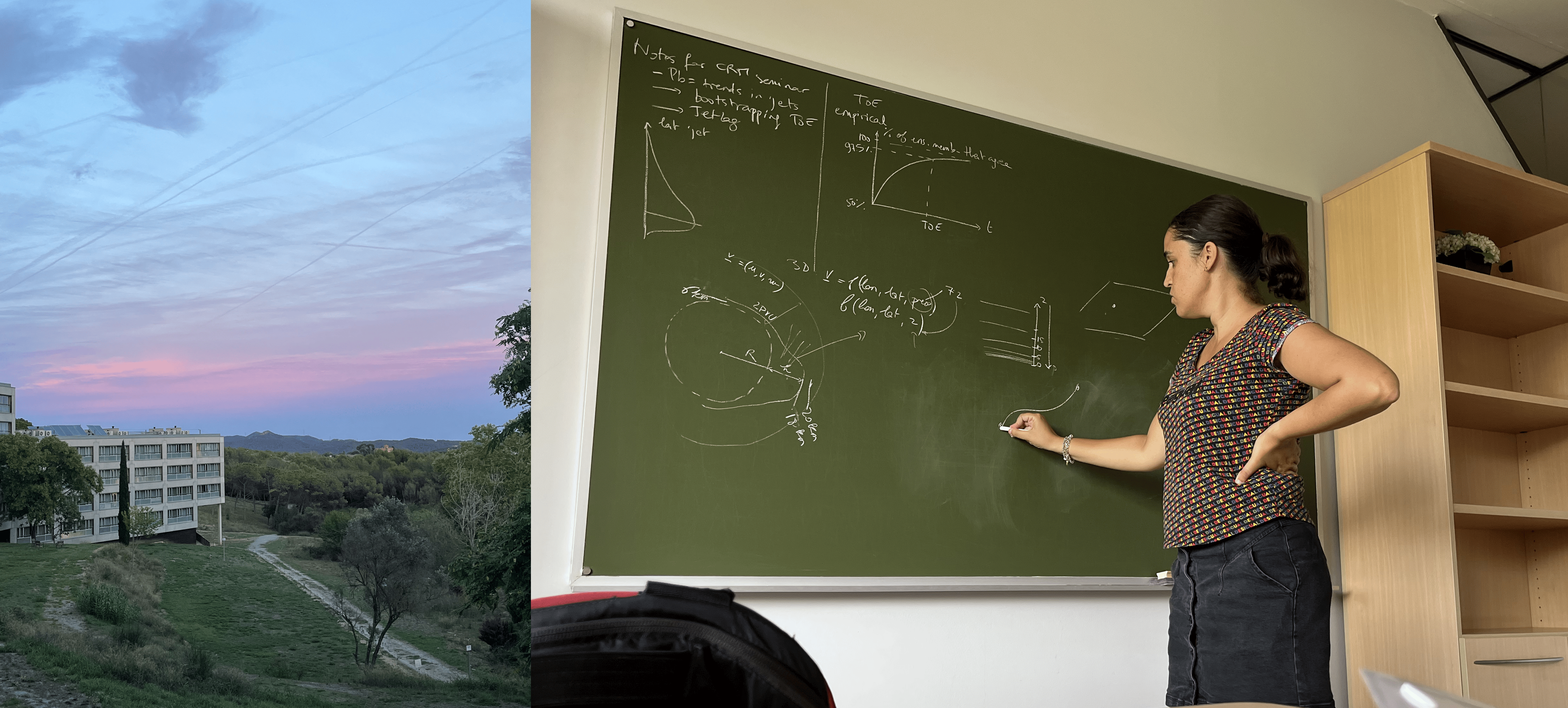
Jezabel and I burned the midnight oil at CRM when the key insight emerged: the backbone of the atmosphere could not be rebuilt from features detected using local information. Instead, it had to be identified as a single coherent structure using global information. Geophysical fluid dynamics theory, in turn, constrained the spatial scales of its undulations.
This observation led us to a powerful technique called 'penalized forward–backward greedy selection'. 'Greedy' means selecting features that connect most strongly based on local information. 'Forward–backward' means first assembling connected features, then removing those that weaken the overall connectivity, thereby incorporating the global information we were missing. 'Penalized' ensures that undulations in the overall structure remain within theoretical bounds.
Even then, the challenge was not over yet. We still needed to verify that the method does not artificially smooth jet features, that its computational demands are reasonable, and that it offers a physically meaningful representation of jets.
What was surprising
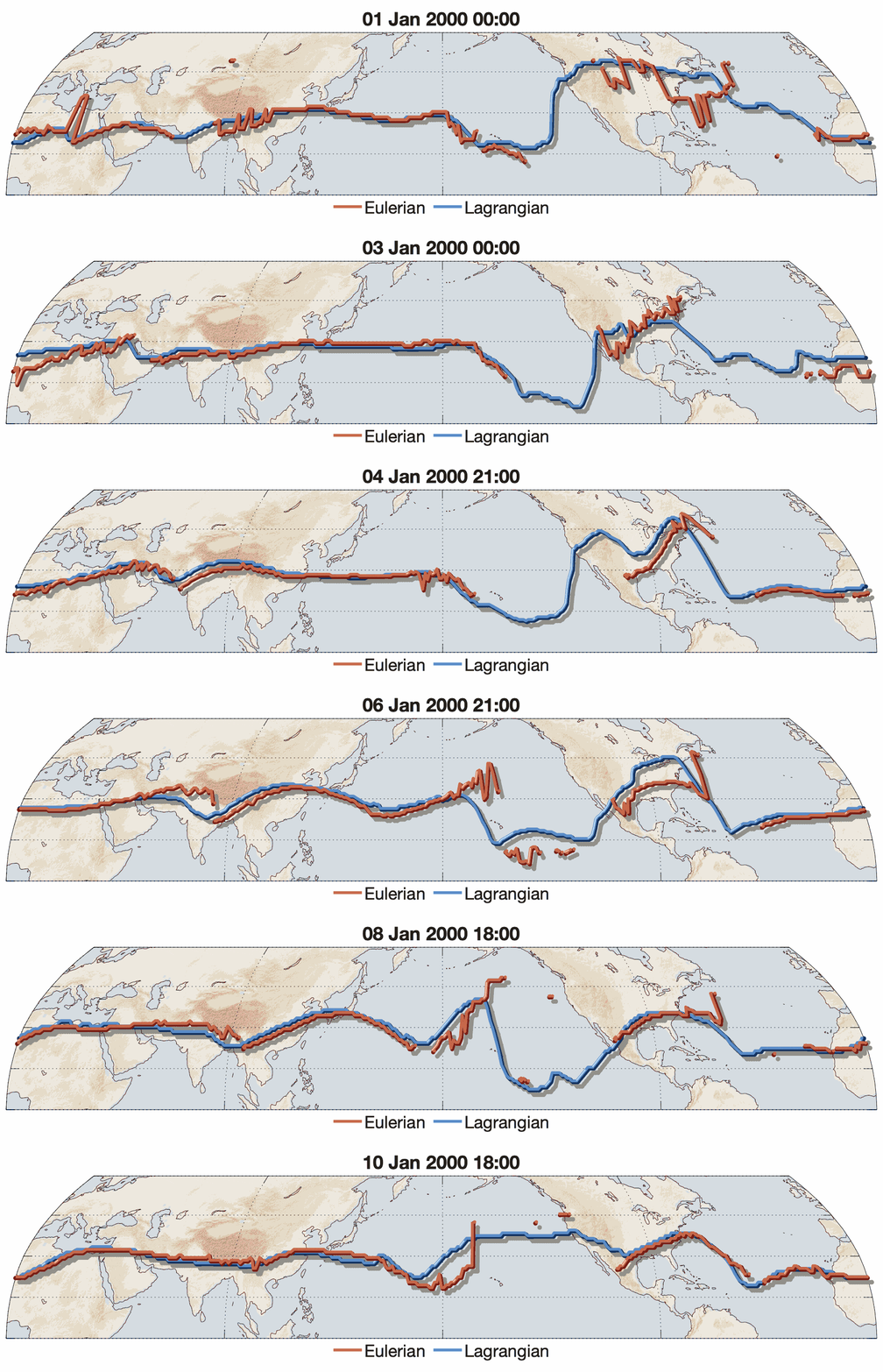
Ultimately, what surprised us was the performance of the method: the Lagrangian view identifies remarkably consistent jets with far fewer discontinuities than previous approaches, and it does so without hand-tuned parameters. The greedy detection algorithm is also computationally lightweight enough to run on a standard laptop.
What’s next
By tracking jets as coherent structures, we can ask new questions about why certain circulation patterns persist and how they may shift in the decades ahead. Jezabel and I are now using this framework to investigate how jet streams are evolving in a warming climate and how those changes may influence extreme weather. I am currently working at the Weizmann Institute of Science to understand how jet streams interact with storms—an interaction that ultimately shapes the weather people experience at the surface.

Atmospheric scientist with research experience at Harvard, MIT, the National Center for Atmospheric Research, and NASA's Jet Propulsion Laboratory.
Developer of rigorous computational methods for teasing out climate signals from background noise.
Chair of the "Lagrangian session" at the leading European body for climate science and geophysics.
Passionate about satellite imagery, computational art, and scientific outreach.
Follow the Topic
-
Communications Earth & Environment
An open access journal from Nature Portfolio that publishes high-quality research, reviews and commentary in the Earth, environmental and planetary sciences.

Related Collections
With Collections, you can get published faster and increase your visibility.
High-resolution modeling for Earth system
Publishing Model: Open Access
Deadline: Feb 07, 2027
Soil microbiomes and carbon sequestration under global change
Publishing Model: Hybrid
Deadline: Mar 18, 2027