Behind the paper: A revised early Jurassic to Albian chronology for dinosaur evolution in tropical Asia
Published in Earth & Environment and Ecology & Evolution
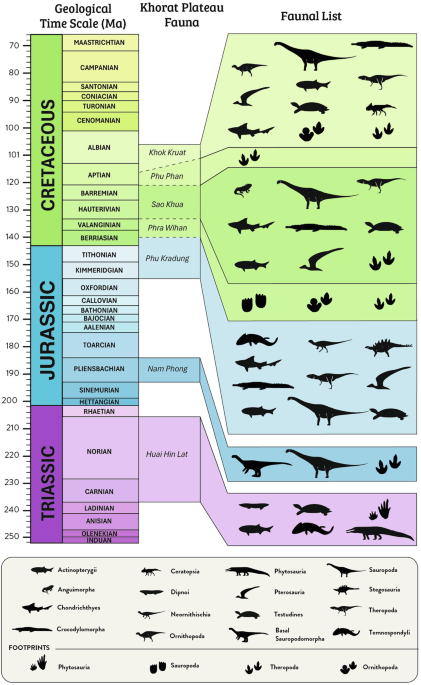

For more than 50 years, dinosaur fossils have been discovered throughout Thailand. The most prolific location for dinosaur fossil is the Khorat Plateau, where numerous geological units, covering a significant part of the Mesozoic (the era spanning from 252 to 66 million years ago), yield new fossils of various age every year (see, for example, some of the fossils already published this year, here and here). However, these dinosaurs and their associated fauna typically exhibit broad temporal ranges and thus do not provide any precise information about their age; moreover, no volcanic ash layers (which could be dated with geochronological techniques) have been identified within these deposits. The chronological framework for the dinosaurs of the Khorat Plateau has thus largely relied on approximate age estimations. Without a clear chronological framework, comparing the dinosaurs of Thailand with other dinosaur fauna has always been complex.
Beyond the clear need for tighter age constraints, this paper is actually born from three causes: a long-term paleontological collaboration between French and Thai paleontologists, a transatlantic move, and a 4-days fieldtrip after the 2022 IPC conference.
The Thai-French research team pioneered dinosaur excavation efforts in Thailand in the late 1970’s and has maintained this partnership over time (with iconic discoveries, such as the earliest sauropods and tyrannosaurids on record at their time of discovery). Jeremy Martin, Phornphen Chanthasit, Komsorn Lauprasert and Supanut Bhuttarach perpetuate this long-standing collaboration since the late 2000’s. Martin and Chanthasit met in 2007 while being Ph.D. students at the same laboratory at the University de Lyon, working on Thai Mesozoic material (Martin specialized in crocodiles and Chanthasit in dinosaurs). Meanwhile, Ditbanjong was studying Thai stratigraphy at the University de Lille 1. They have been working together since then, notably on refining the fossil record of crocodylomorphs (see, for example, here and here).
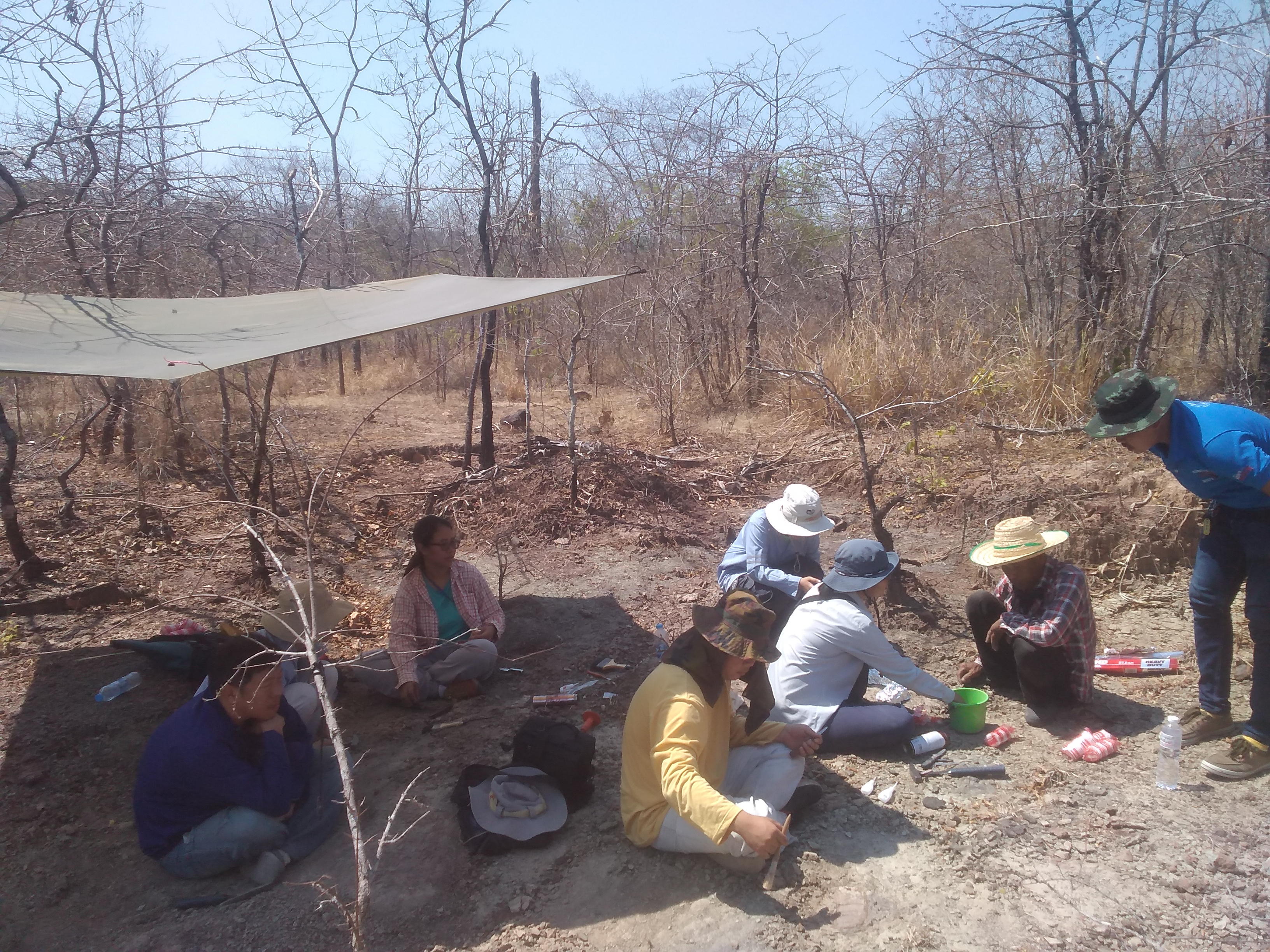
at a new locality of the crocodylomorph Chalawan thailandicus.
Chanthasit is second to the left.
Alexis Licht has always worked at the interface of Geology and paleobiology. A significant part of his work has so far consisted in dating
Licht’s primary motivation was actually to look for late Cretaceous and early Paleogene (80 – 50 Ma) paleoclimatic records in Thailand. But identifying paleoclimatic records requires to date sedimentary sections first. Licht had been working for almost a decade in Myanmar, acquiring the earliest monsoonal records of southeast Asia at that time, and was looking to extend this record further back in time in a neighboring country. Following the coup of 2021, some of the closest Burmese academic collaborators of Licht had been arrested or fired, abruptly stopping all international scientific exchanges. Still today, in 2026, the situation of Burmese academics is intolerable and working there is dangerous for them as for foreign researchers.
Licht, Martin, Chanthasit, and Ditbanjong met at the International Paleontology Congress (IPC) 2022 meeting in Khon Kaen and went on a 4-days fieldtrip all over the Khorat Plateau to visit paleontological localities and sample sandstones and terrestrial carbonates to date them. Samples were completed by sandstones blocks stored in the collections of the Sirindhorn Museum and shipped to CEREGE in France.
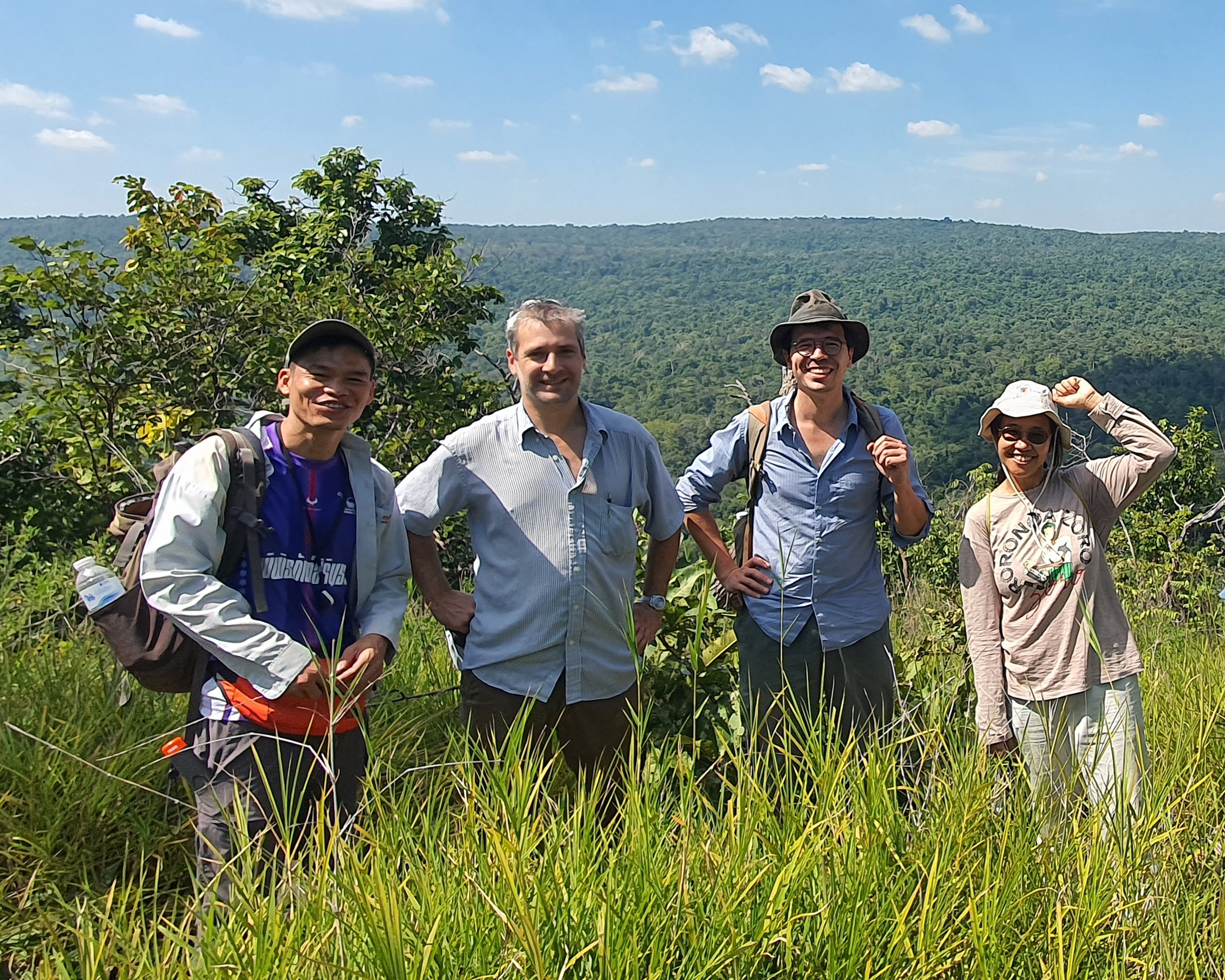
on the Khorat Plateau in 2022.
The ENVITOP mass spectrometry facility at CEREGE, operated by Abel Guihou and Pierre Deschamps, is the first laboratory to have acquired U-Pb ages on carbonates in France
Unlike ash dating, detrital zircon dating does not provide estimate on the “true” depositional ages of geological strata. These zircons are relics of the ancient volcanic arcs surrounding the Khorat Plateau; they were eroded and redeposited within the sandstones bearing dinosaur fossils. In this sense, detrital zircons are always older than the deposits they are found in (they relate to magmatic events that are anterior to the deposition of the strata): they provide maximum depositional age constraints. But if numerous volcanic arcs were present nearby, at the time of deposition, the maximum depositional ages are often close to the “true” depositional age. For some of the geological units of the Khorat Plateau, we show that this was likely the case.
The two major findings of our paper are the rejuvenation of the sauropod-bearing Nam Phong Formation –once thought to hold the oldest sauropods on record—and the tight age constraints for the Phu Kradung Formation, the age of which was previously highly debated. Importantly, our new chronology for the Khorat Plateau fauna provides a robust framework to compare with the abundant and diversified dinosaur fossil record at a global scale, notably with dinosaur localities from Asia, Australia, Africa, Europe and the Americas.
Our new ages are somewhat comforting because they align with ages that were previously proposed for these units based on sauropod, shark
The new ages for the upper part of the Khorat Plateau sequence, dominated by dry mudflats and aeolian dunes deposits, confirm a phase of extreme aridity and a decline of monsoonal activity during the middle Cretaceous, 100 to 80 million years ago, previously shown by climate simulations
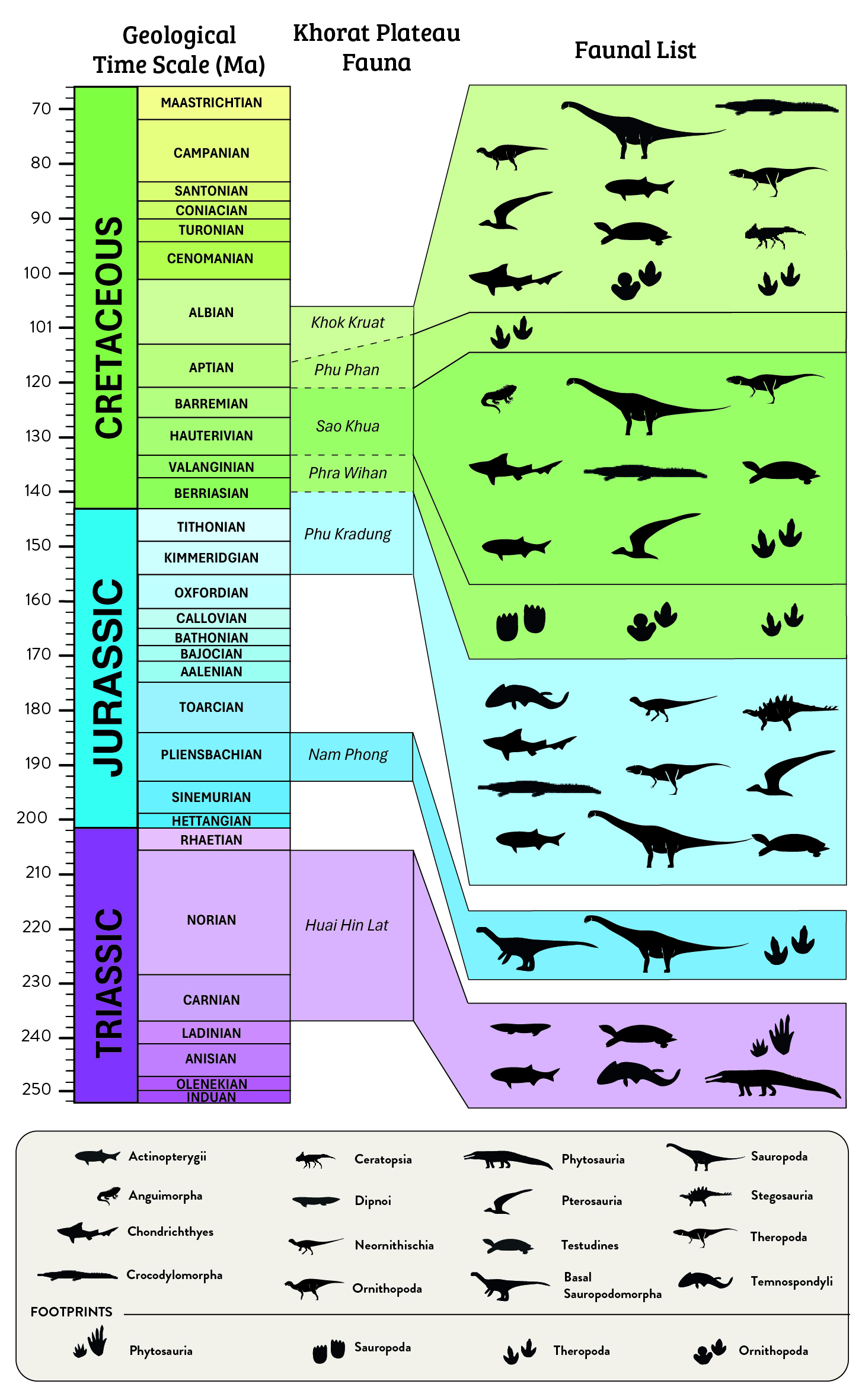
proposed by detritral zircon dating.
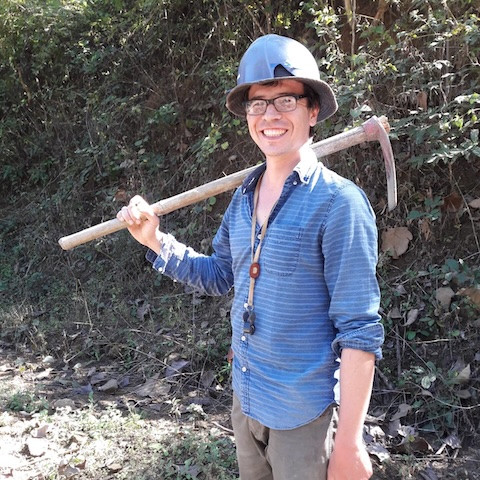
I use sedimentary archives to study the links between Climate, Tectonics, and Life through geologic time. My work involves geological fieldwork and sampling, geochemical and geochronological analyses. I date sedimentary deposits and decipher their sedimentological and geochemical features to reconstruct past climates, paleogeographies, and ecosystems. I closely collaborate with structural geologists, paleontologists, paleobotanists, and other sedimentary geologists to address biogeographical and geological questions in the deep-time (million of years).
Follow the Topic
-
Communications Earth & Environment
An open access journal from Nature Portfolio that publishes high-quality research, reviews and commentary in the Earth, environmental and planetary sciences.

Related Collections
With Collections, you can get published faster and increase your visibility.
High-resolution modeling for Earth system
Publishing Model: Open Access
Deadline: Feb 07, 2027
Soil microbiomes and carbon sequestration under global change
Publishing Model: Hybrid
Deadline: Mar 18, 2027