Behind the Paper: Global genomic surveillance uncovers emergence and spatiotemporal patterns of World Health Organization priority antibiotic resistance in invasive Salmonella
Published in Biomedical Research



Behind the Paper: Tracing the global footprints of priority drug-resistant Invasive Salmonella
When a patient with an invasive Salmonella infection arrives at a hospital, clinicians often face a difficult decision: which antibiotic to prescribe before laboratory results come back. Invasive salmonellosis develops when Salmonella disseminates from the intestinal tract and invades the bloodstream, and it may progress rapidly, especially in young children, the elderly, and immunocompromised individuals. Yet antibiotic resistance does not respect borders.
This clinical reality was the driving force behind our study, recently published in Nature Communications (Pei, Y., Yang, Z., Pang, X. et al. Global genomic surveillance uncovers emergence and spatiotemporal patterns of World Health Organization priority antibiotic resistance in invasive Salmonella. Nat Commun (2026). https://doi.org/10.1038/s41467-026-76354-1). We set out to answer a fundamental question: Where, when, and how is WHO-priority antibiotic resistance emerging in invasive Salmonella worldwide?
The genomic detective work
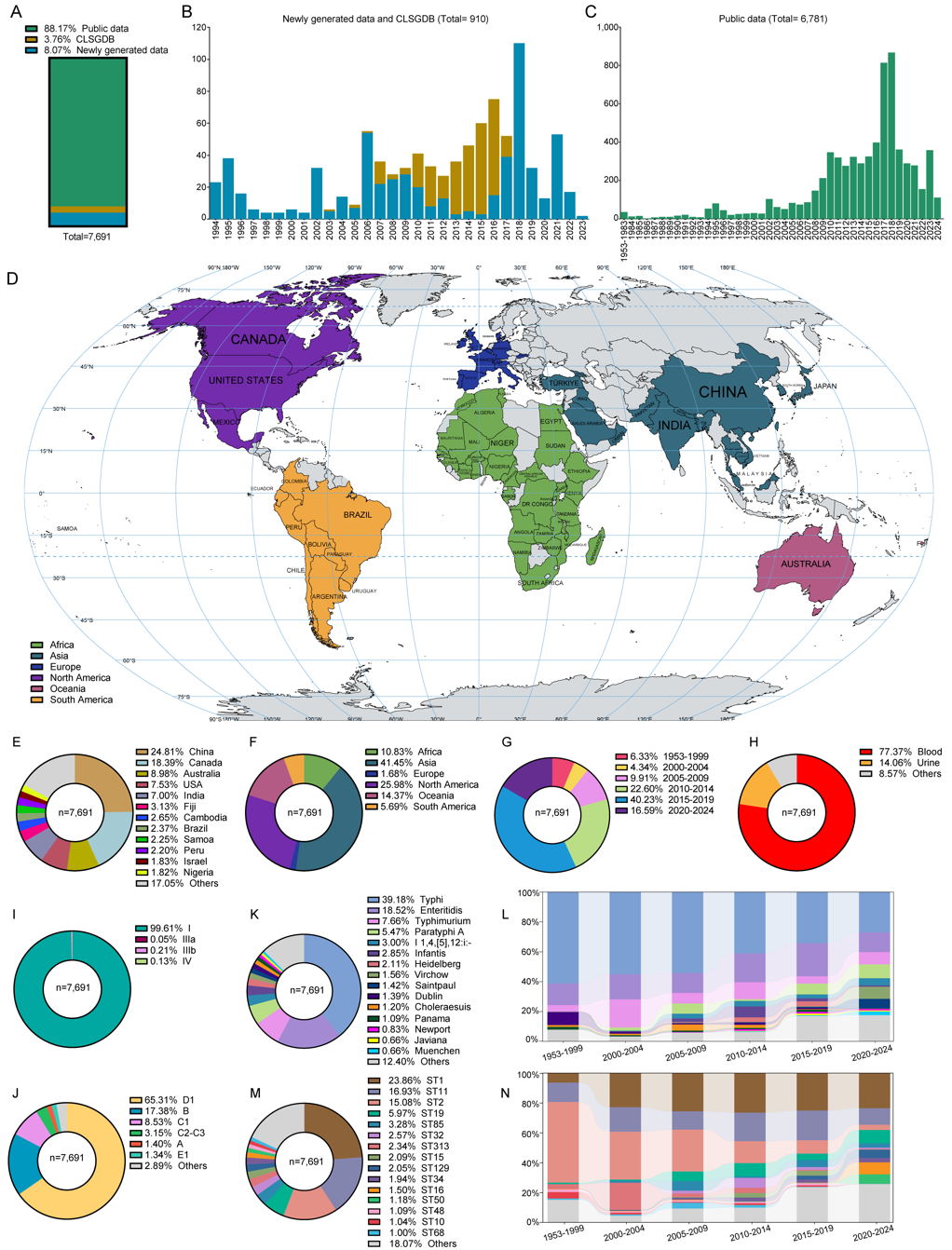
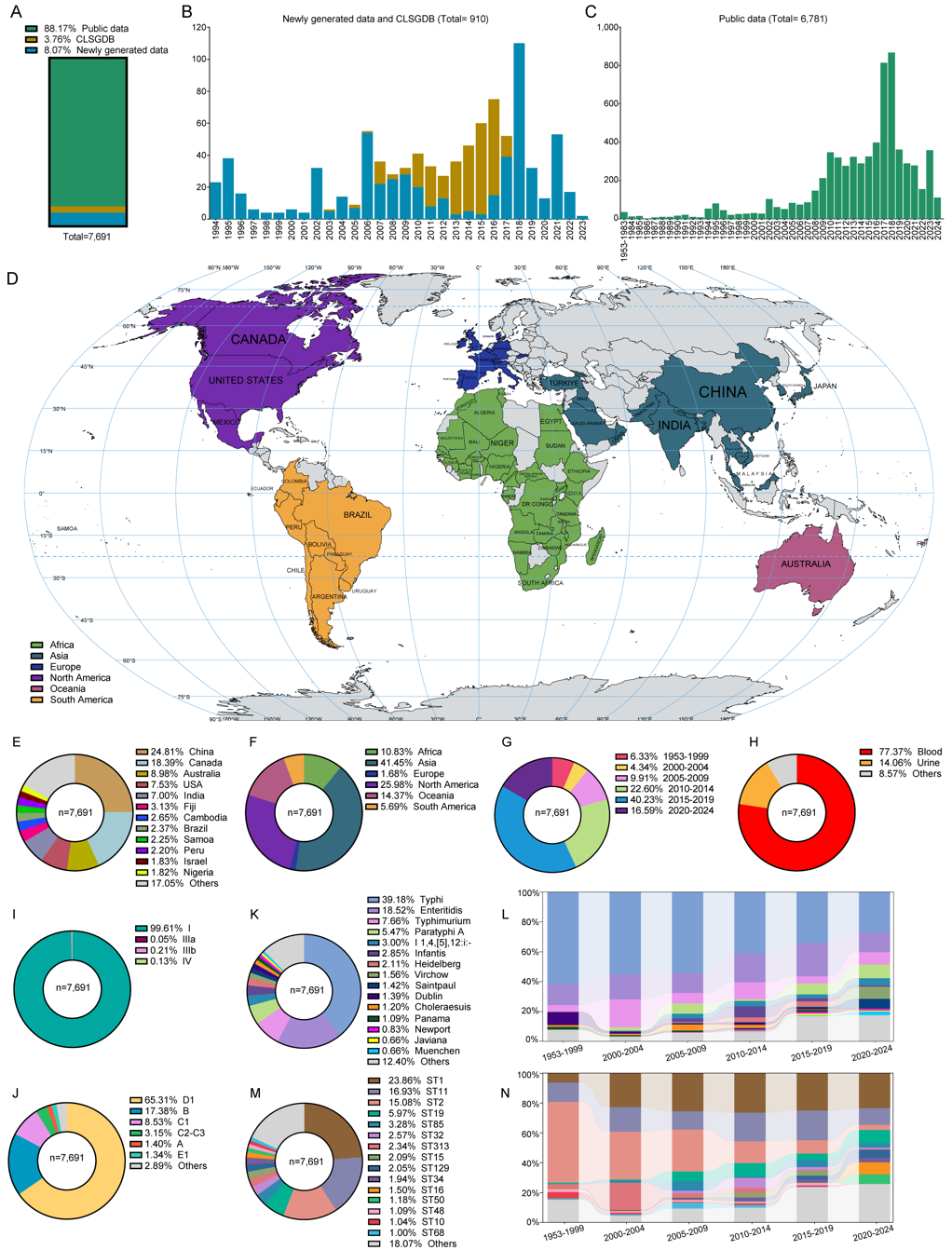
Antimicrobial resistance (AMR) in invasive Salmonella is an escalating global health threat, but its global trends and genomic‑scale data have remained poorly understood. To address this gap, we assembled and analysed 7,691 Salmonella isolates derived from national surveillance systems and publicly available datasets spanning 1954 to 2024. These isolates originate from 77 countries, allowing us to map resistance patterns across broad geographical and temporal scales.
Our workflow integrated whole‑genome sequencing with epidemiological and geospatial analyses. High‑resolution genomic profiling of individual isolates enabled us to differentiate closely related strains and pinpoint mutations or horizontally acquired genetic fragments driving AMR. By pairing genomic data with sampling dates and geographic metadata, we estimated the emergence timings, expansion dynamics, and cross‑region dispersal of resistant lineages.
A global map of WHO priority drug resistance
The results painted a sobering picture. Among 77 countries, 29 (37.7%) had at least one isolate with resistance or decreased susceptibility to ciprofloxacin, a fluoroquinolone antibiotic critical for treating invasive infections. Twenty‑five countries (32.5%) reported resistance to ceftriaxone, and 29 (37.7%) to cefixime, which are both third‑generation cephalosporins (3GCs). Eight countries (10.4%) had isolates resistant to azithromycin, 15 (19.5%) to fosfomycin, and 10 (13.0%) to colistin.
Globally, 7.39% of the 7,691 isolates showed resistance or decreased susceptibility to ciprofloxacin, 7.91% to 3GCs, 4.23% to fosfomycin, and 0.79% to azithromycin. Of particular note are the shifting temporal patterns: global azithromycin resistance is on the rise, alongside rising resistance or decreased susceptibility to ciprofloxacin, 3GCs, and even fourth‑generation cephalosporins (4GCs).
Uneven surveillance, hidden threats
One of our most important findings was not about resistance itself, but about our ability to detect it. Surveillance levels remain inadequate in African and South American regions. This means the true burden of resistance in these areas is likely underestimated. Without robust genomic surveillance, resistant strains can emerge and spread undetected, eventually reaching regions with better monitoring systems through travel or trade.
We also found that resistance in invasive Salmonella is driven by multiple evolutionary processes rather than a single universal outbreak. Some resistance patterns are associated with the expansion of particular clonal groups, near‑identical descendants of a common ancestor, while others appear to have been assembled through repeated horizontal gene transfer, where bacteria exchange genetic material directly or acquire DNA from their surroundings. This distinction matters for public health: containing a single expanding lineage requires tracing transmission and interrupting its spread, whereas mobile resistance elements demand broader monitoring across food systems, hospitals, communities, and animal populations.
From data to policy
We generated a global map of clinically key antibiotic resistance genes from invasive Salmonella infections. This retrospective, global, longitudinal genomic epidemiology study provides evidence‑based data for clinical guidelines, genomic surveillance, AMR control, and public health policies.
But maps are only useful if they guide action. Our findings highlight the urgent need for enhanced high-quality genomic surveillance, especially in regions where data are scarce. They also underscore that antibiotic resistance is not a uniform phenomenon—different lineages, different resistance mechanisms, and different geographies require tailored responses.
A collaborative effort
This work was made possible by an extensive network of collaborators. We are grateful to all researchers of the Chinese Local Surveillance System for Salmonella and everyone who participated in this study, particularly those involved in sampling, laboratory work, and data collection. We also thank all researchers who have uploaded their genomic data to public databases like NCBI. Their openness transformed this project from a regional effort into a truly global one.
Looking ahead
Our study is a snapshot, not a final answer. AMR evolves continuously, and new resistance genes emerge as antibiotics are used and misused. The genomic surveillance infrastructure we helped build must become permanent, not episodic. We hope our work serves as a foundation, a global baseline against which future changes can be measured.
In the end, this project was driven by a simple conviction: that genomic data, when shared and analyzed collectively, can save lives. Every resistant strain we identify today is an opportunity to adjust treatment guidelines, strengthen surveillance, and prevent the next difficult-to-treat infection. The bacteria are evolving—but so are our tools to track them.
Reference
1. Pei, Y., Yang, Z., Pang, X. et al. Global genomic surveillance uncovers emergence and spatiotemporal patterns of World Health Organization priority antibiotic resistance in invasive Salmonella. Nat Commun (2026). https://doi.org/10.1038/s41467-026-76354-1.
2. Wang, Y.N., Xu, X.B., Pei, Y. H., et al. Genomic epidemiology of clinically critical antibiotic resistance in Salmonella enterica causing bloodstream infections across six Chinese provinces, 1994-2023. Microbiol Res 2026, 313: 128691. DOI: 10.1016/j.micres.2026.128691.
3. World Health Organization. WHO bacterial priority pathogens list, 2024: Bacterial pathogens of public health importance to guide research, development and strategies to prevent and control antimicrobial resistance. World Health Organization, doi:https://www.who.int/publications/i/item/9789240093461 (2024).
4. Wang, Y.N., Liu, Y., Lyu, N., et al. The temporal dynamics of antimicrobial-resistant Salmonella enterica and predominant serovars in China. Natl Sci Rev 10, nwac269, doi:10.1093/nsr/nwac269 (2023).
5. Wang, Y.N., Xu, X.B., Zhu, B.L., et al. Genomic analysis of almost 8,000 Salmonella genomes reveals drivers and landscape of antimicrobial resistance in China. Microbiol Spectr 11, e0208023, doi:10.1128/spectrum.02080-23 (2023).
6. Wang, Y.N., Xu, X.B., Zhu, B.L., et al. Enhanced Genomic Surveillance Is Essential for Effective Salmonella Outbreak Response. China CDC Weekly 7, 880-881, doi:10.46234/ccdcw2025.151 (2025).
7. Lv, P.P., Pei, Y.H., Jiang, Y., et al. Genomic insights into antibiotic-resistant non-typhoidal Salmonella isolates from outpatients in Minhang District in Shanghai. Commun Med 5, 228, doi:10.1038/s43856-025-00950-3 (2025).
Follow the Topic
-
Nature Communications
An open access, multidisciplinary journal dedicated to publishing high-quality research in all areas of the biological, health, physical, chemical and Earth sciences.

Related Collections
With Collections, you can get published faster and increase your visibility.
Women's Health
Publishing Model: Hybrid
Deadline: Ongoing
Data for AI, AI for Data: cross-disciplinary cleaning, processing and analysis approaches
Publishing Model: Open Access
Deadline: Dec 31, 2026