Behind the Scenes of the Intercultural Legacy Project
Published in Social Sciences, Behavioural Sciences & Psychology, and Arts & Humanities

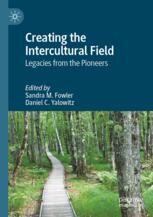

What you can find in the book, Creating the Intercultural Field: Legacies from the Pioneers, is not only a record of the field’s early days but an exploration of how social science knowledge emerges from practice, reflection, and community.
Thinking about the origins of academic disciplines and concomitant practitioner fields, wouldn’t it be nice if we could ask Freud or Jung to tell us about the beginnings of psychology when there was no such thing as a psychologist because they didn’t exist. Or perhaps we might want to ask Auguste Comte about the beginnings of sociology. Many, if not most of the social science professions and their counterparts in research and academia had their beginnings so long ago that their founders and early practitioners have left this earth.
It happens that the intercultural communication field is young enough that some of the early creators and implementors of the field (now in their 80s and 90s) are still with us. When asked, a dozen were delighted to write their stories—how they forged careers when becoming an interculturalist had no clear path. There were no templates, no established curriculum, no textbooks, but we found each other and shared our ideas, methods, knowledge, and skills to inform each other and by so doing, we forged a new discipline.
We credit Edward T. Hall as the founder of interculturalism, briefly defined as a perspective holding that the distance between cultures can be bridged with knowledge about intercultural communication and intercultural relations. Hall’s early books such as The Silent Language (1959) provided the basis for research that laid a foundation from which professionals in the late 1950s and 1960s built practical applications. The intercultural field emerged in the United States in the 1960s, a decade instrumental in the rapid development of this new field. The post-war world combined with American idealism inspired John F. Kennedy to form the US Peace Corps and a plethora of American corporations expanded abroad. It was a time of inspiration and opportunity that helped craft the work of interculturalists.
Our attempt to capture the experience of the early days of interculturalism quickly became a collaborative effort. I had assumed the responsibility over many years of writing memorials and obituaries of passing interculturalists for publication in SIETAR (Society for Intercultural Education, Training, and Research) newsletters. So, the immediate impetus for contacting the elders of the field was to capture their stories in their own words to be used as needed in future obituaries. Joined by a colleague, Daniel Cantor Yalowitz, an author, longtime friend, and interculturalist of note (but too young to be counted as an old-timer) we drew up a list, and we began contacting potential contributors. After our first Zoom meeting with all the contributors, we all agreed: we had a book. Also at our first meeting, we decided that we would share early drafts of our chapters with each other for feedback, questions, and comments. So, collaboration – across individuals, relationships, and cultures – became a major theme of this endeavor, which we entitled The Intercultural Legacy Project (ILP). Such collaboration mirrors the broader value of the social sciences that Social Science Matters seeks to highlight: knowledge grows when people cross boundaries—disciplinary, cultural, and generational.
We thoroughly enjoyed renewing and building new acquaintances, catching up, and remembering old times. All the contributors knew me but not necessarily each other—although they were all familiar with each other by reputation and publications. This commitment to connection has always been central to intercultural work, and it quickly became the foundation of our process as well. I confess that as co-editors, Daniel and I didn’t know what to expect since the contributors were octogenarians, however, the stereotypical images of people in their 80s didn’t fit this group. Enthusiastic, sharp, full of ideas, clear-headed, fun, curious, warm, inclusive. The breadth and depth of their memories was impressive.
Daniel and I asked the group to write their career stories in whatever style, design, or structure they were most comfortable with, providing only a brief style sheet to ensure some consistency across chapters. We didn’t want cookie‑cutter contributions; we hoped for creative and authentic accounts. Our one nonnegotiable request was that they describe the transformative learning experiences that led them to become interculturalists—those moments that shifted their perspectives on the world and on themselves. We also encouraged them to go beyond dates, times, and places, inviting reflection on the insights, growth, and challenges that shaped their lives. These reflections powerfully illustrate how a discipline is shaped through individual turning points as much as through formal institutions It became clear that interculturalism was the umbrella that our different lives fit under. Our goal was to show that as interesting as our individual narratives were, when taken together they formed the mosaic that became known as the field of intercultural relations. In the early days we were taking risks, trying to do things that hadn’t been done before.
Our book—and our process—have involved taking a number of risks, building a tiny community of collaborating contributors. In so doing, we’ve been able to demonstrate how collaboration enables us to integrate past, present, and future into this unique opportunity to delve into the building of a new field and ways of seeing the world from a rich and nuanced perspective. In sharing these stories, we hope to underscore how the social sciences continue to matter—because they are built on curiosity, connection, and the courage to imagine new ways of understanding our world.
Sandra Mumford Fowler, M.A., Editor
Daniel Cantor Yalowitz, Ed.D, Editor
This blog is part of the Social Science Matters Campaign, which champions original and authoritative research within the Social Sciences. Find out more by exploring all Social Science Matters blogs or following the Campaign to keep up to date with all the latest news.

Follow the Topic
Introducing: Social Science Matters
Social Science Matters is a campaign from the team at Palgrave Macmillan that aims to increase the visibility and impact of the social sciences
Continue reading announcement
