Behind the Scroll: The Untold Story of Our Deep Dive into Men’s Health and Social Media
Published in General & Internal Medicine, Public Health, and Paediatrics, Reproductive Medicine & Geriatrics







The opportunity
When the editorial team at Springer Nature invited us to contribute a Behind the Paper article on our recent publication, Social Media and Men’s Health: Separating Science from Speculation in Andrology, we were naturally delighted. Whilst we initially might’ve hoped to share an epic, epiphanous story that brought this work to life, in reality, it emerged following an honest, off-the-cuff conversation between colleagues over coffee. In many ways, that humble beginning reflects the nature of the work itself: a straightforward review article tackling an important yet often overlooked research question head-on. As we give thought to World Sexual Health Day 2025, we are proud to share the motivations, questions and challenges that drove this work.
This review was shaped by the everyday realities faced in our andrology and reproductive health clinics, where we repeatedly encounter patients holding misconceptions and anxieties, often shaped by information found on social media. Interest in controversial men’s health topics, from unregulated testosterone supplements to semen retention, was seemingly being fuelled by viral posts and online influencers, rather than evidence-based science. As these experiences became increasingly common, curiosity gave way to concern, prompting us to ponder the broader relationship between men’s health and social media.
Where do patients now turn for health information online? Do they question the accuracy of what they see on social platforms? And how do they translate this newfound ‘knowledge’ into decisions about their sexual health?
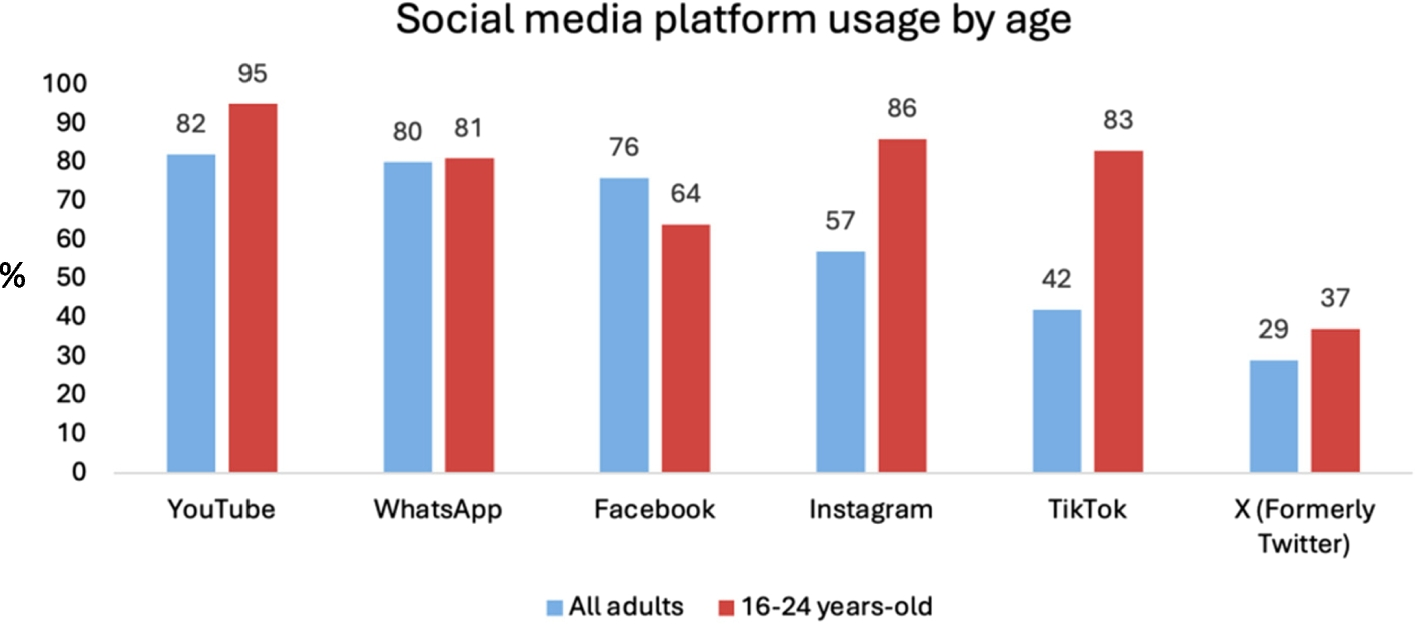
We embarked on a deep dive of popular men’s health topics on social media, aiming to determine the digital behaviours of adults in the United Kingdom and the credibility of the men’s health information they consume, whilst contextualising the findings with key clinical considerations and future research directions.
The current health information digital space
Patients have increasingly turned to the internet to search their symptoms. Their motivations are varied: some wish to feel better prepared for conversations with their doctor, whilst others look seek reassurance or even self-diagnosis. For men with concerns regarding their sexual and reproductive health, a quick scroll or anonymous search can be seen to be an accessible first-step. However, whilst this might have previously taken place on traditional search engines like Google, many individuals now turn to social media.
Searching the internet has always carried inherent risks of unpredictability or inaccuracy. Yet, traditional search engines are accepted to favour high-traffic, reputable websites, providing a degree of stability in the information returned. Social media operates somewhat differently, thriving on clicks, views and comments, reinforced by consumptive algorithms that reward engagement and spectacle. The result is a powerful feedback loop: the more a person interacts with a particular topic or creator, the more similar content they are shown, reinforcing beliefs and amplifying messages – whether accurate or not. Social media, originally designed as a tool for communication and connection, has rapidly evolved into a primary source of health information. For men navigating concerns about their sexual and reproductive health, this shift raises pressing questions about the reliability of health information in the digital era. These challenges are compounded by the stigma and taboo surrounding sexual health, which can discourage patients from discussing their symptoms or seeking clarification about the information they encounter online.
Men’s health coverage on social media
Social media has rapidly emerged as a dominant space for men to seek information about their sexual health, with topics ranging from erectile dysfunction and infertility to Peyronie’s disease, premature ejaculation, and even semen retention. Reviews across platforms such as TikTok, YouTube, Instagram, X (formerly Twitter), and Reddit consistently highlight the reach of such content, amassing millions-to-billions of views. Yet they also reveal a troubling pattern: content accuracy is often poor, and the most popular content is often not created by healthcare professionals. Instead, viral posts are disproportionately produced by influencers, companies, or lay individuals, many of whom promote unverified remedies or commercially driven advice. Across conditions, studies repeatedly demonstrate that content produced by physicians or professional organisations is more accurate, understandable, and reliable, though it is often drowned out by misleading or sensational material. The implications of health misinformation online are significant, shaping patient expectations, promoting unverified treatments or influencing patient engagement with healthcare.
This changing landscape not only underscores the manner in which patients are using social media but also offers insights into how clinicians can better leverage the opportunities these platforms present. Social media holds great potential to educate, connect, and advance the field, but it demands vigilance, digital literacy, and a proactive approach from clinicians. Addressing the misinformation epidemic should be the collective responsibility of content creators, consumers, healthcare professionals, governmental organisations and social media platforms.
The next steps
Whilst this review represents a first step in mapping the landscape of social media and men’s health, there remain unanswered questions. Future research is required to better understand how men engage with social media, including tendencies to search for symptoms or fact-check information. Gaining a clearer understanding of these behaviours will clarify the potential impact of online misinformation and identify those most at risk.
By examining content accuracy across platforms and andrological conditions, this review sheds light on areas where misinformation is prevalent and expert voices are most needed. It serves as a call to action. Although the growing presence of urologists online holds promise for countering misinformation, a modernised approach to communication is required to cut above the noise, ensuring accurate health information is both accessible and engaging to patien
Follow the Topic
-
Basic and Clinical Andrology
This is an open access journal within the domain of andrology, covering all aspects of male reproductive and sexual health in humans and animal models. The journal aims to bring to light the various clinical advancements and research developments in andrology from the international community.

Related Collections
With Collections, you can get published faster and increase your visibility.
Environment, Lifestyle, and Male Fertility: Mechanisms, Risks, and Clinical Implications
The relationship between environmental exposures and male reproductive health is an area of growing scientific and clinical importance. A broad range of external factors—including chemical pollutants, occupational hazards, and lifestyle patterns—has been shown to influence sperm quality, endocrine function, and overall fertility. At the same time, evolving frameworks such as Developmental Origins of Health and Disease (DoHAD) and One Health emphasize that these effects may extend across the life course and even across generations. Understanding the biological mechanisms underlying these associations, including epigenetic regulation and oxidative stress, is essential for developing preventive and therapeutic strategies.
This Collection aims to gather high-quality research that advances knowledge on how environmental and lifestyle determinants shape male fertility, integrating insights from both human and relevant animal studies with translational potential.
Topics accepted include but are not limited to:
- Environmental exposures, including pesticides, pollutants, and occupational hazards, and their impact on male fertility and sperm parameters
- Lifestyle and metabolic factors such as obesity, diet, and toxic habits affecting reproductive health within DoHAD and One Health perspectives
- Epigenetic mechanisms linking environmental factors to sperm quality in both human and animal models
- Oxidative stress pathways and their role in male reproductive dysfunction and sperm integrity
This Collection welcomes original research articles, systematic and narrative reviews (with or without meta-analyses), short communications, and perspective or hypothesis-driven papers that contribute novel scientific or clinical insights into the impact of environmental and lifestyle factors on male reproductive health.
All submissions in this Collection undergo the journal’s standard peer review process. The Editors have no competing interests with the submissions which they handle through the peer review process. The peer review of any submissions for which the Editors have competing interests is handled by another Editorial Board Member or Guest Editor who has no competing interests. As an open access publication, this journal levies an article processing fee (details here). We recognize that many key stakeholders may not have access to such resources and are committed to supporting participation in this issue wherever resources are a barrier. For more information about what support may be available, please visit OA funding and support, or email OAfundingpolicy@springernature.com or the Editor-in-Chief.
Publishing Model: Open Access
Deadline: Jun 01, 2027