Beyond a Single Resonance: When Particle Manipulation Becomes Part of the Measurement
Published in Bioengineering & Biotechnology, Chemistry, and Electrical & Electronic Engineering
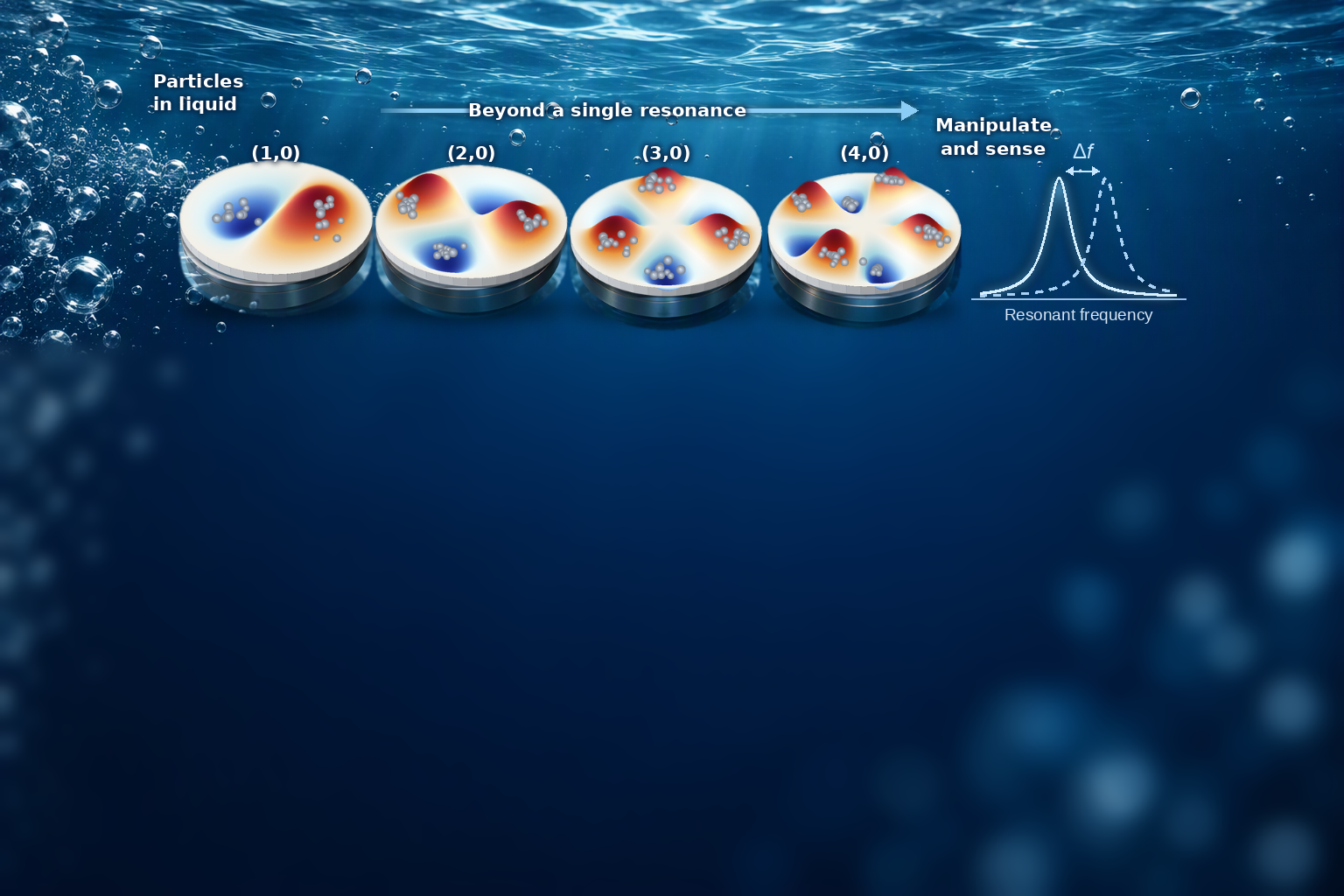

Many resonant mass sensors operate on a simple principle: particles are detected by measuring the change they produce in the resonance frequency of a vibrating structure. While considerable effort is usually devoted to improving the resonator itself, an equally important problem often receives less attention. Before particles can be measured, they must first reach the sensing region. In liquid environments, where particles are typically dispersed throughout a much larger volume, this can be an inefficient process.
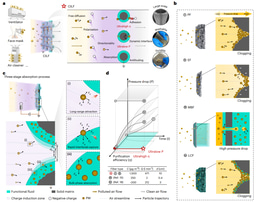
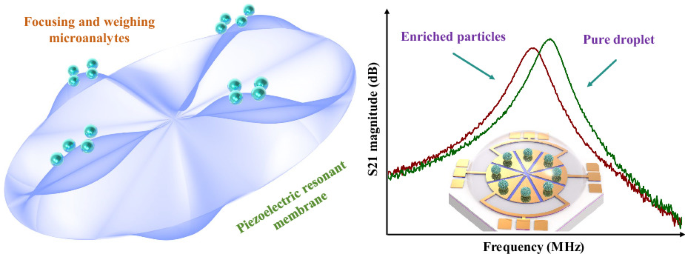
Our earlier work demonstrated an alternative approach. Rather than treating particle manipulation and particle detection as separate functions requiring different subsystems, we showed that both capabilities could be realised using a single piezoelectric resonator. The vibration pattern of the resonator concentrated particles into specific regions while also serving as the sensing mechanism used to measure them. The possibility of integrating particle gathering and sensing within a single device was appealing because it transformed the resonator from a passive detector into an active participant in the measurement process.
That work raised a question that motivated the present study. The manipulate-and-sense paradigm had been demonstrated using a particular higher-order mode, but it was unclear whether the result reflected a fortunate choice of operating mode or evidence of a more general sensing strategy. If the concept was to be useful beyond a single demonstration, it needed to remain effective as progressively higher-order resonances were employed.
Starting with a measurement problem
Our path to that question was not entirely straightforward. We were originally investigating the liquid-phase behaviour of piezoelectric resonant membranes and faced a practical measurement challenge. The fundamental mode could actuate particles in liquid and its motion could readily be observed optically, but obtaining a useful electrical resonance measurement in water proved considerably more difficult. Higher-order modes therefore became attractive because they offered a practical route towards electrical characterisation in liquid.
Among these modes, the transverse (2,0) resonance appeared particularly promising. It could be transduced fully differentially, allowing feedthrough to be suppressed and improving the likelihood of obtaining a clean electrical signal. At the time, our ambitions were modest. Simply recovering a measurable electrical resonance in liquid already seemed a worthwhile objective. Looking back, it is slightly ironic that a mode we initially regarded as a practical workaround ultimately became the starting point for an entirely different line of research.
The first surprise was that the mode could indeed be measured electrically in liquid. The second was that particles did not distribute themselves randomly across the membrane surface. Instead, they concentrated in regions determined by the vibration pattern of the resonator. More importantly, these locations coincided with regions where the membrane was particularly sensitive to added mass. The same mode that allowed us to recover a measurable resonance also concentrated particles where they would have the greatest influence on the sensing response. This observation became the foundation of our earlier study on simultaneous particle manipulation and mass sensing.
One mode or many?
Once that study was completed, we were left with a simple question: had we discovered something unique to one carefully chosen mode, or something more general? The present study was motivated by that question. Instead of focusing on a single resonance, we examined a family of higher-order transverse modes and asked whether the manipulate-and-sense paradigm remained viable as mode order increased. In doing so, we moved beyond proof of concept and began assessing the reproducibility, scalability and practical limits of the approach.
We initially suspected that progressively higher-order modes might simply continue the trend. The results showed a more complicated picture. A useful sensor cannot be judged by a single metric. Some modes sustained vibration more effectively in liquid, some produced stronger electrical signals, and others offered advantages in particle manipulation or sensing performance. No mode was superior in every respect. The challenge was therefore not identifying the highest possible mode, but understanding which modes remained practical and why.
The most important finding was that the central concept proved more robust than we had expected. By extending the investigation across multiple higher-order modes, we found that the manipulate-and-sense paradigm was not confined to one carefully selected resonance. While the details varied from mode to mode, the underlying behaviour remained reproducible. What initially appeared to be an intriguing result associated with the (2,0) mode emerged as evidence of a more general sensing strategy, together with a clearer understanding of the opportunities and trade-offs involved in applying it.
Looking back
What I find most interesting is that the project did not begin with a sensing concept at all. We were exploring higher-order modes because they offered a practical route towards electrical measurements in liquid. The manipulate-and-sense paradigm emerged later as an unexpected consequence of that decision. The present study gave us an opportunity to determine whether that discovery was a fortunate result associated with one resonance or a broader sensing strategy. The answer appears to be the latter. In our case, a mode that began as a practical workaround for a measurement problem ultimately became the foundation of a reproducible sensing concept and an entirely new direction for our research.

Follow the Topic
-
Microsystems & Nanoengineering
This journal, with a target for a high-end journal for years to come, seeks to promote research on all aspects of microsystems and nanoengineering from fundamental to applied research.