Beyond Global Mean Temperature: The Asymmetry of Global Warming
Published in Earth & Environment






Average Value Is Not Always Reliable
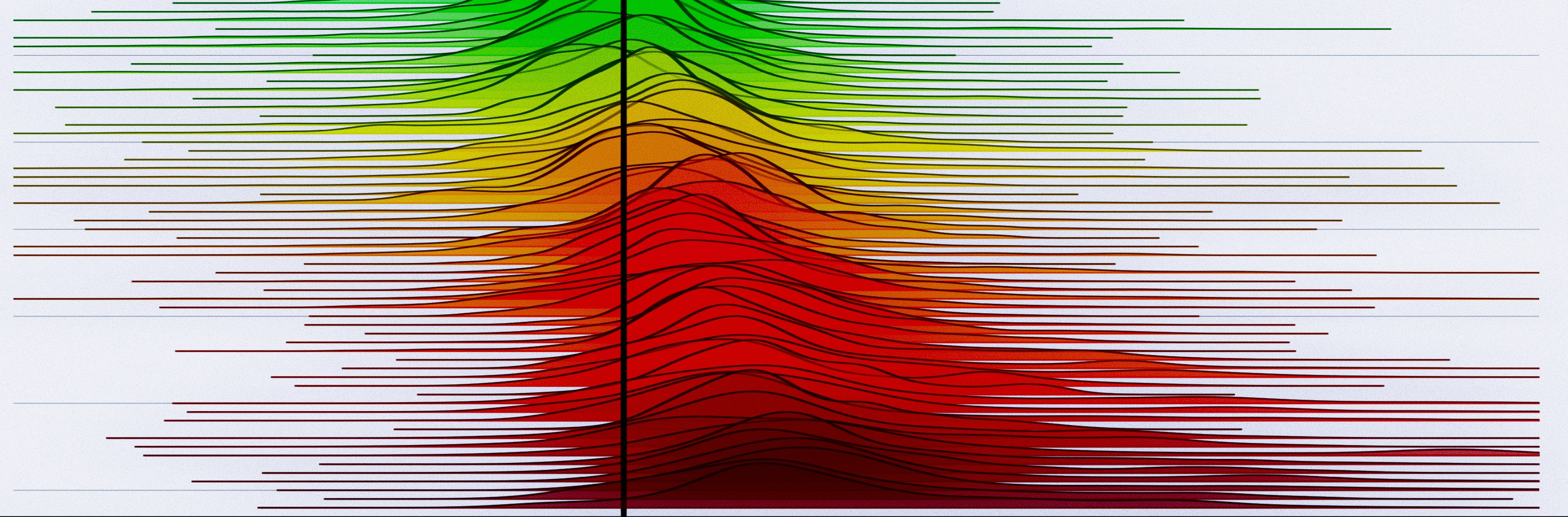
An arithmetic average can accurately represent the center value of a dataset only when the data is evenly and symmetrically distributed. If the data distribution is asymmetric, extreme values will pull the average off track, making it unable to reflect the real situation of most samples. The distribution of social wealth is a classic example of such a highly asymmetric pattern.
For a long time, we have known that our planet is getting warmer. Scientists and policymakers usually use global mean temperature change (△Tmean) to show how serious global warming is. For example, 2024 was reported as the warmest year on record since 1880 because of the fact that △Tmean reached 1.28°C or 2.30°F [NASA].
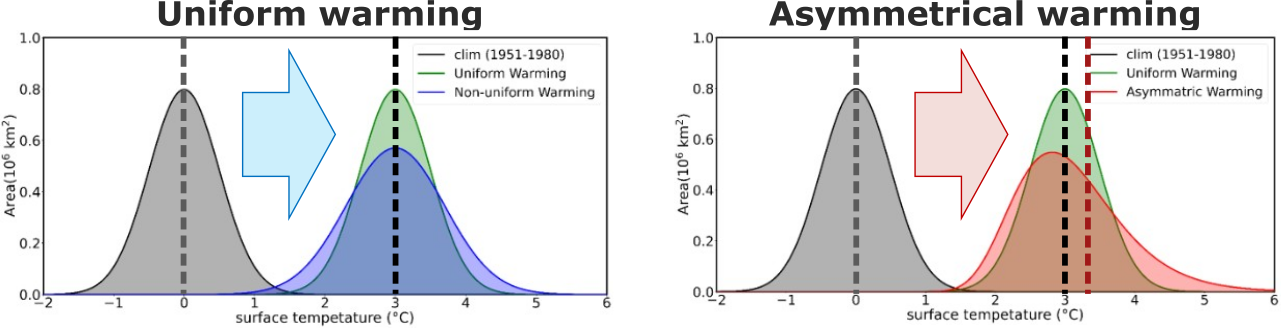
However, global warming is far from uniform across the globe. A well-known example is Arctic Amplification. Despite this fact, it is seldom asked whether △Tmean gives a biased estimation of real global warming. Also, the asymmetry of global warming has long lacked clear quantitative calculation, and its real impacts have rarely been discussed.
About This Study
To fill this gap, our study moves beyond the traditional global mean temperature and focuses on the asymmetry of global warming, a simple yet unanswered problem in climate science. Below are some interesting findings:
- Global warming asymmetry has risen significantly since 1900, with an accelerating trend after 1980.
- Over 80% of this growing asymmetry comes from Northern Hemisphere high latitudes. The Russian region, rather than the Arctic Ocean, plays the leading role.
- Most current climate models cannot accurately reproduce the historical trend of global warming asymmetry.
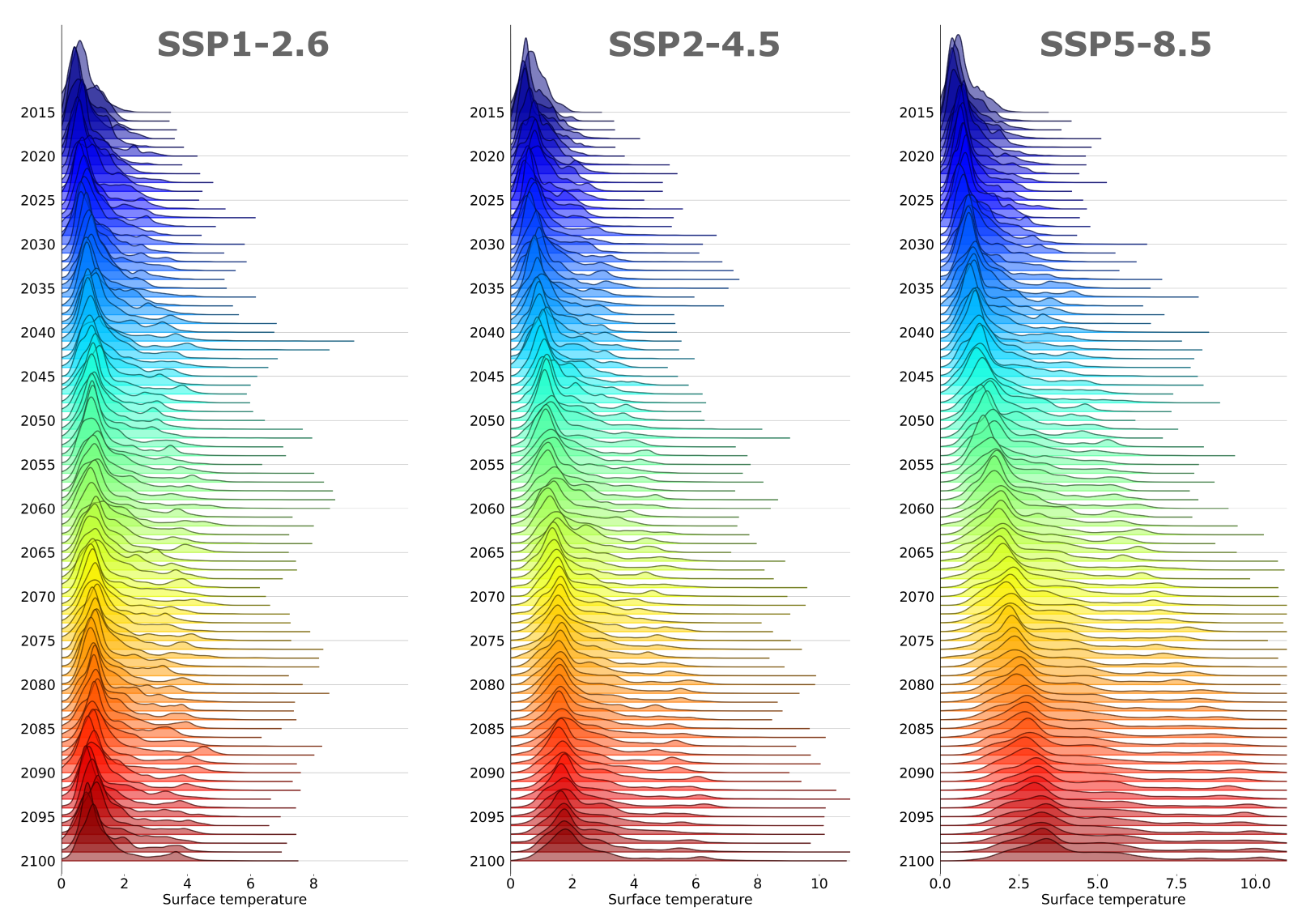
- The higher human greenhouse gas emissions are, the more asymmetric global warming will become.
- As global warming becomes more asymmetrical, △Tmean is strongly skewed by outliers, making it less representative of temperature change across most regions of the world. This may enhance cognitive biases in public awareness toward climate change.
Climate change is a highly complex process (with a high degree of freedom) that cannot be fully described by just one simple indicator. Although global mean temperature is easy to understand and physically meaningful (closely linked to Earth’s energy balance), it hides the complexity of climate change, which holds important implications for climate change assessment and mitigation. Our work reminds us to look beyond the average and pay more attention to the asymmetry of global warming.
For more details about the research, please refer to our full paper [Original article].
Follow the Topic
-
npj Climate and Atmospheric Science
This journal is dedicated to publishing research on topics such as climate dynamics and variability, weather and climate prediction, climate change, weather extremes, air pollution, atmospheric chemistry, the hydrological cycle and atmosphere-ocean and -land interactions.

Related Collections
With Collections, you can get published faster and increase your visibility.
Atmosphere-Biosphere Interactions
Publishing Model: Open Access
Deadline: Oct 31, 2026
AI-Driven Innovation in Atmospheric Chemistry and Composition–Climate Interactions
Publishing Model: Open Access
Deadline: Oct 31, 2026