BMC Geriatrics is calling for submissions to our Collection, Managing multimorbidity in older adults
Published in Biomedical Research

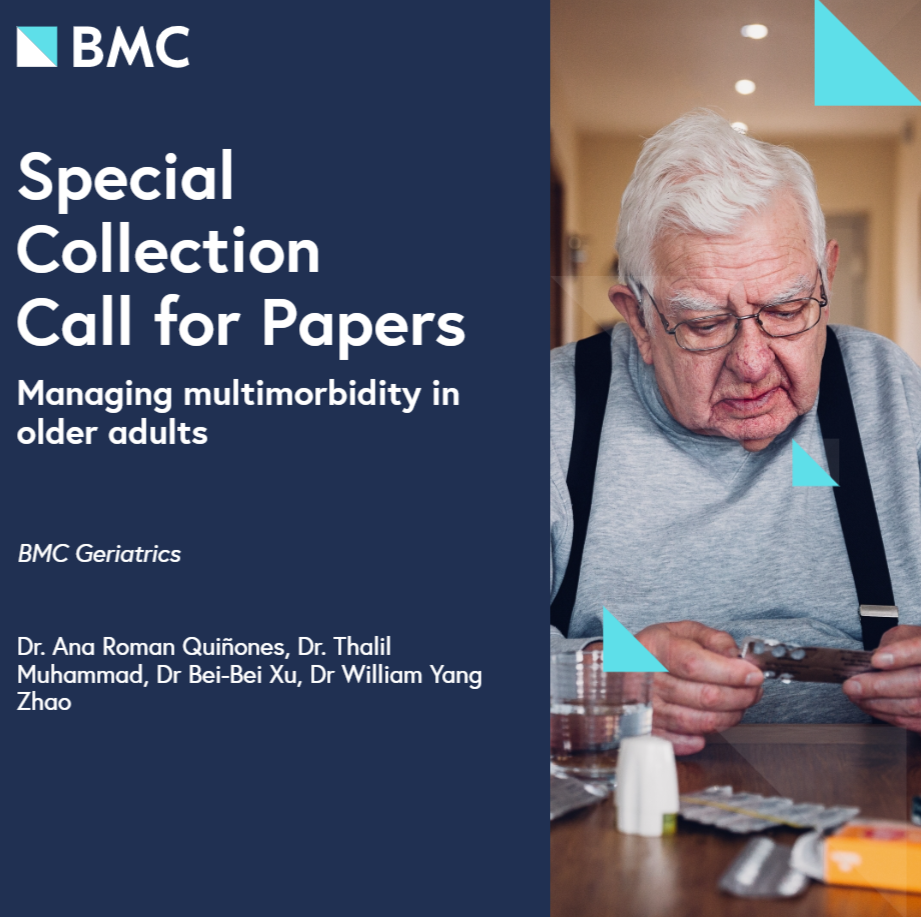

Addressing the management of multimorbidity is crucial for improving health outcomes and ensuring the effective delivery of healthcare services. Advances in research have begun to identify best practices for the integrated management of multiple chronic diseases, emphasizing the importance of personalized care plans and interdisciplinary collaboration among healthcare providers. Additionally, innovative technology and telehealth solutions are reshaping the landscape of chronic disease management, offering new avenues for monitoring, education, and patient engagement.
Ongoing research in this area may lead to significant improvements in our understanding of the biological and behavioral interactions among chronic conditions. With sustained attention, we may discover new therapeutic strategies that address the complexities of multimorbidity and facilitate the development of more comprehensive care models, ultimately improving the health and well-being of aging populations.
Follow the Topic
-
BMC Geriatrics
BMC Geriatrics is an open access journal publishing original peer-reviewed research articles in all aspects of the health and healthcare of older people, including the effects of healthcare systems and policies.

Related Collections
With Collections, you can get published faster and increase your visibility.
AI and geriatric care
BMC Geriatrics is inviting submissions to our Collection on AI and geriatric care.
The integration of Artificial Intelligence (AI) into geriatric care represents a transformative approach to addressing the complexities of aging populations. As the world faces an increasing number of older adults, the need for innovative solutions to enhance healthcare delivery for this demographic is paramount. AI technologies, including machine learning and natural language processing, are being explored for their potential to improve diagnostics, personalize treatment plans, and streamline caregiving processes, among other applications. This Collection aims to explore the intersection of AI and geriatric care, highlighting research that examines the applications and implications of AI in the field of gerontology.
Advancements in AI are beginning to show promise in healthcare, with early applications emerging in geriatric settings. From predictive analytics that identify health deterioration or predict fall-risk to AI-driven tools that assist in daily caregiving tasks, these innovations hold potential to improve both the quality of care and the patient experience. A foundation of ethical AI practices is also crucial, as the application of AI in geriatric care remains an emerging area that requires careful consideration. Beyond technical challenges around technology integration and adoption, it is essential to ensure that the deployment of this technology respects the dignity and autonomy of older adults, resists entrenching bias and discrimination of existing health inequities, and considers accessibility and cost. Multidisciplinary research is needed to understand how AI can be effectively and ethically integrated into geriatric care.
As research continues in this area, AI systems capable of real-time monitoring and intervention are moving closer to reality. These advancements may enable more personalized care planning and improve communication between clinicians, caregivers, and older adults. Realizing tangible benefits in terms of health and quality of life will depend on rigorous evaluation, thoughtful implementation, and sustained engagement with end users, including clinicians, older adults, and caregivers.
Topics of interest include but are not limited to:
- Applications of AI in geriatric healthcare
- Machine learning for predictive analytics in aging
- Integration of AI with existing wearable or sensor-based technologies
- Ethical considerations in AI for gerontology
- AI-driven tools for daily caregiving tasks
- Balancing innovation with compassionate, human-centered care
BMC Geriatrics focuses on research related to health and healthcare in adults aged 60 and older.
All manuscripts submitted to this journal, including those submitted to collections and special issues, are assessed in line with our editorial policies and the journal’s peer-review process. Reviewers and editors are required to declare competing interests and can be excluded from the peer review process if a competing interest exists.
Publishing Model: Open Access
Deadline: Jan 22, 2027
Health disparities in aging: addressing inequities in geriatric care
BMC Geriatrics is inviting submissions to our Collection on health disparities in aging: addressing inequities in geriatric care
Health disparities pose a significant challenge in geriatric care, as older adults from diverse backgrounds face inequities in access to services, quality of care, and health outcomes due to factors such as socioeconomic status, geographic location, and cultural differences. Addressing these disparities requires integrating social determinants of health into care models, fostering cultural competence among providers, and implementing community-based interventions that promote equity. Recent research underscores the importance of collaborative efforts among healthcare systems, policymakers, and community organizations to ensure that aging populations receive appropriate, equitable care tailored to their unique needs.
Potential topics of interest include, but are not limited to:
- Socioeconomic determinants of health in aging, such as income, wealth, education and working conditions
- Geographic and environmental disparities in geriatric care, including differences in urban and rural healthcare and environmental stressors
- Gender, racial, and ethnic disparities in geriatric care
- Inequalities in the provision of and access to social care, and the consequences for health
- Barriers to care, such as language, cost, or transportation
- Culturally competent care for older adults
- Community-based interventions to reduce health disparities
BMC Geriatrics focuses on research related to health and healthcare in individuals aged 60 and older.
This Collection supports and amplifies research related to SDG 1: No Poverty and SDG 3: Good Health & Well-Being.
Publishing Model: Open Access
Deadline: Nov 09, 2026