Call for papers: Tectonic and magmatic drivers of carbon-cycle change
Published in Earth & Environment

What is this collection about?
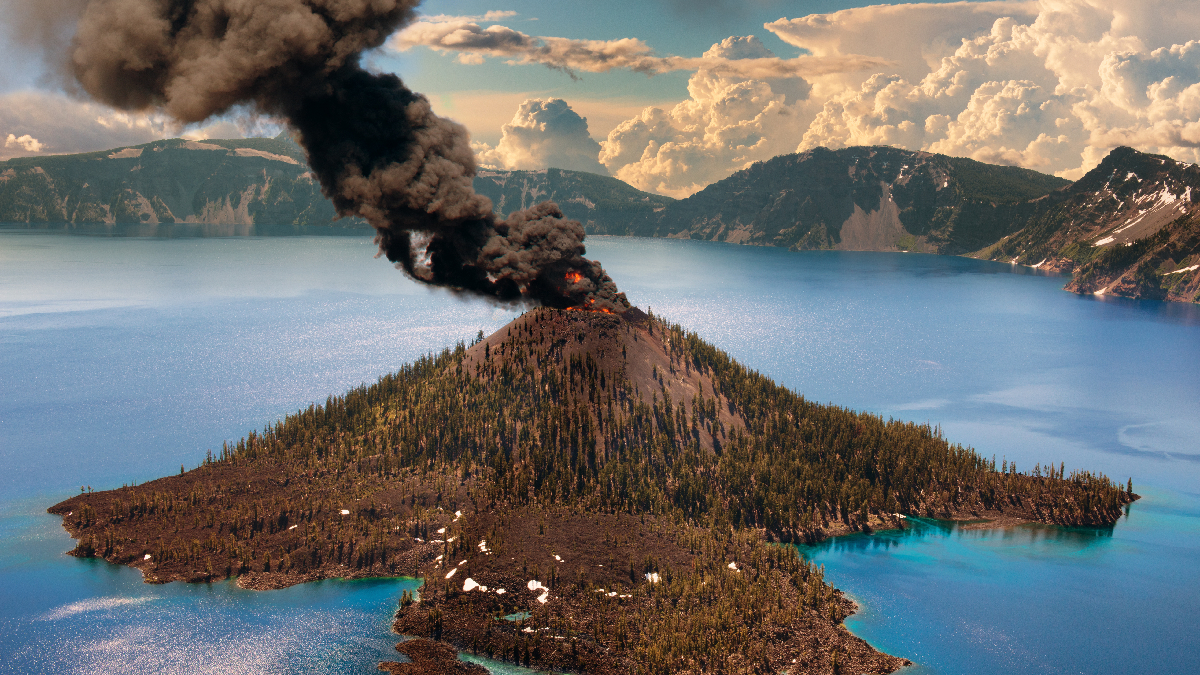
Tectonic and magmatic processes exert a first-order control on Earth’s long-term carbon cycle, governing the exchange of carbon between Earth’s interior and surface reservoirs through ridge and arc degassing, subduction recycling, rift-related volcanism, and large-scale magmatic events. Recent advances have refined estimates of carbon fluxes at individual plate boundaries and during specific intervals of Earth history. However, the connections between these fluxes across tectonic and magmatic settings, in particular, the ways carbon-cycle reorganization reflects evolving plate configurations, variable subduction efficiency, and episodic, high-volume magmatic activity have yet to be fully constrained.
With this cross-journal collection, we invite contributions that examine tectonic and magmatic controls on carbon-cycle evolution through Earth history. We particularly encourage studies that integrate constraints from geochemistry, petrology, volcanology, sedimentary archives, geophysics, and Earth system modeling to better quantify carbon fluxes and strengthen links between deep carbon cycling and long-term climate, ocean chemistry, and planetary habitability.
Why is this collection important?
This is a cross-journal collection between Nature Communications, Communications Earth & Environment, and Scientific Reports. Authors are welcome to submit to any of the participating journals. All manuscripts published in the collection are hosted on a dedicated nature portfolio portal, giving articles high visibility beyond the journal they are published in.
Why submit to a collection?
Collections like this one help promote high-quality science. They are led by In-House Editors who are experts in their fields and supported by a dedicated team of Commissioning Editors and Managing Editors at Springer Nature. Collection manuscripts typically see higher citations, downloads, and Altmetric scores, and provide a one-stop-shop on a cutting-edge topic of interest.
Who is involved?
Communications Earth & Environment is edited by both in-house professional editors and Editorial Board Members.
Guest editor for Communications Earth & Environment
Mojtaba Fakhraee,PhD,University of Connecticut, USA
Dr Mojtaba Fakhraee is an Assistant Professor in the Department of Earth Sciences at the University of Connecticut, USA. For his Ph.D. in water resources science at the University of Minnesota in Aug 2018, he studied sulfur cycling in the low sulfate environment of Lake Superior, and provided new insight into several aspects of sulfur cycling in low sulfate environments, such as large freshwater systems and the oceans of the geologic past (>0.5 billion years ago). He is now interested in developing a mechanistic understanding of the co-evolution of life and Earth's surface environments, with goal to understand how life has shaped our planet. He recruits a wide range of theoretical, modeling, and experimental toolkits to create, formulate, and test hypotheses on the nexus between life and Earth’s surface conditions.
Jun Shen, Phd, China University of Geosciences, China
Dr Jun Shen is a professor in the State Key Laboratory of Biogeology and Environmental Geology, China University of Geosciences, Wuhan, China. His research is focused on the paleoclimatic, paleo-environmental, and biospheric effects of volcanism, especially those related to large igneous provinces during critical transitions in Earth history.
Renbiao Tao, Phd, HPSTAR, China
Dr. Renbiao Tao is a staff scientist at Center for High Pressure Science & Technology Advanced Research (HPSTAR) in China. He received his Ph.D. in high-pressure metamorphic geology at Peking University, China. Then he successively worked as postdoc in high-pressure experimental petrology and geochemistry at Carnegie Institution for Science and University de Lyon. Now he is the Principal Investigator of a high-pressure Earth and planetary science group at HPSTAR. His research is focused on deep carbon cycle processes and their environmental effect. High-pressure and high-temperature mineral physics and fluid geochemistry also fall within his research interests.
Nature Communications is edited by in-house professional editors.
Scientific Reports is managed by in-house professional editors and edited by Editorial Board Members.
Our editors work closely together to ensure the quality of our published papers and consistency in author experience.
How can I submit my paper?
Follow the Topic
-
Nature Communications
An open access, multidisciplinary journal dedicated to publishing high-quality research in all areas of the biological, health, physical, chemical and Earth sciences.
-
Scientific Reports
An open access journal publishing original research from across all areas of the natural sciences, psychology, medicine and engineering.
-
Communications Earth & Environment
An open access journal from Nature Portfolio that publishes high-quality research, reviews and commentary in the Earth, environmental and planetary sciences.



Related Collections
With Collections, you can get published faster and increase your visibility.
Phytochemicals and health
Publishing Model: Open Access
Deadline: Oct 28, 2026
Ecological resistance and resilience under global change
Publishing Model: Open Access
Deadline: Apr 07, 2027