Call for papers: Extreme Events in High-Latitude Regions
Published in Earth & Environment

What is this collection about?
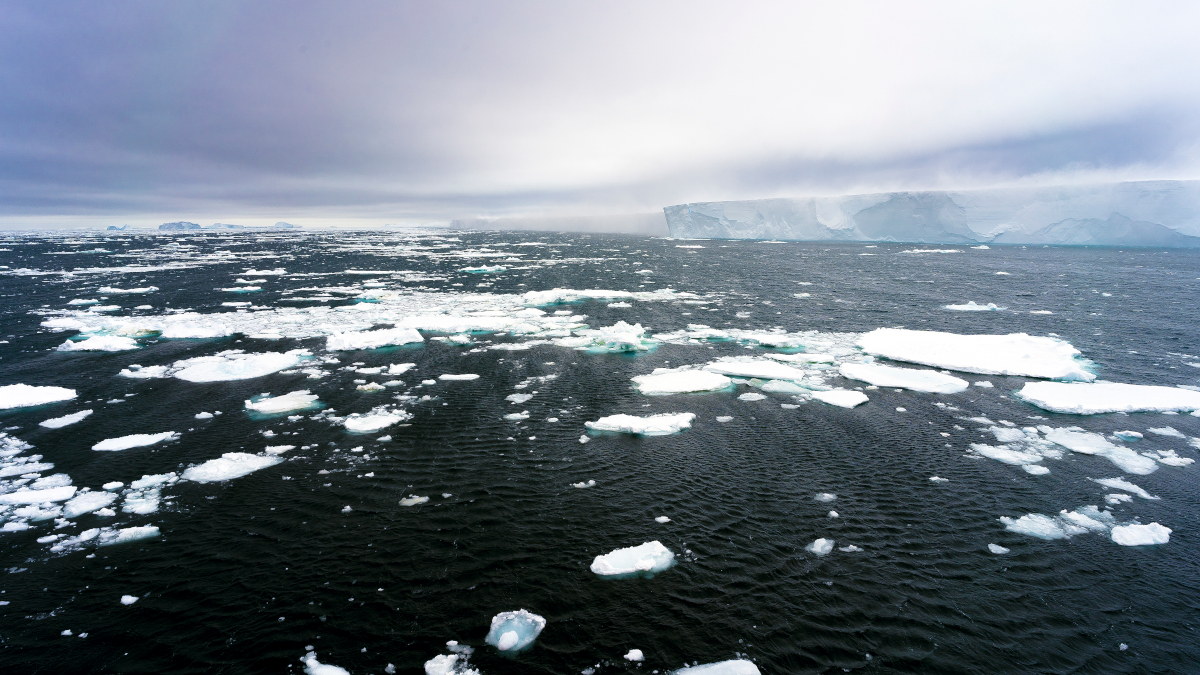
Extreme events are unusual or rare weather, climate, or environmental conditions that depart from typical patterns. High-latitude regions are increasingly exposed to these phenomena, with their intensity and frequency amplified by climate change. Key manifestations include intense and persistent heatwaves, record‑low sea‑ice extent, accelerated snow and glacier melt, unprecedented wildfires, and rapid permafrost degradation. Together, these processes can influence global climate systems, accelerate sea‑level rise, and disrupt ecosystems. As a result, high-latitude regions are both highly vulnerable and critically important for understanding environmental change and for informing science‑based policy decisions.
This cross-journal collection from Communications Earth & Environment, Communications Sustainability, Nature Water, Nature Geoscience, Nature Communications, npj Natural Hazards, and Scientific Reports brings together research that explores the physical mechanisms and environmental impacts of extreme events in high-latitude regions under changing climatic conditions. Contributions addressing adaptation approaches, socio-economic implications, governance aspects, and geopolitical challenges are also encouraged.
Why is this collection important?
This is a cross-journal collection between Communications Earth & Environment, Communications Sustainability, Nature Water, Nature Geoscience, Nature Communications, npj Natural Hazards, and Scientific Reports. Authors are welcome to submit to any of the participating journals. All manuscripts published in the collection are hosted on a dedicated nature portfolio portal, giving articles high visibility beyond the journal they are published in.
Why submit to a collection?
Collections like this one help promote high-quality science. They are led by In-House Editors who are experts in their fields and supported by a dedicated team of Commissioning Editors and Managing Editors at Springer Nature. Collection manuscripts typically see higher citations, downloads, and Altmetric scores, and provide a one-stop-shop on a cutting-edge topic of interest.
Who is involved?
Communications Earth & Environment is edited by both in-house professional editors and Editorial Board Members.
Communications Sustainability is edited by both in-house professional editors and Editorial Board Members.
Nature Communications is edited by in-house professional editors.
Nature Geoscience is edited by in-house professional editors.
Nature Water is edited by in-house professional editors.
npj Natural Hazards is edited by a team of external academic editors.
Scientific Reports is managed by in-house professional editors and edited by Editorial Board Members.
Our editors work closely together to ensure the quality of our published papers and consistency in author experience.
How can I submit my paper?
Follow the Topic
-
Nature Communications
An open access, multidisciplinary journal dedicated to publishing high-quality research in all areas of the biological, health, physical, chemical and Earth sciences.
-
Scientific Reports
An open access journal publishing original research from across all areas of the natural sciences, psychology, medicine and engineering.
-
npj Natural Hazards
npj Natural Hazards considers research examining the causes and effects of natural hazards, including seismic hazards, landslides and debris flows, volcanic hazards, coastal hazards, tsunamis, tropical cyclones and hurricanes, floods, droughts, extreme weather events, avalanche hazards etc.
-
Nature Geoscience
A monthly multi-disciplinary journal aimed at bringing together top-quality research across the entire spectrum of the Earth Sciences along with relevant work in related areas.
-
Communications Earth & Environment
An open access journal from Nature Portfolio that publishes high-quality research, reviews and commentary in the Earth, environmental and planetary sciences.
-
Nature Water
This journal publishes research on the evolving relationship between society and water resources on a monthly basis. It covers the natural sciences, engineering, and social sciences, with a particular interest in regards to interdisciplinary research.
-
Communications Sustainability
An open-access journal publishing high-quality, editorially selected and peer-reviewed advances in all sustainability-related areas of science, including the natural and social sciences as well as engineering.






Related Collections
With Collections, you can get published faster and increase your visibility.
Earthquake Rupture, Cascading Effects, and Multi-Hazard Consequences
Publishing Model: Open Access
Deadline: Jan 10, 2027
Phytochemicals and health
Publishing Model: Open Access
Deadline: Oct 28, 2026