Charting an 'atlas' of folate
Published in Microbiology, Protocols & Methods, and Anatomy & Physiology

Setting out
Growing up, all I knew about vitamins was that fruits and vegetables were full of them, that some people took tablets or ate gummies to get more of them, and that they were important to stay healthy. Even after finishing my undergraduate studies, vitamins were still a gestured at, but rarely directly discussed part of my coursework. It was only upon starting my PhD that I realized how much we still have to learn about vitamins.
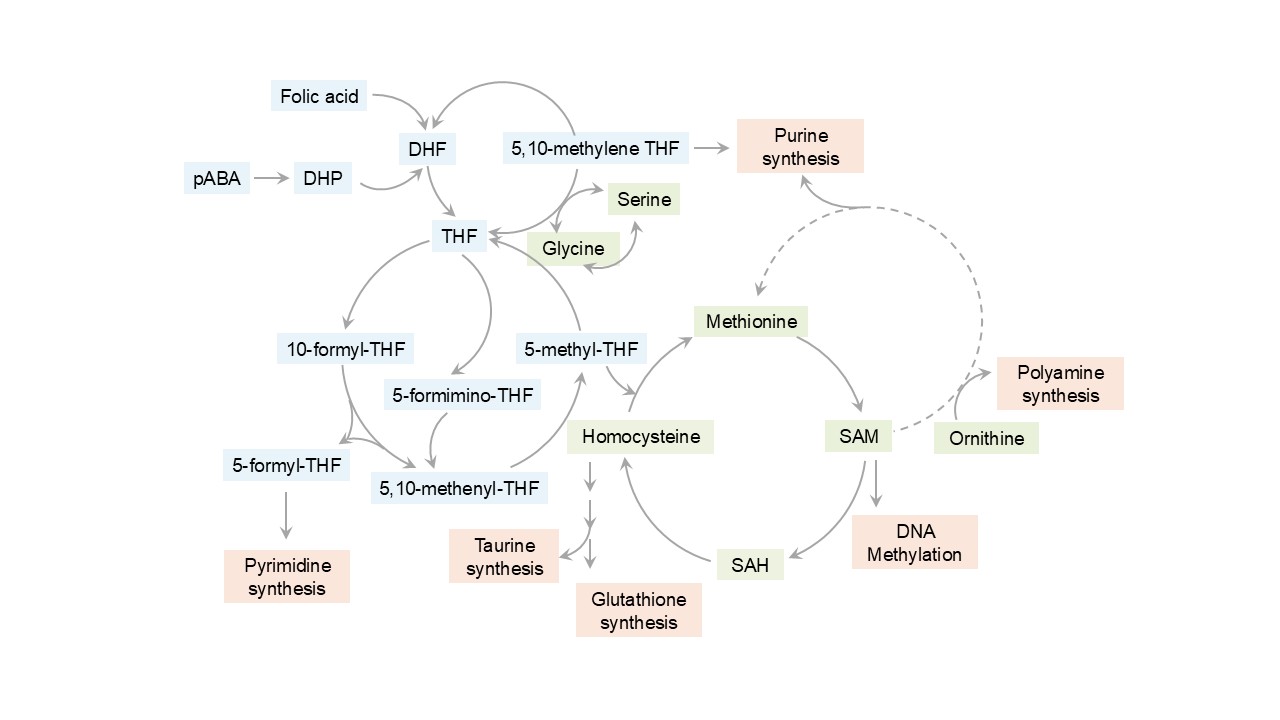
My thesis work has focused on vitamin B9, or folate. Folate is an essential vitamin for humans and other mammals. We obtain most of our folate from our diet and in many countries, like the U.S. and Canada, folate is supplemented in grain products. Alongside the diet, the gut microbiome can also be a source of folate and influence host folate status. The biochemical role of folate is well understood; it helps in regulating homocysteine levels and supports DNA synthesis as a part of one-carbon metabolism. Deficiencies in folate are connected to diseases like neural tube defects and anemia, but recent research has also connected it to cardiometabolic disease and obesity.
On a larger scale though, many important questions about folate still linger. Outside of the liver and blood, how much folate is in tissues? Are the types of folates the same between tissues? Are there sex-differences in folate abundance and composition? How does the presence or absence of the gut microbiome affect host folate levels?
Charting an atlas
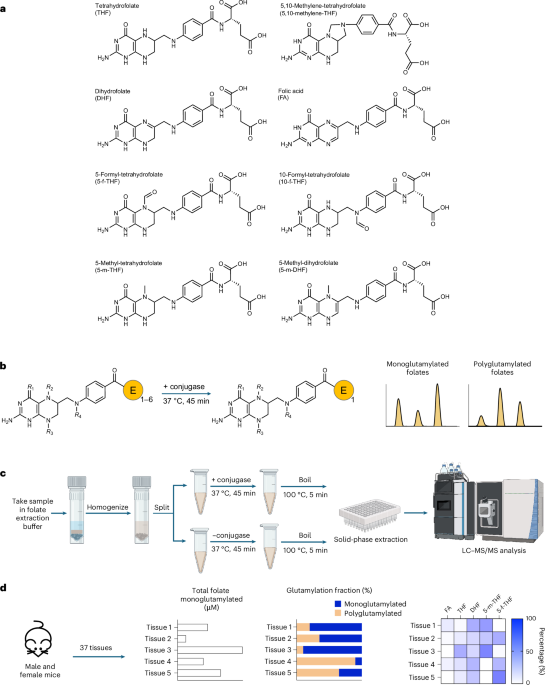
To answer some of these questions and provide a resource for further study we charted an ‘atlas’ of folate in 37 tissues in male and female conventional and germ-free mice. (https://chaudharilab.com/folate-atlas/) In this work we show that folate concentrations vary dramatically across tissues, with nearly 100-fold variation between tissues with the highest and lowest abundances. Folate composition is extremely varied. Some tissues have only a single form of folate, while others have eight or more. Male and female mouse tissues had similar amounts of total folate, but their composition and response to the microbiome were strikingly different.
One of the most surprising results from our study was the dramatic influence of the microbiome on folate. We found that in the absence of a microbiome, folate levels in intestinal contents and some host tissues were higher than conventional mice. We believe this supports a more opportunistic approach of the microbiota to vitamin production. The mouse diet is very high in folate, so the gut microbiome has folate in abundance. Under these conditions, there is no benefit to synthesizing additional folate. We hypothesize that under replete folate environments, microbes consume folate and reduce its availability to the host, a trend which may be inverted under a folate-deficient diet.
A second interesting finding were sex-dependent differences in folate composition and response to the microbiome in male and female mice. Male mice had much larger differences between conventional and germ-free conditions than females. Further, when we measured expression of Fpgs and Ggh, two enzymes that orchestrate folate retention, we found that their levels differ considerably between male and female mouse tissues.
A final thread I want to highlight was one that initially stumped me - why is there so much folate in the gallbladder? Among the 37 locations where folate was profiled, the gallbladder had the second highest levels of folate in the body. Initially, I assumed that the gallbladder samples were contaminated with liver tissue, which has the highest levels of folate. However, upon a deep dive into literature from the 1980-90s, I found a considerable body of research demonstrating folate secretion in the bile and reabsorption in the intestine. This enterohepatic recirculation of folate was found to play an essential role in regulating circulating folate levels. In the time since this research, enterohepatic circulation of other metabolites such as bile acids have been shown to be an important axis for host-gut communication. It may be that enterohepatic folate circulation serves a similar important role, one that warrants further investigation.
Future horizons
With a more detailed understanding of folate levels across the body, we can now interrogate the complexities of its metabolism. One area I think is especially promising is studying changes in tissue folate levels in the context of cancer. Aberrant methylation is a hallmark of cancer, tying it directly to one-carbon metabolism. Drugs that mimic folate, like methotrexate, are already used to treat several forms of cancer. Further understanding how cancer alters folate uptake, consumption, and composition could provide new axis for detection and treatment.
A second area this research highlights is the complex interplay between our diet, specifically our vitamin consumption, host physiology, and the gut microbiome. Folate, like many other vitamins, is commonly taken as an over-the-counter supplement. Further studies examining how vitamin supplementation or deficiency may alter gut microbes would aid in deciphering the metabolic crosstalk between the host and its resident microbiome.
Finally, our results support continued development of techniques and workflows to analyze micronutrients. Techniques like LC-MS can provide detailed and quantifiable measurements of these essential metabolites and help to explain poorly understood mechanistic links between micronutrient deficiencies and disease.
While this work began with trying to answer specific questions about folate metabolism, I believe it built a foundation for further study into how disease and dysbiosis could affect folate on a tissue-specific basis, and how vitamin supplementation can affect the host via the gut microbiota.

Follow the Topic
-
Nature Metabolism
This journal publishes work from across all fields of metabolism research that significantly advances our understanding of metabolic and homeostatic processes in a cellular or broader physiological context, from fundamental cell biology to basic biomedical and translational research.

Related Collections
With Collections, you can get published faster and increase your visibility.
The expanding therapeutic landscape of GLP 1 receptor agonists
Publishing Model: Hybrid
Deadline: Jan 23, 2027
Microbiome and energy metabolism
Publishing Model: Hybrid
Deadline: Dec 06, 2026