Cities are modifying the latitudinal diversity gradient, one of the well-recognized and long-standing biogeographic patterns
Published in Earth & Environment and Ecology & Evolution


Cities are modifying the latitudinal diversity gradient, one of the well-recognized and long-standing biogeographic patterns
Biodiversity generally declines from the tropics toward the poles. This “latitudinal diversity gradient (LDG)” is a widely recognized biogeographic pattern, which has fascinated ecologists for centuries relating to many explanations involving temperature, productivity, evolutionary history, and other natural ecological processes. But today, human activities, such as urbanization, have considerably modified 50 to 70% of Earth’s land surface, thus, truly “natural” ecosystems are inherently rare. This led us to a simple question: does the classic latitudinal diversity gradient still look the same in a human-dominated world?
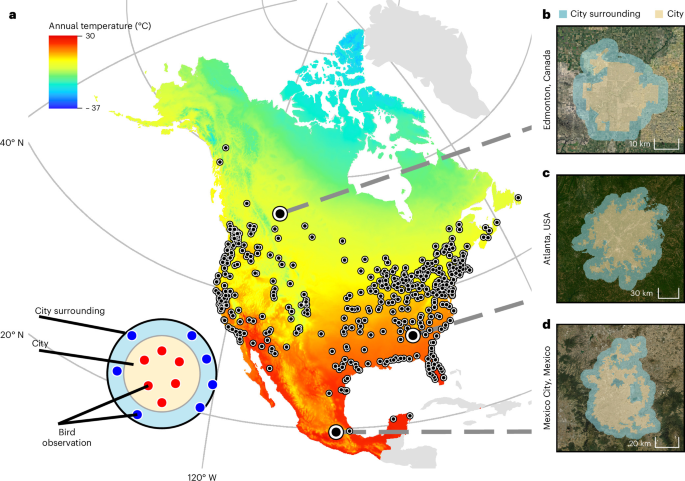
Birds offered an ideal opportunity to explore this question. Using eBird observations collected across North America between 2015 and 2019, we compared bird diversity within hundreds of cities with that in their surrounding areas. After filtering hundreds of millions of records, our main analysis included about five million checklists across around 500 city–surrounding pairs.
A pattern that emerged in winter for native species
We expected urbanization to influence bird diversity. What interested us more was whether this influence would remain similar across latitude.
The answer was no. The clearest pattern appeared for native birds during winter. As expected, native bird richness declined strongly toward higher latitudes. However, this decline was significantly weaker inside cities than in their surroundings. At lower latitudes, cities generally supported fewer native bird species than surrounding areas. Moving northward, however, this difference became progressively smaller. In some colder, higher-latitude locations, bird richness in cities approached or even slightly exceeded that of their surroundings.
In other words, cities did not remove the latitudinal diversity gradient. Instead, they flattened it.
This seasonal result was particularly revealing. The same strong divergence between cities and their surroundings was not evident during the breeding season, nor was it consistently observed for non-native birds. This suggested that the pattern was not simply a universal consequence of urbanization. Something about the interaction between cities and cold winter conditions seemed to matter.
When a negative effect becomes less negative
Urbanization is widely associated with biodiversity loss, and our results do not contradict this. Overall, higher human population density was associated with lower native bird richness. Cities can replace natural vegetation, fragment habitats, and filter out species that are sensitive to human disturbance.
But when we examined human population density together with temperature, a significant interaction emerged: As winter temperature decreased, the negative relationship between human population density and native bird richness became progressively weaker and eventually shifted toward a positive relationship.
This helped us understand why cities could flatten the winter diversity gradient.
Cold environments impose strong energetic constraints on birds. Maintaining body temperature requires energy, while snow and ice can make natural food difficult to access. Cities change these conditions. Buildings can generate warmer microclimates and provide shelter. Human food subsidies, including bird feeders and food waste, can offer relatively stable resources. Managed vegetation and evergreen plants may also retain food and shelter when vegetation in surrounding areas becomes seasonally less productive.
The same human activities that act mainly as disturbances under relatively benign conditions may therefore provide some benefits when cold itself becomes a stronger environmental filter.
Are humans changing biodiversity boundaries?
For us, this result raises a broader biogeographic question. We often think about species distributions as being constrained by climatic niches. Temperature determines where many species can survive, and climate change is therefore expected to shift species ranges toward higher latitudes or elevations.
However, humans are adding another dimension to these niches. If urban environments provide warmth, food, vegetation, or shelter that partially relax climatic constraints, they may allow some species to persist in places where they would otherwise struggle. Over time, such environments could potentially help species occur farther toward their climatic range limits and contribute to shifts in the geographic boundaries of biodiversity.
Our study does not directly demonstrate that bird range boundaries are already moving poleward because of cities. Instead, it identifies a mechanism through which human activities may modify the environmental constraints underlying those boundaries. In this sense, cities could potentially function as “stepping stones” or winter outposts as species redistribute under global change.
Our study found that human influence on biodiversity is not simply a story of species loss versus species gain. Human activities can interact with natural environmental gradients, and their ecological effects may change or even potentially reverse depending on the climatic context. This suggests that human influences should increasingly be considered as part of the environmental dimensions that shape ecological niches and geographic distributions. Climate tells us much about where species can potentially live, but in the Anthropocene, understanding where species actually occur may also require asking what kinds of environments humans have created there.
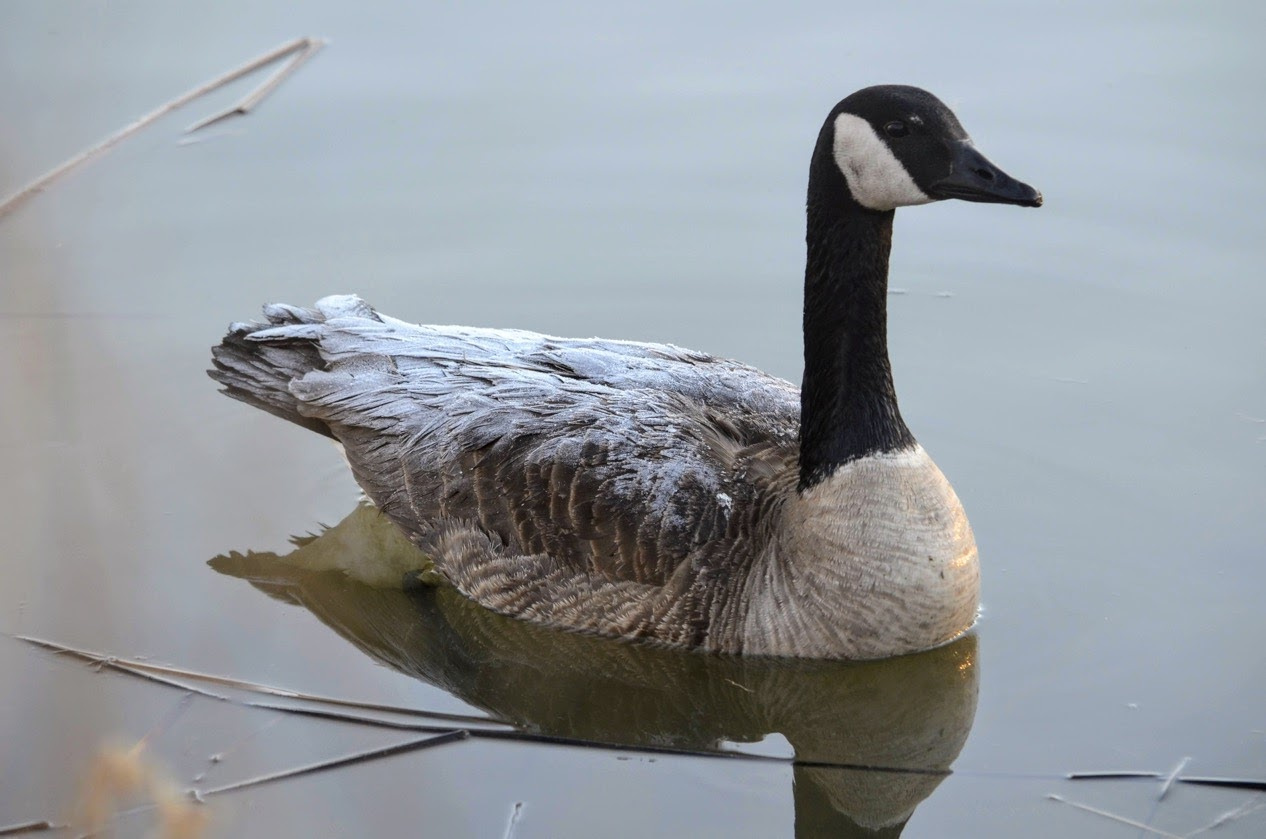
Header Image: a goose in an urban pond in winter; credit: Joseph Robert Burger.
Follow the Topic
-
Nature Cities
This journal aims to deepen and integrate basic and applied understanding of the character and dynamics of cities, including their roles, impacts and influences — past, present and future.