Climate change, crop water use, and the uncertainty challenge
Published in Earth & Environment, Sustainability, and Agricultural & Food Science




Why crop water use matters
Agriculture accounts for roughly 70% of global freshwater withdrawals, making it by far the largest human use of water worldwide. As the global population grows and diets change, food production is expected to increase substantially over the coming decades. At the same time, climate change is altering precipitation patterns and intensifying droughts and heatwaves, creating greater uncertainty about future water availability. Understanding how much water crops require, and whether those water demands can be met sustainably, is therefore essential for planning resilient agricultural systems.
In our latest study, we explored how uncertainty in global climate and hydrological models affects estimates of crop water use and sustainability under climate change. We focused on two indicators: the Water Footprint (WF), which measures the total water required to grow crops, and the Water Debt Repayment Time (WD), which estimates how long natural hydrological processes need to replenish the consumed water. While water footprint measures how much water crops use, the water debt addresses a more important sustainability question: is water being used faster than nature can replace it? We also distinguished between green water (soil moisture from rainfall) and blue water (irrigation water withdrawn from rivers, lakes, and groundwater).
A global multi-model analysis
To investigate how uncertainty affects these estimates, we performed a multi-model analysis combining six global hydrological models, which simulate runoff, groundwater recharge, evapotranspiration, and soil moisture, and four global climate models, which project future temperature and precipitation. The analysis considered eight major crops - including wheat, maize, rice, soybean, and sugarcane – and covered future projections from 2010 to 2090 under multiple emission scenarios. This approach allowed us not only to estimate future crop water use, but also to understand how much confidence we can place in those projections.
Our results show that uncertainty is far greater for blue water than for green water. By the end of the century, global uncertainty spreads reached about 18% for green water footprints and about 51% for blue water footprints. The uncertainty became even more pronounced when we examined sustainability through water debt repayment times. For blue water debt, variability between models ranged from 250% to over 450%, depending on the climate scenario.
Why such large differences?
These differences largely stem from how hydrological models represent processes such as runoff, groundwater recharge, evapotranspiration, and soil moisture. These processes are difficult to represent consistently at global scales, and different models make different assumptions to represent the various processes at play. Small differences in these estimates can strongly amplify sustainability calculations. This means that two equally credible models may produce very different conclusions about whether irrigation in a particular region is sustainable or not.
Climate models, hydrological models, and local hotspots
Our analysis also revealed that climate and hydrological models contribute differently to uncertainty. For green water estimates, uncertainty increasingly came from climate models, especially under high-emission scenarios. Since green water depends heavily on rainfall, differences in future precipitation projections become more important as climate change intensifies. For blue water estimates, however, hydrological models remained the dominant source of uncertainty. Irrigation sustainability depends not only on rainfall, but also on groundwater recharge, river flows, and evapotranspiration, all processes represented differently across water models.
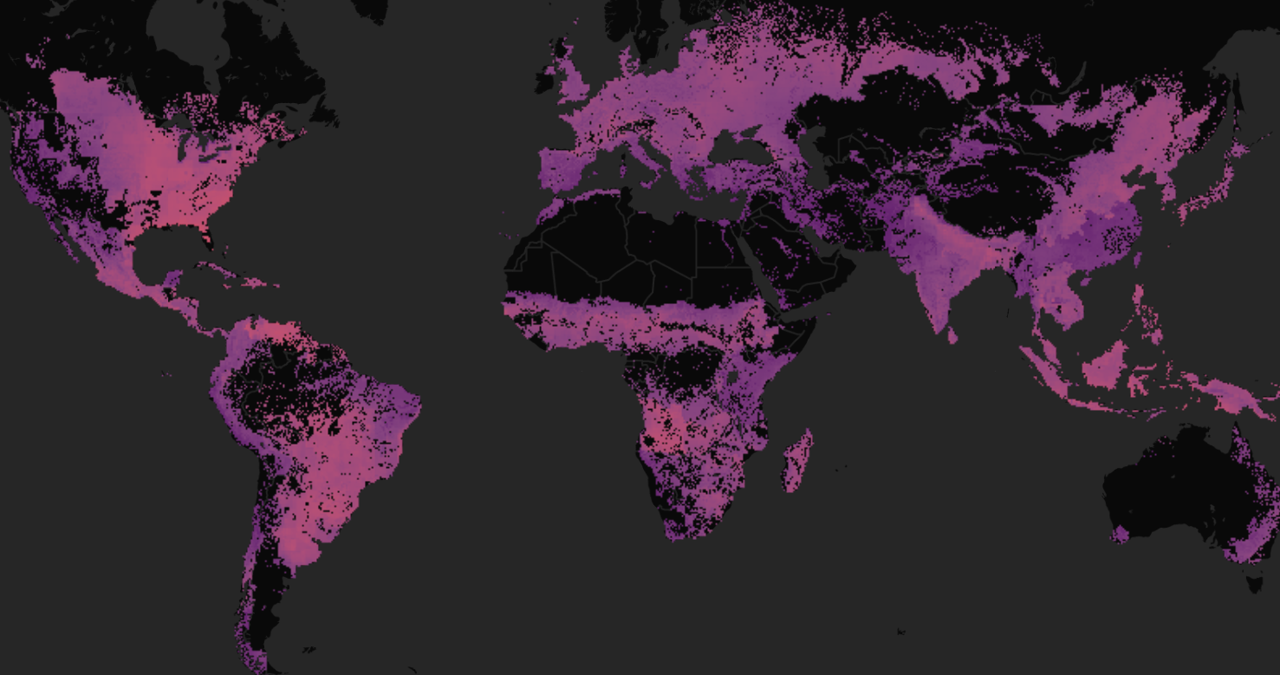
Another key finding was that uncertainty increases substantially at finer spatial scales. While global averages may appear relatively stable, model disagreement grows substantially when examining specific regions. Several agricultural hotspots emerged as particularly vulnerable, including northwestern India and Pakistan, the central United States, and parts of eastern Australia. These regions already experience significant pressure on water resources, especially groundwater depletion, often driven by water-intensive crops such as rice, wheat, maize, sugarcane, and potatoes, which are driving unsustainable irrigation demand.
Our results show that these same hotspots are also places where model disagreement is strongest. This creates a difficult challenge for policymakers: the regions facing the highest water stress are often those where future projections are least certain.
Why acknowledging and quantifying uncertainty strengthens science
Uncertainty is often perceived as a weakness. In reality, quantifying uncertainty is a key part of robust scientific analysis. Ignoring model spread can create a false sense of precision: a single estimate of future water demand may appear authoritative, but without understanding the range of possible outcomes, decision-makers may underestimate risks or overlook vulnerable regions.
Our findings highlight the importance of using multi-model ensembles rather than relying on individual models. Ensemble approaches provide a more realistic picture of future conditions by capturing a range of plausible outcomes and revealing where projections are more or less reliable.
These results also emphasize the need for flexible and adaptive water management strategies that can operate under uncertainty. Rather than searching for a single “correct” projection, policymakers and water managers may benefit more from understanding the range of possible outcomes and preparing for multiple scenarios. Ultimately, uncertainty should not be seen as a reason for inaction, but rather as a tool for making more informed, resilient, and transparent decisions.
Read the full publication here and explore the results at drop4crop!

Follow the Topic
-
Communications Earth & Environment
An open access journal from Nature Portfolio that publishes high-quality research, reviews and commentary in the Earth, environmental and planetary sciences.

What are SDG Topics?
An introduction to Sustainable Development Goals (SDGs) Topics and their role in highlighting sustainable development research.
Continue reading announcementRelated Collections
With Collections, you can get published faster and increase your visibility.
Ecological resistance and resilience under global change
Publishing Model: Open Access
Deadline: Apr 07, 2027
Hazards in Mountain Regions
Publishing Model: Open Access
Deadline: Nov 02, 2026