Discovering and quantifying the eco-physiological advantages of plant-soil-Arbuscular Mycorrhizal Fungi (AMF) system: a promising eco-math-statistical modelling approach
Published in Ecology & Evolution, Microbiology, and Agricultural & Food Science




Objective
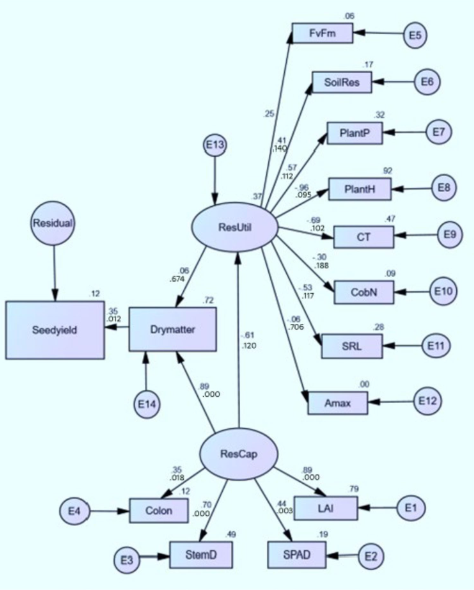
The objective of this study is to develop a mathematical modeling framework using Structural Equation Modeling (SEM) to quantify the contribution of AMF in symbiosis with maize, based on plant and soil-measured variables, while identifying key eco-physiological factors for resource capture and utilization.
Methods
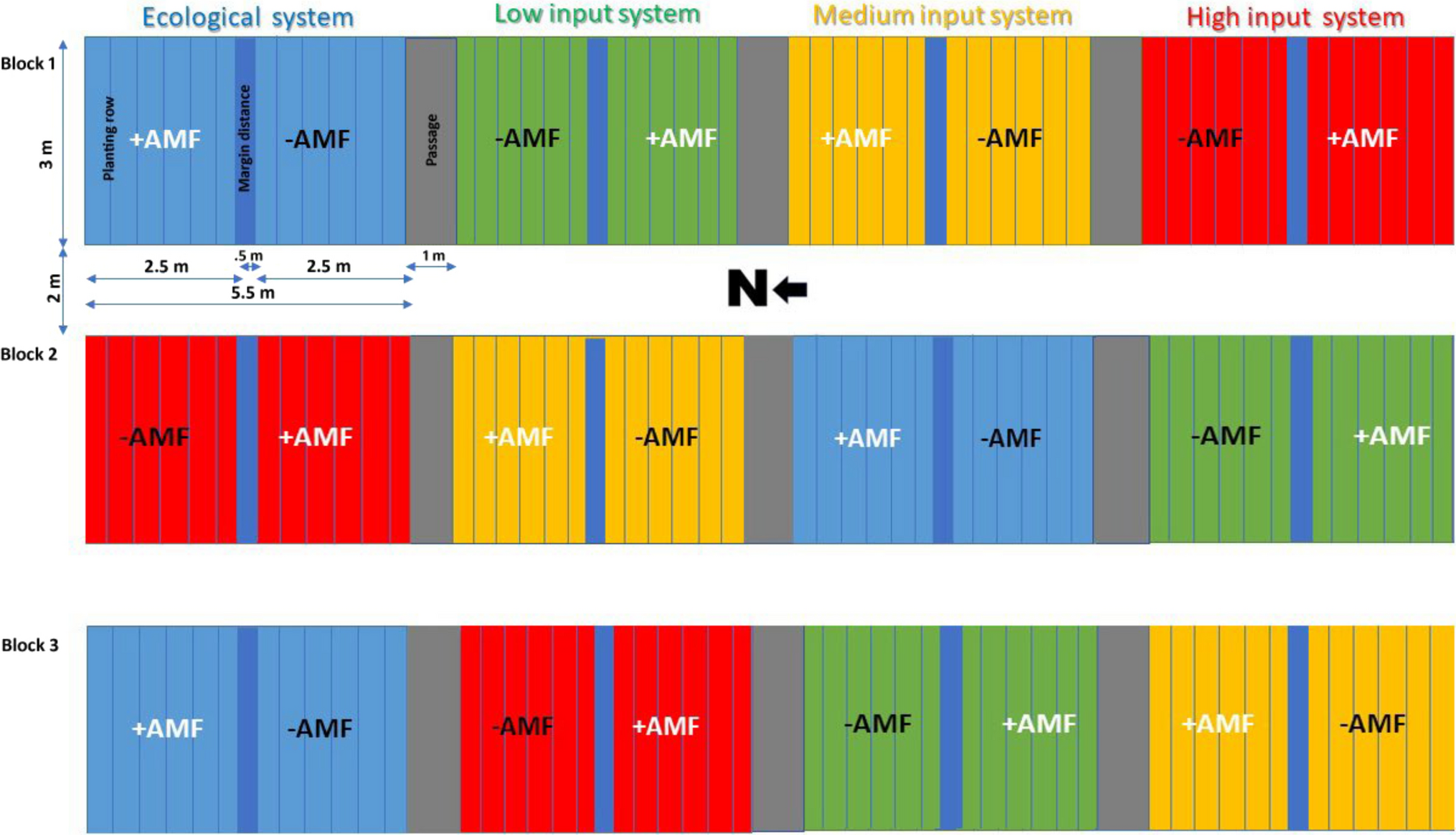
Two field experiments were conducted as split-plot arrangements in a Randomized Complete Block Design (RCBD) with three replications. Maize seeds were inoculated with exogenous AMF (Rhizophagus intraradices and Funneliformis mosseae). Analysis of variance (ANOVA) was performed on maize, AMF, and soil variables. Confirmatory Factor Analysis (CFA) grouped variables into two factors. SEM was employed to model causal relationships, with model competency assessed via normalized chi-square, R², RMSE, and other fit indices. Data transformation ensured normality, and reproducibility was maintained through consistent experimental protocols.
Results and conclusions
The SEM model achieved a normalized chi-square of 2.33, indicating competency, with R² = 0.37 explaining 37% of total variance through resource capture and utilization pathways. Key variables like leaf area index (LAI), stem diameter, and root colonization highlighted AMF's role in enhancing maize performance. The model provides a practical tool for agroecological management, reducing inputs while increasing productivity and sustainability.
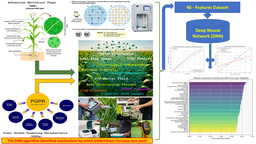
Graphical Abstract
The degradation of fundamental natural resources, the decline in biodiversity, the ever-growing population, and the rise of cultural and geopolitical conflicts have collectively rendered our planet’s environment more unstable than ever before. For the first time in human history, our shared ecosystem faces the tangible risk of total collapse. In this context, it has become imperative to reduce the environmental costs of food production while simultaneously ensuring that the growing global population can access food in safer and healthier ways. One of the most essential pathways toward this goal lies in improving resource-use efficiency on farms. By enhancing how plants absorb and utilize water, nutrients, and energy—and by understanding the eco-physiological pathways through which these resources are converted into food—we can minimize input usage while ensuring the sustainable exploitation of soil, water, and plant resources.
In this study, titled “Discovering and quantifying the eco-physiological advantages of plant-soil-Arbuscular Mycorrhizal Fungi (AMF) system: a promising eco-math-statistical modelling approach,” published in Discover Ecology (Springer Nature), we sought to bridge the gap between ecophysiology and mathematical modeling to improve the sustainability of agricultural systems. Our motivation was rooted in a simple yet powerful question: Can we quantify the hidden causal mechanisms of AMF-plant symbiosis to guide practical agroecological decisions?
The Motivation Behind the Work
Traditional methods for assessing AMF symbiosis, like root colonization percentage, are limited—they are time-consuming, subjective, and fail to capture the full eco-physiological impact on crop performance. Modern agriculture generates vast data on plant traits, soil properties, and microbial interactions, but these often remain underutilized due to the complexity of cause-effect relationships. Conventional statistics struggle with nonlinear dynamics, while ignoring symbiosis efficacy hinders sustainable practices. This gap between measurement and mechanistic understanding became the foundation of our research. We aimed to create a modeling framework capable of revealing quantifiable pathways in resource dynamics, making AMF a predictable tool for eco-friendly farming.
Our Approach: From Data to Discovery
We developed a Structural Equation Modeling (SEM) framework that integrates measured variables into latent constructs—resource capture and utilization—representing eco-physiological processes. These constructs model how AMF enhances nutrient mobilization, root development, and photosynthetic efficiency in maize. The approach involved field trials with AMF inoculation, ANOVA for initial analysis, CFA for factor grouping, and SEM for causal path quantification. By focusing on variables like leaf area index, chlorophyll content, and soil respiration, our model acts not just as a predictive tool but as a digital map of the symbiosis's biological logic.
Overcoming Challenges
Developing this framework was far from straightforward. One major challenge was data variability across cropping systems and years—harmonizing traits like root colonization and canopy temperature required rigorous normalization without losing ecological meaning. Another difficulty was ensuring model reliability; we addressed overfitting through goodness-of-fit indices like normalized chi-square and R², while validating paths against eco-physiological principles. But perhaps the greatest challenge was conceptual: integrating agronomic data with statistical rigor to produce actionable insights, ensuring the model reflects real-world symbiosis rather than abstract correlations.
Key Findings and Insights
The SEM model uncovered that AMF symbiosis explains 37% of variance in maize performance through resource capture (e.g., root colonization enhancing nutrient uptake) and utilization (e.g., improved chlorophyll leading to better yield). Paths like LAI to dry matter (R=0.89) and colonization to resource capture (R=0.35) revealed novel dynamics—AMF boosts radiation capture via larger leaves and reduces stress through better water uptake. Such insights highlight bio-efficiency mechanisms where microbial symbionts can replace chemical inputs, promoting resilience in semi-arid systems.
Why It Matters
Global agriculture stands at a crossroads. The challenge of feeding nearly 10 billion people by 2050 cannot be met with incremental improvements alone. What we need are transformative frameworks that connect disciplines—bringing together biology, statistics, and environmental ethics. Our research contributes a step in that direction. It shows that mathematical modeling, when guided by ecological principles, can become a tool for biological discovery rather than just quantification. By learning from the symbiosis's inner logic, we can move toward a form of agriculture that is both productive and regenerative.
Looking Ahead
This work opens the door to a new generation of hybrid models—systems that combine SEM, machine learning, and ecophysiological simulation. The next step is to apply similar frameworks to multi-crop systems, assess climate adaptation strategies, and develop decision-support tools for farmers in resource-limited regions. Ultimately, this study is not just about models or datasets; it’s about a vision. A vision where data-driven intelligence becomes an ally of ecological wisdom—helping humanity cultivate food systems that sustain both people and the planet.

I focus on tackling unsustainability in food systems using ecosophy & ML for sustainable solutions. My work promotes a sociocultural-ecological shift, leveraging AI for predictive modeling and precision agriculture to enhance food security and resilience. Methods and Techniques: I integrate ecological knowledge & Python programming for optimized farming, and biodiversity. Ongoing Projects: I develop AI models to predict climate impacts on crops, optimize resource use via ML.
Follow the Topic
-
Discover Ecology
A fully open access, peer-reviewed journal supporting multidisciplinary research and policy developments across all fields relevant to ecology, including biogeography, evolutionary biology, genetics and ethnology.

Related Collections
With Collections, you can get published faster and increase your visibility.
Conservation Biogeography and Climate Change
Conservation Biogeography is a discipline that provide ecological and evolutionary tools to biological conservation. In the whole world, the species have been modified regarding their distributional areas due to the climate change. Biogeographic patterns should be analyzed because those modifications could be irreversible. In this collection, researches about how the biotas face the climate change in the century XXI, and how the society can contribute to the maintaining of the biodiversity at long term.
Keywords: biodiversity, conservation, Evolution, systematic planning, species distribution models
This Collection supports and amplifies research related to SDG 13.
Publishing Model: Open Access
Deadline: Nov 25, 2026
Trait-based Urban Biodiversity and Urban Ecosystem
Urban biodiversity and ecosystem services are key towards a sustainable cities and welfare of urban residents. We propose the study of urban biodiversity and ecosystem via a trait-based approach, which includes functional traits of plants, birds, amphibians, insects ect. Moreover, ecological engineering and restoration practices can also be enhanced through a trait-based approach in urban areas. For example, trait-based approach can improve the guidance in the choice of the ideal greening vegetation and monitoring of functional diversity post the urban ecological engineering project.
Keywords: urban plants; trait-based approaches; species diversity and functional diversity; urban ecosystem functions; ecological restoration in urban.
This Collection supports and amplifies research related to SDG 11.
Publishing Model: Open Access
Deadline: Jul 31, 2027