Domestication of the Amazonian fruit tree cupuaçu may have stretched over the past 8000 years
Published in Earth & Environment



Deep within the Amazon rainforest, a captivating narrative emerges, one of biodiversity, indigenous communities, and plant domestication. This vast and diverse region, housing countless plant species, plays a critical role in global ecosystem services and carbon regulation. The wealth of Amazonia's functional and taxonomic biodiversity is intricately linked to the stewardship of indigenous communities, who have adeptly managed plants for millennia.
Amazonia has historically been the cradle of numerous plant species cultivated for over 12,000 years. Presently, the region's food economy is a primary activity, featuring numerous plant species with varying domestication levels. Some, like açaí palm, guaraná, and cacao, have been selectively altered and are now cultivated or consumed. Others, including pineapple, cassava, and the peach palm, have undergone more pronounced domestication, featuring specific traits favored by indigenous populations.
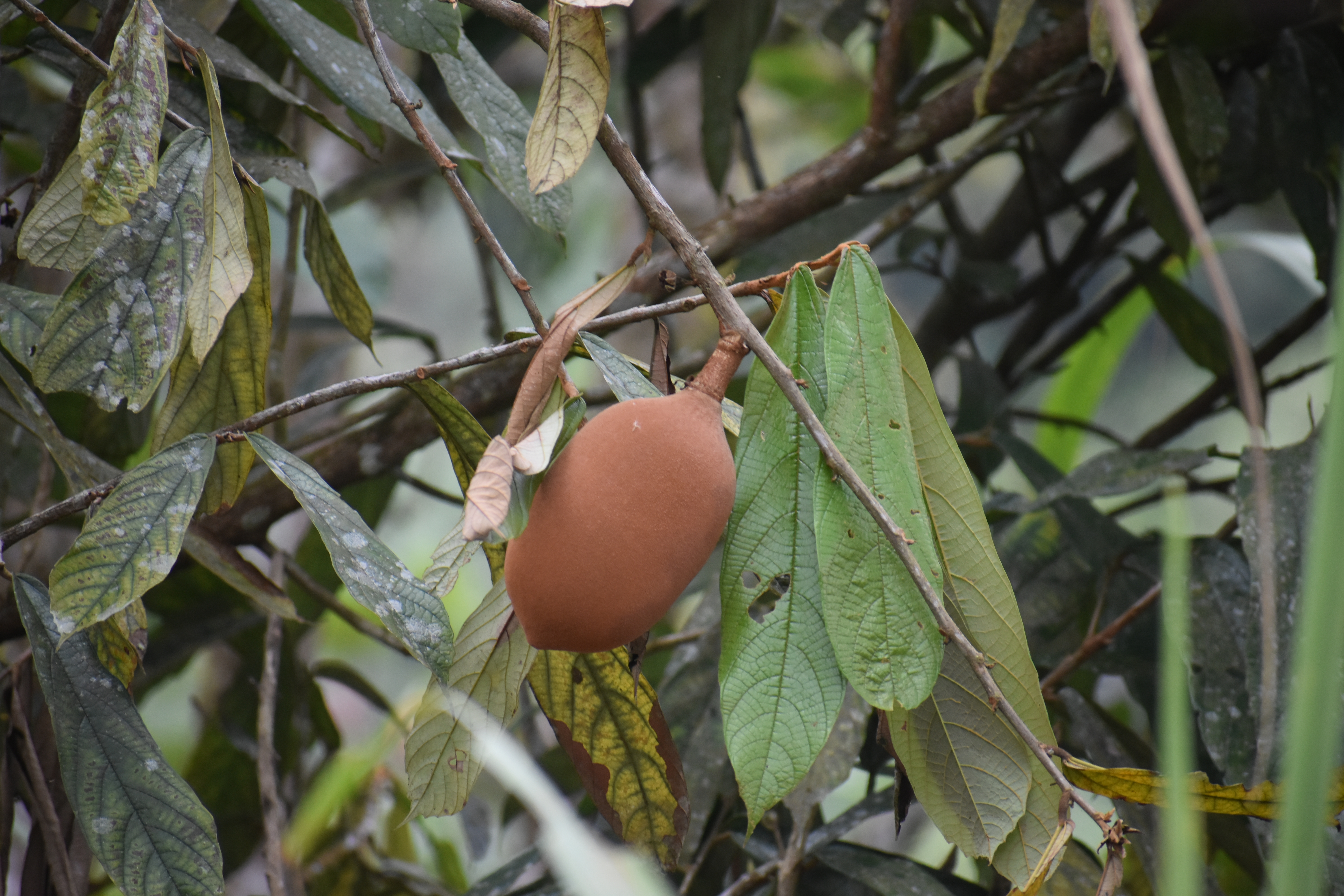
Within this rich Amazonian tapestry, one plant species have remained relatively uncharted—cupuaçu (Theobroma grandiflorum, Malvaceae). Cupuaçu, a fruit tree closely related to cacao (Theobroma cacao), predominantly thrives in the Amazon Basin, with Brazil as its primary habitat. Valued for its seed-pulp, used in creating various desserts, cupuaçu seeds also produce "cupulate", a confectionery akin to chocolate but with a unique flavor. Over recent decades, the economic importance of cupuaçu has surged especially in Brazil, with Brazilian authorities estimating a production of over 21,000 tons in 2017, generating more than 11 million US dollars in revenue for the year.
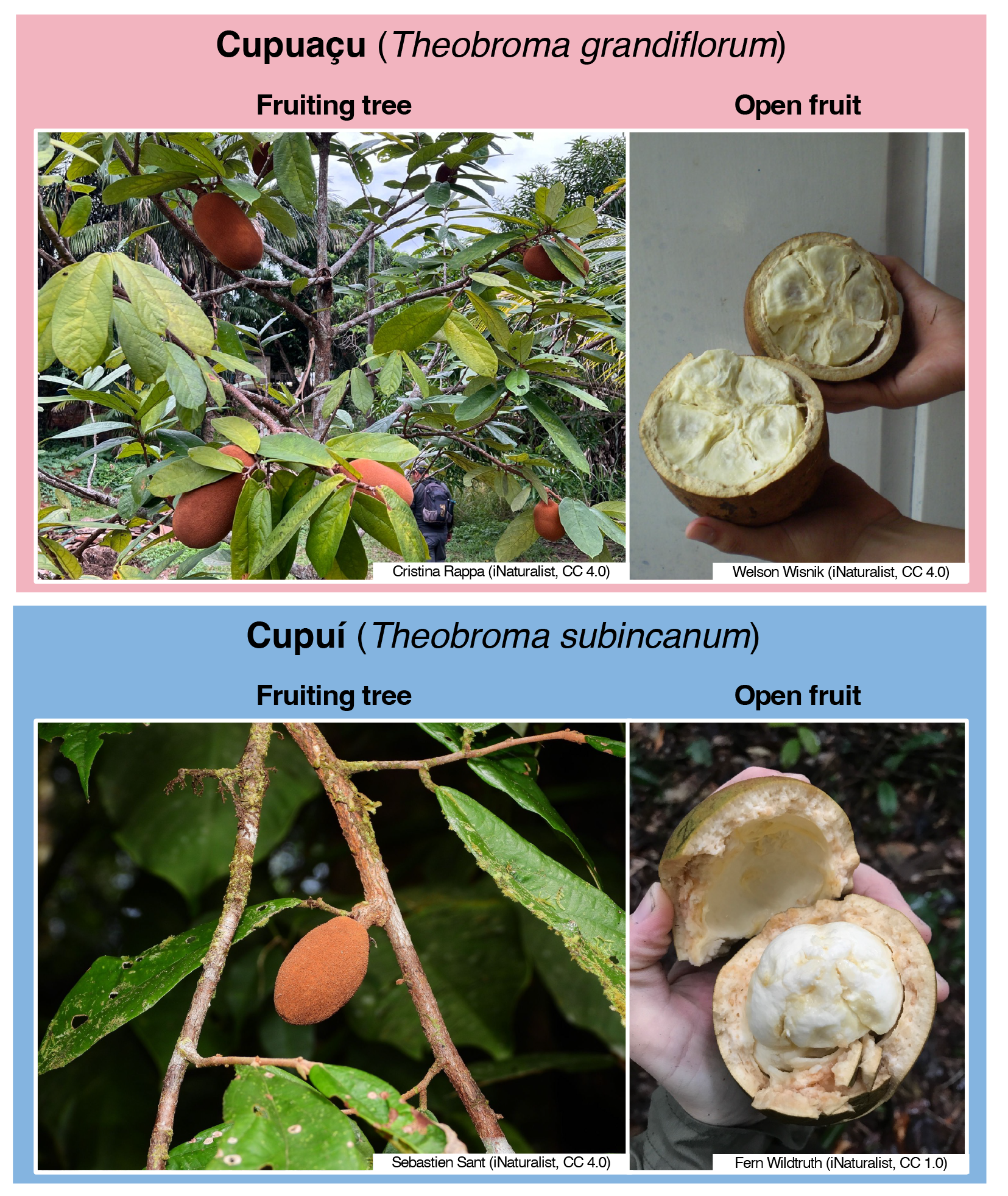
Cupuaçu's closest relative is cupuí (Theobroma subincanum), and recent studies that depict phylogenetic relationships among taxonomic groups have consistently shown these two species to be sister-groups. Morphologically, cupuí closely resembles cupuaçu but features smaller fruits and seeds, along with hairier leaves. Their geographic distributions largely overlap, with cupuí extending further into Western Amazonia. Both words, "cupuaçu" and "cupuí," share a common Tupi-Guarani root, indicating their resemblance to cacao.
In this present study, analyses of genomic data at population levels was employed to explore the domestication history of cupuaçu. Our findings offer a very interesting revelation: cupuaçu is not a sister-species of cupuí, as suggested by prior phylogenetic studies, but rather a domesticated form, with cupuí lineages being its progenitor.
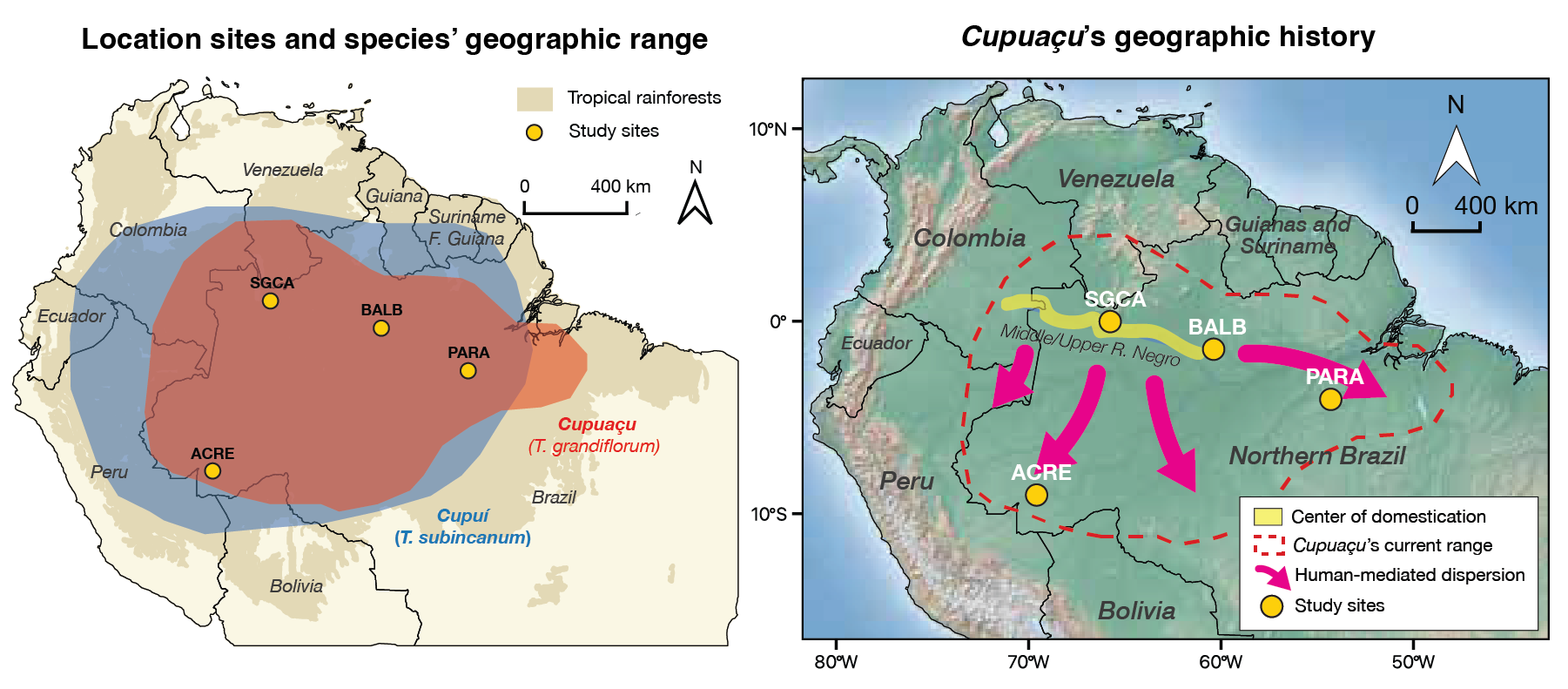
When we depicted the demographic history of cupuaçu and cupuí by analyzing changes in genomic structure of its populations from four sites in Brazil, we found that the domestication process of cupuaçu is marked by two moments: the first occurring 5,000-8,000 years ago, somewhere in Northwestern Amazonia, in the region of the Middle-Upper Rio Negro basin. Conversely, the second important moment of cupuaçu's domestication took place more recently, over the last two centuries, coinciding with historical events in the Brazilian Amazon, including the rubber boom that took place in the late 19th century and large-scale migrations in the 20th century that happened in Brazil's modern history.
Cupuaçu's domestication history predates that of cacao, a curious revelation given that cacao was initially used for its pulp by indigenous societies. Cupuaçu's remarkable transformation highlights the intense selection pressure imposed by humans on populations of its progenitor cupuí, leading to distinct morphological traits. While our study has some limitations, including a limited geographic sampling of populations, it presents exciting opportunities for further research. A more extensive sampling of more locations may provide a more precise timeframe for cupuaçu's domestication, shedding light on the domestication processes of other valuable Amazonian plants. The intricate relationship between humans and plants in Amazonia, as evidenced by the case of cupuaçu, continues to unfold, offering valuable insights into the region's past, present, and future.
Follow the Topic
-
Communications Earth & Environment
An open access journal from Nature Portfolio that publishes high-quality research, reviews and commentary in the Earth, environmental and planetary sciences.

Related Collections
With Collections, you can get published faster and increase your visibility.
Ecological resistance and resilience under global change
Publishing Model: Open Access
Deadline: Apr 07, 2027
High-resolution modeling for Earth system
Publishing Model: Open Access
Deadline: Feb 07, 2027