Effectiveness of a Nursing Rehabilitative Intervention for Elderly Victims of Spousal Emotional Abuse on Stress Level, Life Satisfaction, and Family Functioning
Published in Healthcare & Nursing


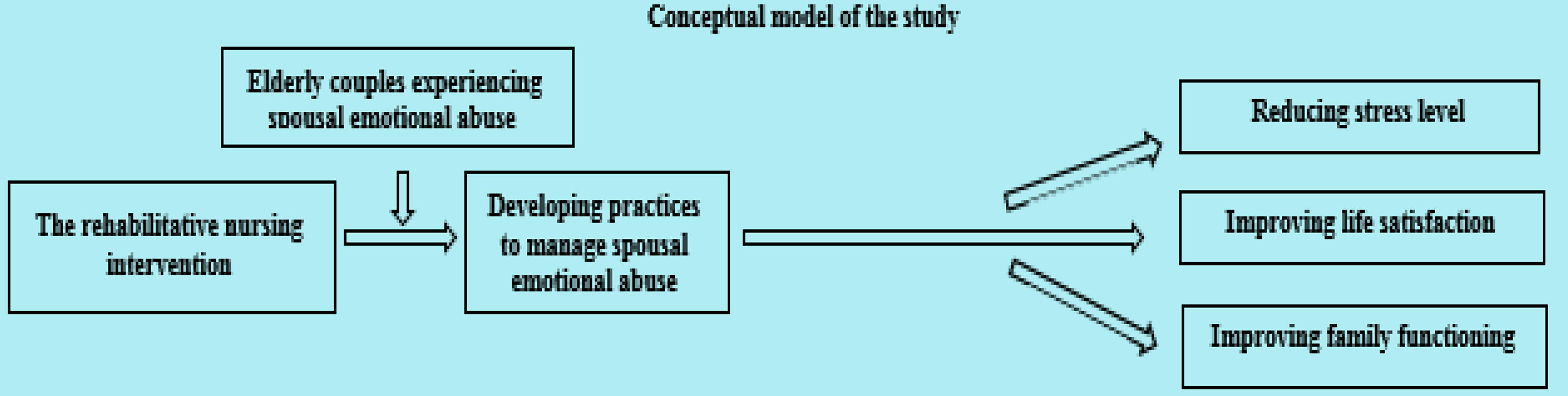

Emotional abuse among elderly couples represents a significant yet often underrecognized public health concern, with profound p sychological and social consequences. Older adults are particularly vulnerable due to increased dependency, social isolation, and reduced coping capacities. Exposure to spousal emotional abuse has been associated with elevated stress levels, diminished life satisfaction, and impaired family functioning, all of which negatively affect overall quality of life. Despite the seriousness of this issue, there is a lack of structured, evidence-based nursing interventions specifically designed to address the needs of this population.
This study aimed to evaluate the effectiveness of a nursing rehabilitative intervention for elderly victims of spousal emotional abuse in reducing stress levels, enhancing life satisfaction, and improving family functioning. A quasi-experimental research design was utilized, involving a sample of elderly individuals exposed to emotional abuse within marital relationships. Participants were assessed before and after the implementation of the intervention using validated measurement tools for stress, life satisfaction, and family functioning.
The rehabilitative intervention included structured nursing sessions focusing on emotional support, education about abuse recognition, coping strategies, stress management techniques, and enhancement of interpersonal communication skills. The program was delivered over a specified period through individualized and group-based approaches.
The findings demonstrated a statistically significant reduction in stress levels, along with notable improvements in life satisfaction and family functioning among participants following the intervention. These results highlight the effectiveness of nursing-led rehabilitative programs in addressing the multifaceted consequences of emotional abuse in older adults.
In conclusion, the study underscores the critical role of nursing interventions in mitigating the negative impact of spousal emotional abuse among the elderly. Integrating such programs into routine geriatric and community health services may contribute to improving psychological well-being and strengthening family relationships. Further research is recommended to expand the evidence base and support the development of standardized intervention protocols.

Follow the Topic
-
BMC Nursing
This is an open access, peer-reviewed journal that considers articles on all aspects of evidence-based nursing care; nursing research methods; nursing service delivery, utilization, and evaluation; nursing administration and human resources.

Related Collections
With Collections, you can get published faster and increase your visibility.
Career development for nursing students
BMC Nursing is calling for submissions to its Collection, Career development for nursing students. The transition from nursing education to professional practice is a pivotal phase for nursing students, fraught with challenges and opportunities. As the healthcare landscape continues to evolve, nursing students must navigate a myriad of career pathways, requiring not only clinical competence but also a solid understanding of professional development strategies. This Collection aims to explore the various dimensions of career development for nursing students, including mentorship, networking, and skill acquisition, to better prepare them for successful careers in nursing and healthcare.
Addressing career development in nursing education is essential for fostering a skilled and adaptable workforce. Recent advancements in nursing curricula emphasize the importance of integrating career readiness into educational programs. Initiatives such as simulation training, mentorship programs, and career counseling services have emerged to support nursing students in their professional journeys. By equipping future nurses with the tools and knowledge needed for career success, we can enhance job satisfaction, reduce turnover rates, and ultimately improve patient care outcomes.
Future research in this area holds promise for innovative approaches to career development tailored to the needs of nursing students. As technology continues to reshape healthcare, there may be a rise in virtual mentorship programs and online networking platforms that facilitate connections among nursing professionals. Additionally, ongoing research may lead to the identification of best practices for career development that can be standardized across nursing programs, ensuring that all students have equitable access to the resources they need for successful career trajectories.
We call for studies contributing to the examination of topics relating to career development for nursing students, including but not limited to:
- Mentorship programs in nursing education
- Integration of career readiness in nursing curricula
- The role of simulation in career development
- Effective networking strategies for nursing students
- Peer mentoring and its influence on career maturity and decision-making self-efficacy
- Leadership development and mentoring for emerging nurse leaders
- Digital health and technology skills for modern nursing practice
All manuscripts submitted to this journal, including those submitted to collections and special issues, are assessed in line with our editorial policies and the journal’s peer review process. Reviewers and editors are required to declare competing interests and can be excluded from the peer review process if a competing interest exists.
Publishing Model: Open Access
Deadline: Mar 12, 2027
Person-centered care in nursing 2026
BMC Nursing is calling for submissions to its Collection, Person-centered care in nursing 2026. Person-centered care (PCC), often embraced as part of the culture change movement, describes a shift from staff-centric task-based and disease-centered care to a focus on the individual. This philosophy is characterized by health care professionals’ (such as nurses’) knowledge of the individual with various care needs and a close and trusting relationship between care professionals and recipients. Furthermore, this integrates a clinical perspective with a broader understanding that recognizes the unique experiences of each person with various care needs. Particular attention is required for populations such as older adults in long-term and home-care settings and individuals with complex, multi-morbid conditions, where coordinating person-centered, inter-professional care is critical. In recent years, PCC has gained traction as a “gold standard” in nursing and healthcare, fostering improved communication between individuals with various care needs and healthcare professionals, enhancing the quality of nursing, and promoting better health outcomes. The integration of the perspectives of individuals with various care needs and their loved ones into care planning and decision-making is vital for the successful implementation of PCC.
Advancements in technology (e.g., artificial intelligence) seems to provide promising contributions to the evolution of person-centered care, allowing for greater autonomy and empowerment of individuals with various care needs and involvement in their own care. Research has shown that when people with various care needs are actively engaged in their care, they are more satisfied with it. Moreover, the emphasis on gender and ethnic competence and health equity within PCC frameworks highlights the need for nurses to tailor care interventions to diverse populations, ensuring that all individuals receive equitable treatment that respects their unique backgrounds.
As research in PCC continues to evolve, new methodologies and frameworks are anticipated to further empower individuals with diverse care needs and their loved ones in their care. Future advancements may include innovative digital tools that enhance care communication, more comprehensive approaches to informed consent, and strategies to ensure that care delivery is equitable and gender- and culturally sensitive. Such developments will likely transform how nurses engage with individuals receiving care, ultimately leading to improved health outcomes and a more inclusive healthcare system.
We call for studies contributing to the investigation of topics relating to person-centered care, including but not limited to:
- Empowerment strategies through PCC for individuals with diverse care needs
- Development of innovative PCC interventions and their implementation
- Enhancing health equity through PCC
- Gender and cultural competence in PCC
- PCC approaches in aged-care and long-term residential facilities
- PCC models for dementia, frailty and multimorbidity
- Coordination of complex care across settings (acute, community, home)
- Technology-enabled PCC for older and complex-care populations (e.g., remote monitoring, AI-supported care planning)
- Innovative PCC outcomes
All manuscripts submitted to this journal, including those submitted to collections and special issues, are assessed in line with our editorial policies and the journal’s peer-review process. Reviewers and editors are required to declare competing interests and can be excluded from the peer review process if a competing interest exists.
Publishing Model: Open Access
Deadline: Jan 15, 2027