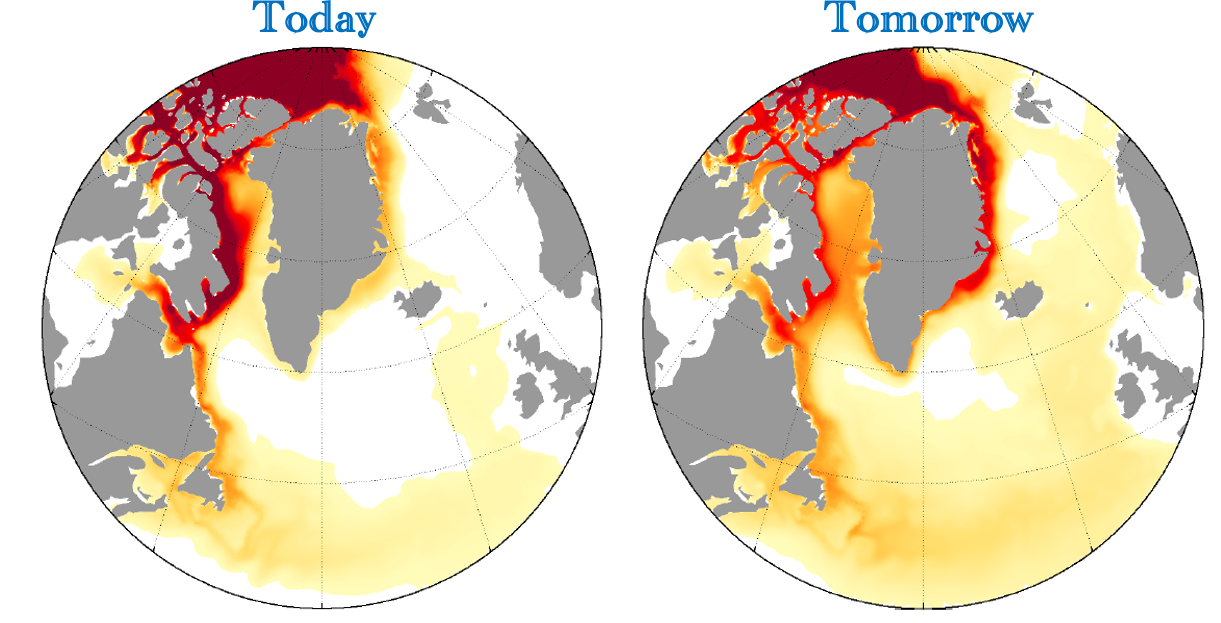

The Arctic Ocean receives a large amount of freshwater from rivers, precipitation, and sea ice melt. Much of this freshwater eventually leaves the Arctic and enters the North Atlantic, where it influences ocean stratification, deep-water formation, marine biogeochemistry, and ultimately climate. However, the pathways of this export are likely to change. Our new paper, published in Nature Communications, examines how and why these pathways may reorganize during this century.
The project grew out of a question that has occupied our group for several years. We have studied the Beaufort Gyre, Arctic freshwater storage, and exchanges between the Arctic and the North Atlantic in a series of previous projects. Those studies gradually revealed different pieces of the same picture, but one question remained unresolved: what determines whether Arctic freshwater leaves mainly through Fram Strait or the Canadian Arctic Archipelago in a warming climate? This paper began as an attempt to answer that question.
Freshwater exported through these two gateways does not have the same climatic consequences. Water leaving through Fram Strait is more likely to reach the regions where deep water forms in the North Atlantic, whereas freshwater exported through the Canadian Arctic Archipelago follows a different pathway with a generally weaker influence on the Atlantic Meridional Overturning Circulation (AMOC). Understanding what controls this partitioning is therefore important for understanding future Arctic–North Atlantic interactions.
At the beginning of the project, we expected the answer to lie mainly in changes occurring farther south in the Baffin Bay and subpolar North Atlantic, where sea level variability has been found to strongly modulate ocean volume transport through the Canadian Arctic Archipelago. Accordingly, much of our early analysis focused on those regions. As our analysis progressed, one region consistently stood out: the waters north of Greenland. This region proved to link changes within the Arctic Ocean with changes in freshwater export toward the North Atlantic.
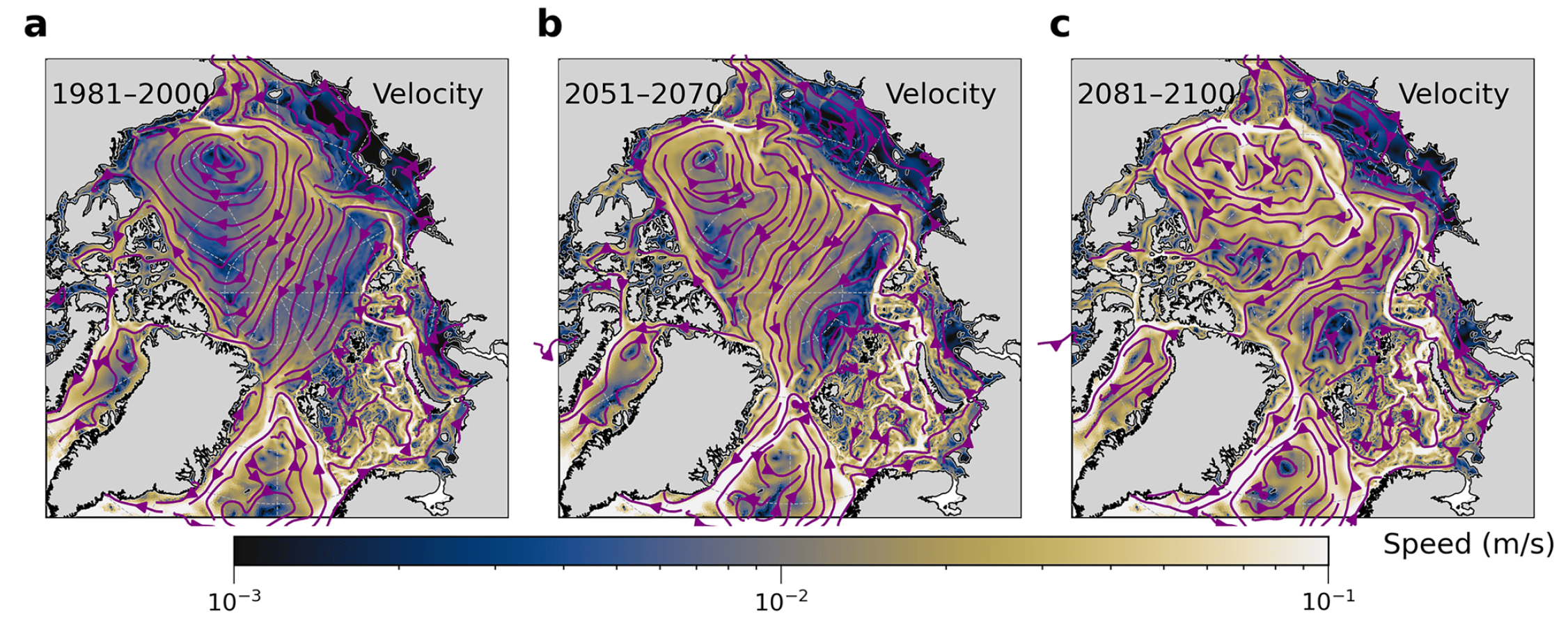
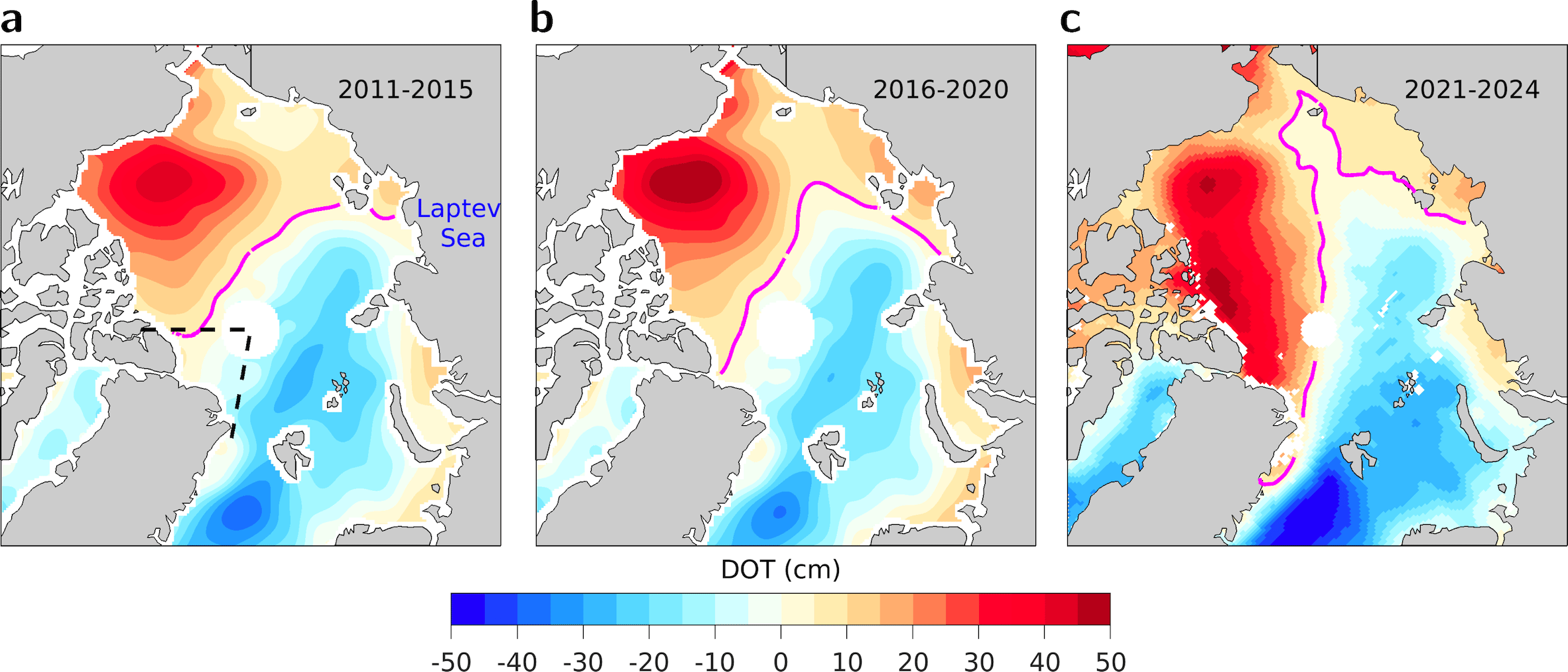
The mechanism can be understood in terms of changes in dynamic sea level and the resulting surface geostrophic circulation. As freshwater spreads eastward from the western Arctic under climate warming, dynamic sea level north of Greenland rises. This alters the sea-surface slope and redirects the surface geostrophic circulation at the southern end of the Transpolar Drift, allowing a larger fraction of Arctic freshwater to leave through Fram Strait. Under continued but moderate warming, this trend persists, making Fram Strait the dominant oceanic export gateway from the Arctic to the North Atlantic. Only if global warming exceeds about 3 °C above pre-industrial levels do saltier waters from the Eurasian Arctic begin to lower dynamic sea level north of Greenland, partially reversing the shift in export pathways.
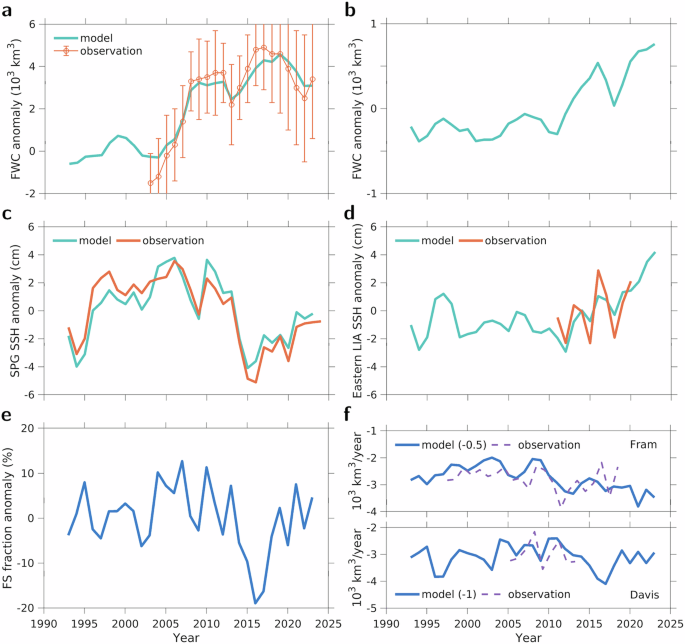
Another part of the story developed only after we compared the model results with recent observations. Satellite observations show that dynamic sea level north of Greenland has been rising during the past decade, and our hindcast simulations indicate increasing freshwater export through Fram Strait accordingly. Although observations alone cannot demonstrate that the projected long-term transition in climate simulations has begun, their consistency with the projected early-stage evolution suggests that this reorganization of Arctic freshwater pathways may already be emerging. The consistency between the observations and the modelled mechanism provided independent support for our interpretation of the projected changes.
The implications extend beyond freshwater itself. Arctic waters transport nutrients, dissolved organic carbon, carbonate chemistry signals, and other substances that influence marine ecosystems. A shift in export pathways therefore changes not only where freshwater enters the North Atlantic, but also where these biogeochemical tracers are delivered. Understanding the consequences for marine ecosystems and biogeochemical cycles will require much closer collaboration between physical oceanographers and biogeochemists.
This study also highlights the importance of continuing observations north of Greenland. For decades, thick multiyear sea ice made this one of the least accessible parts of the Arctic Ocean. Recent Polarstern expeditions, together with advances in satellite observations, are beginning to provide measurements from a region that has long been difficult to observe. These observations will be essential for evaluating how Arctic circulation evolves over the coming decades and for testing the mechanisms identified in this study.
Looking back, what I appreciate most about this project is not a single result, but the way it brought together questions that we had previously studied separately. Beaufort Gyre freshwater storage, the Transpolar Drift, dynamic sea level north of Greenland, and exchanges between the Arctic and the North Atlantic initially appeared to be distinct problems. This work suggests that they are closely connected through a common dynamical framework. I doubt that we have reached the end of the story. As new observations become available from the waters north of Greenland, they will provide an increasingly clear picture of how Arctic circulation is changing and whether Fram Strait is indeed becoming the dominant Arctic export gateway under moderate warming, as our results suggest.
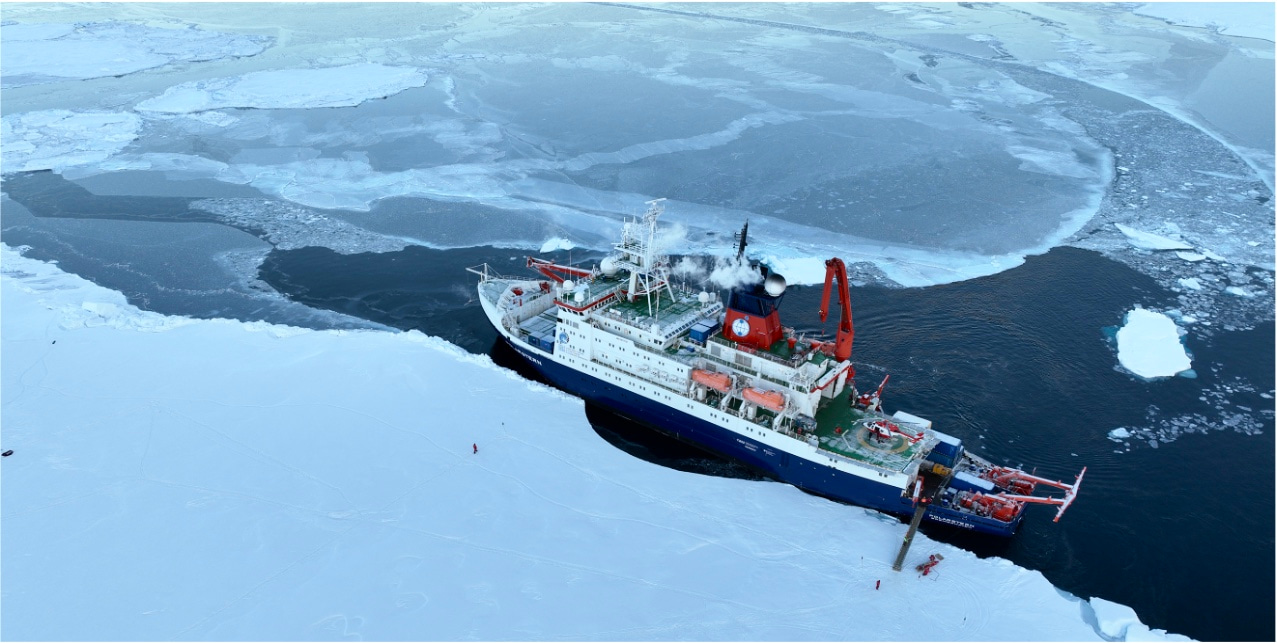
Polarstern in the waters north of Greenland during an Arctic expedition in 2025. This region is identified in the new study as the key control point influencing how Arctic freshwater is exported to the North Atlantic in a warming climate. (Photo: Marcel Nikolaus)
Read the paper for more details:
Wang, Q. et al. Sea level rise and fall north of Greenland reorganize Arctic freshwater export to North Atlantic. Nat Commun 17, 6242 (2026). https://doi.org/10.1038/s41467-026-75610-8

Follow the Topic
-
Nature Communications
An open access, multidisciplinary journal dedicated to publishing high-quality research in all areas of the biological, health, physical, chemical and Earth sciences.

Related Collections
With Collections, you can get published faster and increase your visibility.
Women's Health
Publishing Model: Hybrid
Deadline: Ongoing
Tumor Microenvironment Crosstalk and Therapeutic Implications
Publishing Model: Hybrid
Deadline: Nov 02, 2026