From Siberia to Alaska: new connections in a warming Arctic Ocean
Published in Social Sciences, Earth & Environment, and Sustainability
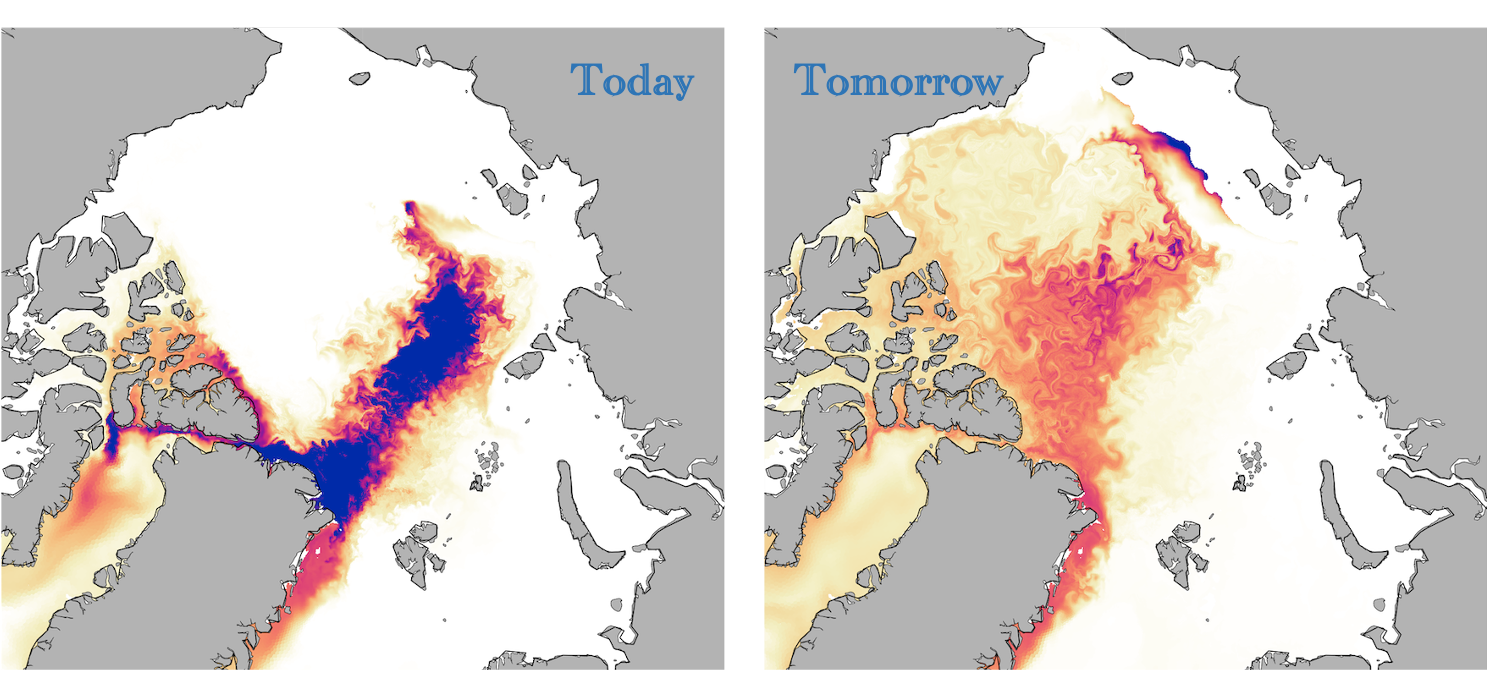

Every year, an enormous flow enters the Arctic Ocean: water from rivers. The Arctic receives more than 10% of the world's river discharge despite containing only about 1% of global ocean volume. These rivers carry not only freshwater, but also nutrients, organic carbon, sediments, and increasingly, pollutants. As the Arctic warms, river runoff is expected to increase. A natural question follows: where does all this material go?
To investigate this, we used high-resolution numerical simulations together with virtual tracers and drifting particles representing Arctic river discharge and the materials it carries. We followed their journeys through the ocean under both present-day and future climate conditions.
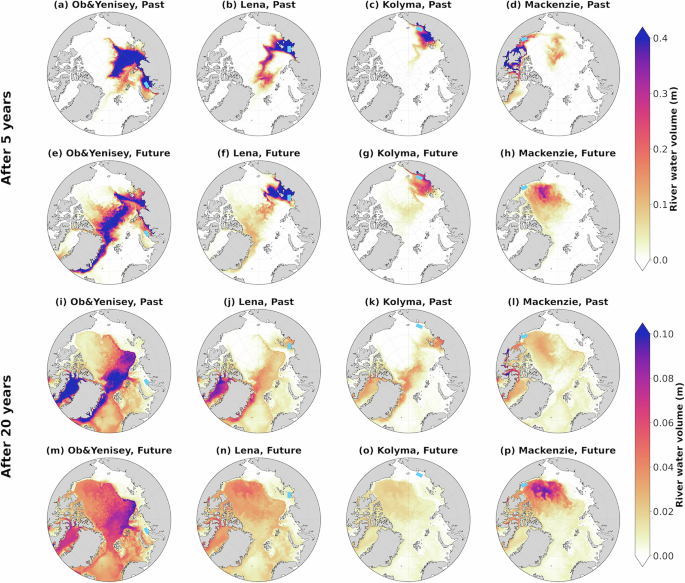
We found a striking increase in Arctic Ocean connectivity under future climate conditions, both within the Arctic Basin and between the Arctic and the subpolar seas. River water from Siberia spreads more quickly across the Arctic Basin and reaches the North Atlantic much sooner than it does today. At the same time, a growing fraction is diverted toward the western Arctic.
Materials originating thousands of kilometres away in Siberian rivers increasingly find their way into the Beaufort Gyre, a large clockwise circulation system north of Alaska and Canada. Historically, the gyre has acted mainly as a regional reservoir, storing freshwater from nearby sources. In our future simulations, however, it becomes a pan-Arctic accumulation zone.
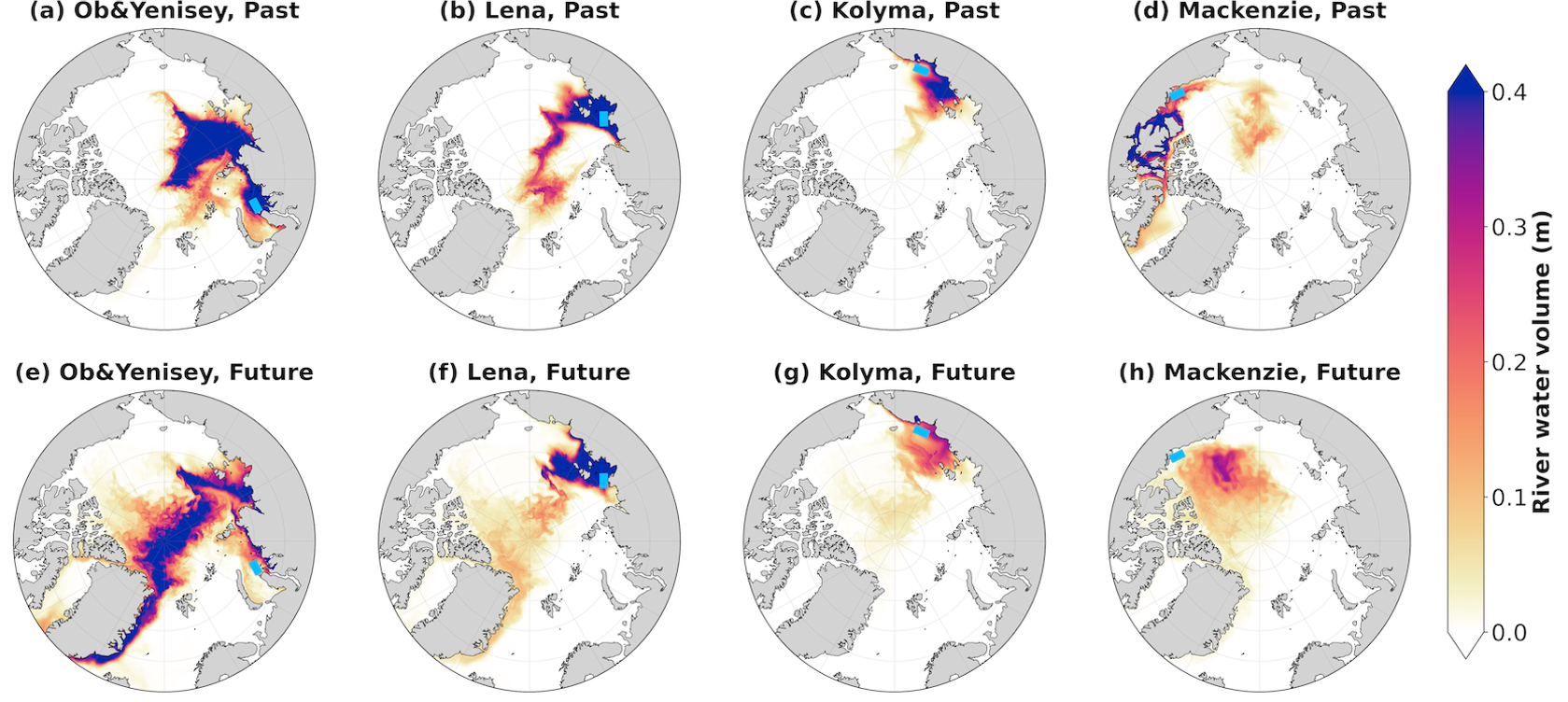
Faster dispersal of river discharge under future climate conditions. Spatial distribution of vertically integrated river runoff content after entering the ocean for five years.
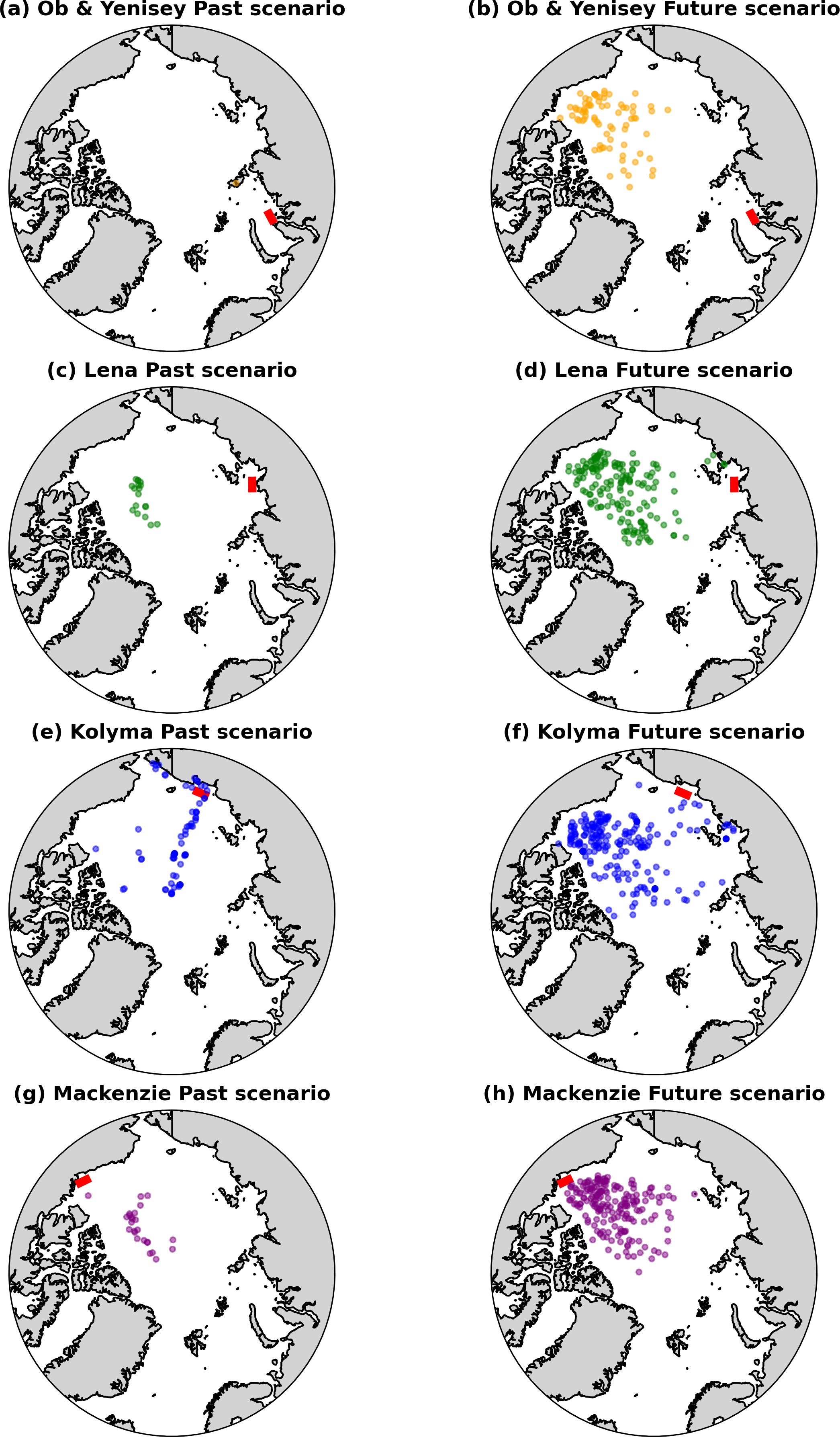
Increasing accumulation of river-born materials in the western Arctic under future climate. Spatial distribution of surface particles after being released for 20 years from the four major Arctic river systems.
Why does this happen?
This increase in connectivity arises from several interacting changes. Less sea ice allows winds to transfer more energy into the ocean, while Arctic winds themselves are projected to strengthen. Surface waters become fresher and warmer. Together, these changes intensify both Arctic surface currents and the convergence of surface waters toward the Beaufort Gyre. Meanwhile, spinning ocean eddies become more energetic and more effective at transporting material across the largest Arctic Ocean front, the Transpolar Drift.
As a result, regions of the Arctic that were previously only weakly connected become more strongly linked. Material released on the Siberian shelves gains more opportunities to cross the central Arctic and enter the Beaufort Gyre.
These circulation changes affect far more than freshwater distribution. Rivers transport nutrients that support ecosystems, carbon released from thawing permafrost, and contaminants ranging from industrial pollutants to microplastics. The western Arctic may therefore experience increasing exposure to materials originating far outside its own watershed. What was once largely a regional system is becoming increasingly connected to Arctic coastlines and watersheds across the basin.
Not all questions have been answered in our new study. Different terrigenous materials behave differently in the ocean. Some float, some sink, some become trapped in sea ice, and some change their fate through biofouling as organisms colonize their surfaces. Understanding the future pathways of different substances will require further work. Yet the broader message is clear: climate change is not only warming the Arctic. It is rewiring the Arctic.
Read the paper for details:
Wang, K., Liu, C., Shu, Q. et al. Warming transforms the western Arctic Ocean into a hub of drifting matter. Nat Commun 17, 5317 (2026). https://doi.org/10.1038/s41467-026-74439-5

Follow the Topic
-
Nature Communications
An open access, multidisciplinary journal dedicated to publishing high-quality research in all areas of the biological, health, physical, chemical and Earth sciences.

Related Collections
With Collections, you can get published faster and increase your visibility.
Women's Health
Publishing Model: Hybrid
Deadline: Ongoing
Tumor Microenvironment Crosstalk and Therapeutic Implications
Publishing Model: Hybrid
Deadline: Nov 02, 2026
