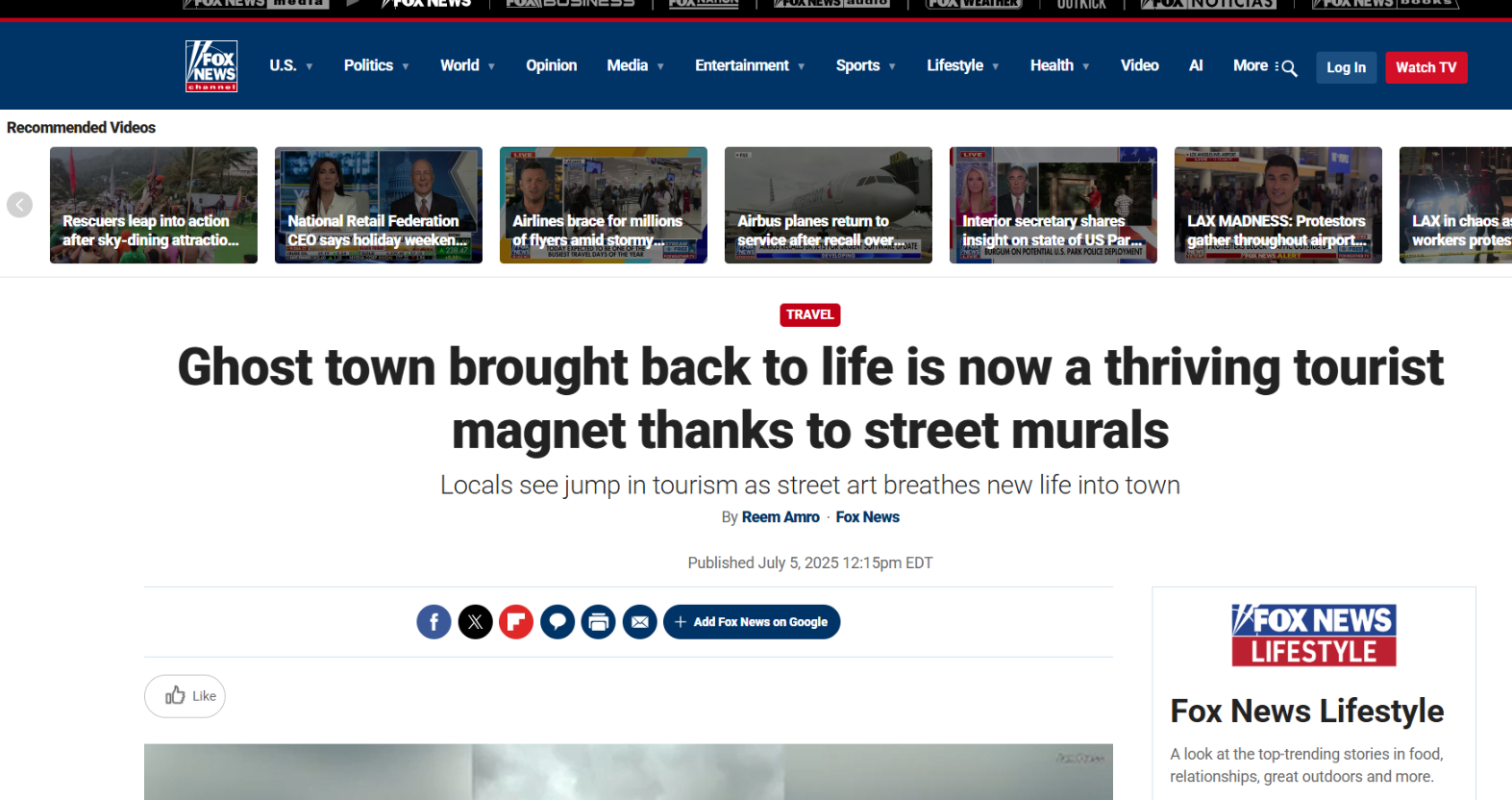
From Dereliction to Cultural Magnet: Street Art, Visual Spectacle and Sustainable Regeneration in Stornara (FOX NEWS USA)
Published in Social Sciences and Education
SOURCE: https://doi.org/10.5281/zenodo.17782034
The renaissance of Stornara, an agricultural settlement in the Tavoliere delle Puglie with around 5,000 inhabitants, offers a striking illustration of how street art can serve as a catalyst for territorial revival. Once characterised by depopulation and economic contraction, the town has been reimagined through the Stramurales International Street Art Festival, organised by Stornara Life APS under the stewardship of Lino Lombardi, now comprising over 140 murals.
Street art beyond beautification
Literature on culture-led regeneration has long debated whether artistic intervention is a driver or a symptom of renewal. Early 'creative city' models [Florida, 2002; Evans, 2009] emphasised attraction of the creative class, but subsequent critical work highlighted risks of gentrification and displacement in urban contexts [Zukin, 2010; McAuliffe, 2012].
Recent rural-focused research proposes a different mechanism. Gibson, Waitt and Head argue that in small towns, murals function less as real-estate valorisation and more as symbolic reparation - dignifying neglected spaces and restoring visibility to communities rendered invisible by demographic decline. This aligns with Scannell and Gifford's work on place attachment, where aesthetic investment supports place identity and pride.[2021][2010]
In Stornara, fieldwork between 2018-2024 shows that murals operate simultaneously on two levels. As aesthetic embellishments, they transform abandoned streets into vibrant tableaux. As instruments of socio-economic renewal, they create what Molnár describes as 'legitimacy for place', enabling local commerce - bars, B&Bs, artisanal shops - to reposition within a cultural narrative rather than a deficit narrative.[2018]
Visual spectacle and social media amplification
The article for Fox News situates Stornara's metamorphosis within debates on the performative power of visual spectacle. This can be grounded in research on tourism and mediatisation. Urry's concept of the tourist gaze and its later revision for the digital age [Urry & Larsen, 2011] suggests that destinations are increasingly consumed through images before they are visited.
Boy, Uitermark and Woldendorp demonstrate that Instagrammable street art generates secondary circuits of visibility: visitors photographing murals produce user-generated content that functions as unpaid destination marketing, extending reach far beyond traditional campaigns. Andron and Watzke note that this 'social media visibility' can be double-edged, risking superficial consumption, but when governance remains local, it can amplify community agency rather than erode it.[2020][2022]
In Stornara, the deliberate cultural strategy of Stornara Life APS has leveraged this dynamic. By maintaining an open-access archive of works and encouraging documentation, the festival has inserted a small Apulian town into a global cultural conversation without reliance on large-scale infrastructure investment. This is consistent with Richards' work on creative tourism, where co-creation and documentation become part of the experience itself.[2020]
Communal identity and cultural sustainability
The claim that art can rekindle communal identity is central to cultural sustainability literature. Soini and Birkeland define cultural sustainability as the maintenance and transmission of cultural practices, identity and sense of place across generations. UCLG's Agenda 21 for Culture similarly positions cultural participation as a pillar of sustainable development, alongside environmental and economic dimensions.[2014]
In Stornara, this manifests in three observable processes documented in ethnographic observation:
First, re-appropriation of public space. Streets previously avoided are now sites of intergenerational gathering during festival production.
Second, narrative renewal. Murals depicting agricultural labour, women's work and migration provide counter-narratives to decline, a process Wandersman and Florin identify as central to community empowerment.
Third, economic micro-activation. Rather than large-scale tourism, the impact is on local commerce revitalisation - a pattern described in OECD reports on rural tourism as 'low-intensity, high-retention' value creation, where visitor spending remains local.[OECD][2020]
These processes do not imply that street art alone reverses structural demographic trends. What they demonstrate is that intentional cultural strategy, when harnessed with community stewardship, can become what in urban sociology is termed a 'civilising infrastructure': a modest but meaningful intervention that improves everyday quality of life and enables other forms of resilience.
A paradigm, not a panacea
Stornara exemplifies how deliberate cultural strategy can breathe new life into communities long overshadowed by decline, but it also cautions against romanticisation. Long-term sustainability requires continued local governance, as stewardship by figures like Lino Lombardi and the association ensures continuity beyond the event itself, and integration with broader policies on housing, mobility and agricultural value chains.
For scholars of urban regeneration, the case suggests that the paradigm of 'thriving tourist magnet' should be reframed: success is not measured by arrival numbers alone, but by whether aesthetic transformation supports communal identity and cultural sustainability over time.
References
Andron, S., & Watzke, M. (2022). Social media and street art visibility. Urban Studies.
Boy, J., et al. (2020). Instagrammability and the city. City, 24(3-4).
Evans, G. (2009). Creative cities, creative spaces and urban policy. Urban Studies, 46(5-6).
Florida, R. (2002). The Rise of the Creative Class. Basic Books.
Gibson, C., et al. (2021). Creative economies in rural communities. Progress in Human Geography.
McAuliffe, C. (2012). Graffiti or street art? Environment and Planning A, 44(1).
Molnár, V. (2018). Street art and the valorisation of urban space. Cultural Sociology.
OECD (2020). Rural Well-being: Geography of Opportunities.
Richards, G. (2020). Designing creative places. International Journal of Culture, Tourism and Hospitality Research.
Scannell, L., & Gifford, R. (2010). Defining place attachment. Journal of Environmental Psychology, 30(1).
Soini, K., & Birkeland, I. (2014). Cultural sustainability. Sustainability Science, 9.
Urry, J., & Larsen, J. (2011). The Tourist Gaze 3.0. Sage.
Zukin, S. (2010). Naked City. Oxford University Press.
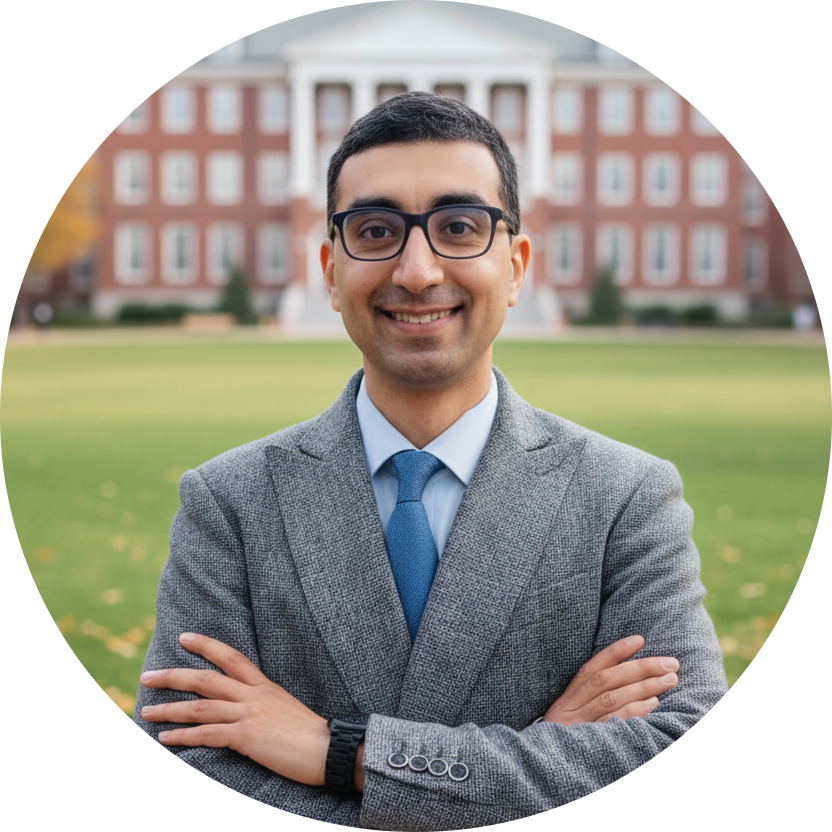
- Pluriennal high-tech practictioner at Google Ireland (Dublin), Apple EU Headquarters (Cork), and Amazon Slovakia (Bratislava).
- Alumnus of Aspire Institute, Harvard Business School.
- Current Member of Harvard Aerospace and Defense Alumni Organization (HADAO).
- Former Member of the White House Historical Association (WHHA).
- Former Member of Yale Club of New Haven (YCNH).
- International Journalist with numerous pieces/interviews featured on London Daily News, New York Post, Los Angeles Journal, The Hill, The Washington Post Opinion, Fox News USA, The Associated Press, The Daily Mirror UK, Metro UK, BBC News World Services, AS USA, Yahoo, AOL, MSN, The Scottish Daily Express, The Daily Record Scotland's Champion, L' Essentiel Luxembourg, 20Minuten.ch, NYC Up Magazine, Yale Daily News, The Stanford Daily, The Psychologist, Popular Archeology, Hollywood Beats Magazine, Opera Gazet, Corriere della Sera, Blog L' Espresso-Repubblica "Fino a Prova Contraria", Blog Nicola Porro, Agenda Digitale.
- Contributing Academic Author to the "Stanford Social Innovation Review" at Stanford University.
- Contributing Academic Author to the Faculty of Law B., University of Oxford.
- Contributing Academic Book Critic to the LSE Review of Books with Executive Education Certificate in Communication from the London School of Economics (LSE) and Political Science.
- Alumnus of the Aspire Institute, Harvard Business School.
- Pro PhD and MBA at the European Open University, Germany.
- Open Researcher and Contributor ID (ORCID):
0009-0003-9392-9213
- Web of Science ResearcherID:
OYE-6074-2025
- Google Scholar:
https://scholar.google.com/citations?user=XALdgW8AAAAJ&hl=it
- Zenodo Author Page Profile:
https://zenodo.org/search?q=metadata.creators.person_or_org.name%3A%22Magaldi%20Sardella%2C%20Luciano%22&l=list&p=1&s=10&sort=bestmatch
- Academia.edu Profile: https://cambridge.academia.edu/LucianoMagaldiSardellaPhD
- ResearchGate Profile:
https://www.researchgate.net/profile/Luciano-Magaldi-Sardella