From economic financialization toward universal economic socialization
Published in Economics and Law, Politics & International Studies
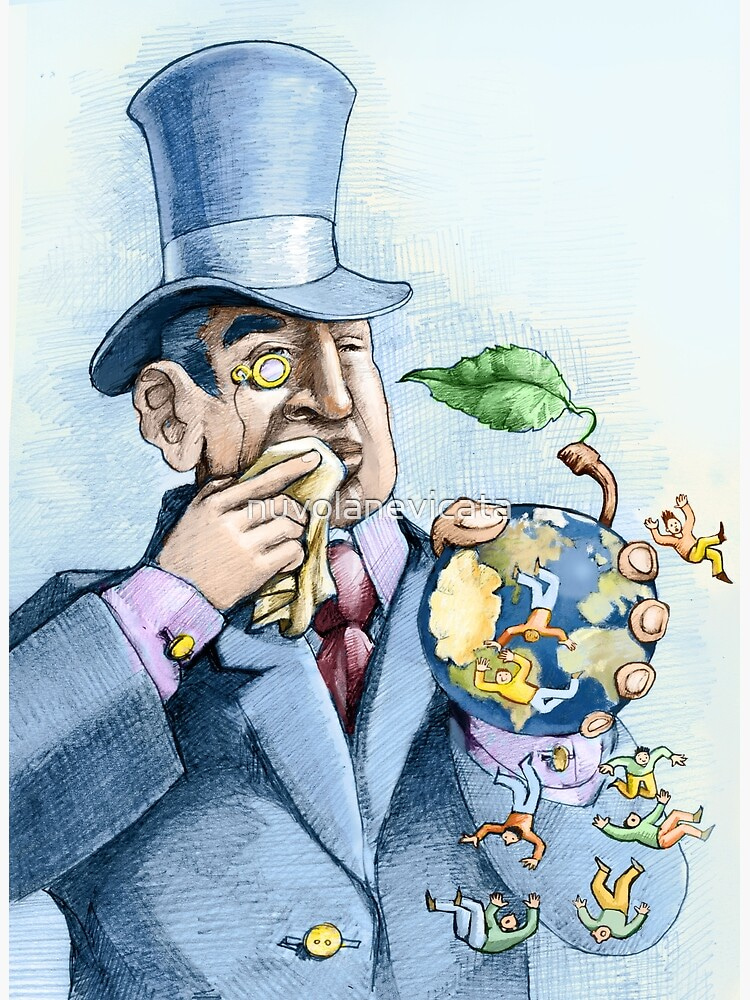


Today we live in the era of financial capitalism. According to Francesco Vigliarolo, we are witnessing the decoupling of economic (now financial) wealth from human well-being. Vigliarolo frames "financialization" not just as a technical economic shift, but as a moral crisis that treats human rights as "decoration" rather than the foundation of our global home, the universal economy.
To better understand the shift Vigliarolo describes—from an economy that serves people to a system where people serve finance—it helps to visualize the "inversion" that occurred after 1971.
The Great Decoupling: Finance vs. Real Economy and human well-being
• The financial economy: trillions of dollars in high-frequency trading, currency speculation, and derivatives. It moves at the speed of light, seeking margins through algorithms.
Just two funds manage a value equivalent to one-fifth of the entire global GDP. But it doesn't end there: the same 10 funds now hold approximately 30% – according to some studies, 40% – of the top 500 global companies.
The richest 1% of the world's population holds a similar share of wealth to the remaining 44% of humanity, highlighting a huge imbalance.
All of this creates serious social and environmental crises around the world.
• The real economy and human well-being:
According to the ILO, in recent decades we have witnessed a structural increase of approximately 2% in global unemployment, equivalent to millions of people losing their right to work. The number of people living on less than $6.85 a day, approximately $250, now stands at 3.2 billion, nearly a third of the world's population. This figure has remained stable since the 1990s and shows no signs of decreasing (Oxfam 2025 data). Added to this, over 7 million people worldwide die from economic pollution. 700,000 in Europe. 70,000 in Italy. And many, too many, die of hunger worldwide. Not because there is no food, but because of the malfunctioning of the dominant market, lacking rules and protections for rights. The wealth of global billionaires has increased at unprecedented rates (for example, according to Oxfam, it is expected to grow to $2 trillion by 2024).
Forced labor is the second most widespread illicit economy in the world. It is estimated that globally, forced labor generates annual profits for traffickers amounting to $236 billion (as of 2025). In low- and middle-income countries, informal employment remains the most common form of labor market participation. Women continue to earn approximately 20% less than men for the same work.
How to go out?
The Rise of the "Third Sector"
The most hopeful part of this analysis is the "economy that refuses to die." Vigliarolo points to the Social and Solidarity Economy (SSE). This isn't just charity; it’s a structural alternative.
|
Feature |
Financialized Capitalism |
Social & Solidarity Economy |
|
Primary Goal |
Profit Maximization |
Social/General Interest |
|
Governance |
Shareholders (Weighted by wealth) |
Democratic (One person, one vote) |
|
Surplus |
Distributed to owners/investors |
Reinvested into the mission |
|
Scope |
Global/Abstract |
Local/Embedded in community |
Moving Toward "Universal Economic Socialisation"
Vigliarolo proposes also a radical but grounded path forward. Instead of hoping for "trickle-down" effects from a casino economy, he suggests we organize the "meso-economic" level—the space where communities and states decide what is essential.
- Redefining Success: Shifting metrics from GDP (which counts "bads" like disaster cleanup as "goods") to indicators of meaningful work, health access, and ecological health.
- New Global Governance: Creating bodies like a World Human Rights-Economic System Organisation to ensure trade deals don't violate the right to food or water, for example.
- Ethical Finance: Steering capital toward circular production and social infrastructure rather than speculative bubbles.
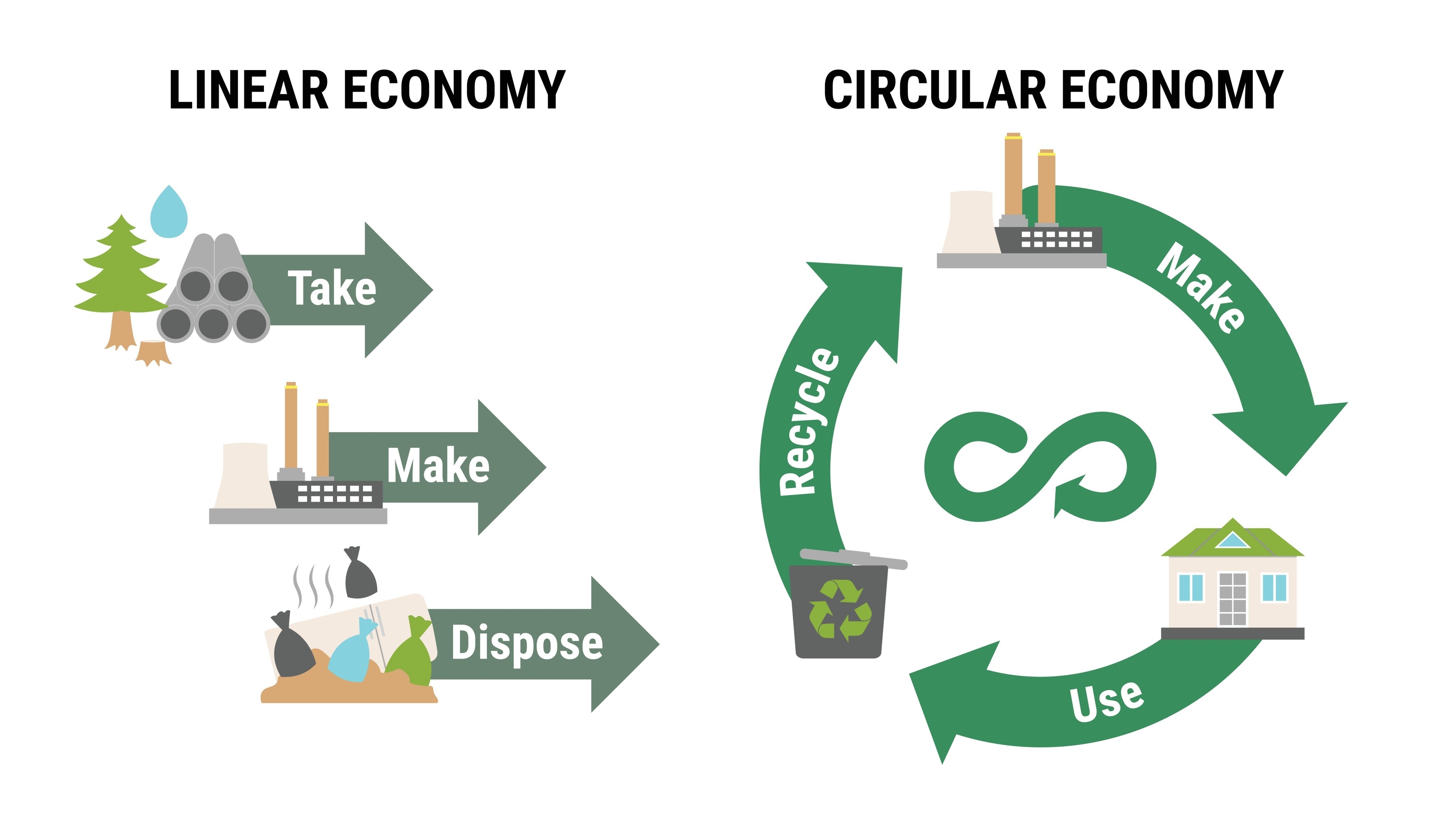
The Universal economy: "Oikos" (Home) and the global "Nomos" (Governance)
The root of "economy" is oikos (house) and nomos (management). Vigliarolo reminds us that an economy that burns down the house to increase the value of the insurance policy is not "growth"—it is a failure of management. Rebuilding the economy around the Universal Declaration of Human Rights is the only way to return the "management of the house" to its rightful purpose: the flourishing of all its inhabitants.
Francesco Vigliarolo is prof. titular of Regional Economics at Catholic University of La Plata and social economist. PhD. in Social Sciences, specialization in economic sociology, post doctorate in Economics and Master in sustainable development. He is also an Associate Investigator of the CESOT (Centro de Study of Sociology of Work) of the University of Buenos Aires. At the Universidad Nacional de La Plata he is chairolder of UNESCO chair in “Economic Systems and Human Rights” he founded with almost 20 Universities all over the world. With his investigations, he is interested in local development processes such as the construction of territorial identities that imply the affirmation of rights (ontological reason) through the strength of associative and democratic forms of production. In this direction, he works to what is called an “economic phenomenology” which aims to observe the economy starting from the relationship between subject and materiality, which presupposes “functions, ideas, concepts” and the affirmation of the "relational identity of a democratic society”, which defines an ontological reason as opposed to the utilitarian one. He published various books and scientific articles from which he explains concepts such as “social ethical capital”, “economic socialization and democracy”, “demand for the rights of the people”, “meso-economics approach” and “the principles of economic phenomenology”. Among his latest books we mention (2025) “Economic Systems and Human Rights: Using Socioeconomic Models and Practices to Promote Economic Socialization, Palgrave Macmillan”.

Please sign in or register for FREE
If you are a registered user on Research Communities by Springer Nature, please sign in