Growing a Global Parkinson’s Research Community: Insights from npj Parkinson’s Disease
Published in Neuroscience, Genetics & Genomics, and Biomedical Research
As npj Parkinson’s Disease marks its 10-year milestone, it is an appropriate moment to reflect not only at how the journal has grown, but at what this growth says about how research on Parkinson’s disease has evolved and how scientific communities are built over time.
Over the past decade, Parkinson’s disease research has expanded in both scope and complexity, moving decisively toward interdisciplinary approaches that integrate molecular neuroscience, immunology, clinical research, and computational methods. As science has evolved, so too have expectations from researchers for publishing platforms that combine rigorous peer review with efficiency, transparency, and the ability to surface emerging areas of importance. In this context, the journal has grown alongside the field it serves, responding to shifts in both scientific direction and community needs.
A central feature of this evolution has been the leadership of Prof. Malú Gámez Tansey, Editor-in-Chief of npj Parkinson’s Disease, whose scientific expertise in neuro-immune interactions reflects a broader conceptual shift in the field. Her work has helped in advancing the understanding of complex interplay between the nervous and immune systems in neurodegenerative disease, while her editorial leadership has contributed to strengthening the integration of disciplines across the Parkinson’s research landscape. In recognition of this impact, she was awarded the Editorial Impact Award for 2025, reflecting her contribution to shaping and supporting the field through scholarly publishing.
 From a publishing perspective, this trajectory underscores a key principle: sustainable journal growth is not a function of scale alone, but of structure. As submission volumes increased and research areas diversified particularly during and after the COVID-19 pandemic, the challenge was not simply to accommodate growth, but to design systems capable of maintaining quality, consistency, and disciplinary breadth under increasing demand.
Building a structured and scalable editorial ecosystem
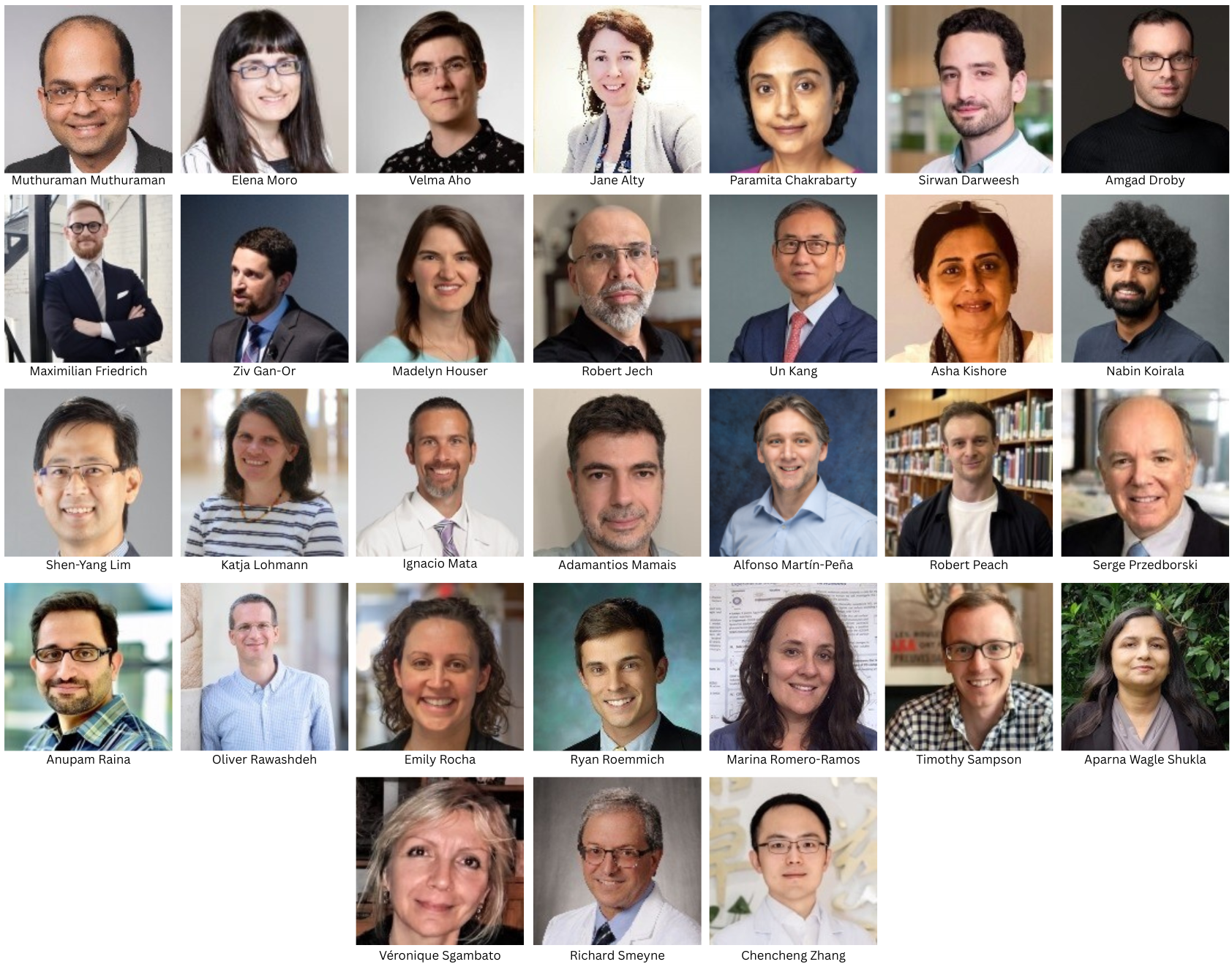
The journal’s development has been shaped by a deliberate emphasis on distributed expertise and clearly defined editorial roles. This includes the involvement of Deputy Editors, Dr. Muthuraman and Dr. Moro with computational and clinical expertise, supported by Associate Editors (listed below) and an Editorial Board Members covering the full breadth of the field. Together, this structure ensures that manuscripts are handled with appropriate subject-matter depth, enabling more informed assessment and more constructive peer review.
We are proud of our editorial team, whose subject-matter expertise ensures that every manuscript is assessed with depth, rigor, and care.”
For authors, this translates into a review process that is both rigorous and context-aware, with feedback designed not only to evaluate but also to strengthen the clarity, robustness, and impact of the work. A broad and actively engaged reviewer community is central to this model, providing the disciplinary range needed to assess an increasingly interdisciplinary literature.
Enabling field-level coordination through curated initiatives
Beyond manuscript handling, the journal helps bring researchers together around shared scientific priorities. The development of thematic collections has provided a structured mechanism to bring together research around defined scientific and clinical priorities, helping to consolidate emerging areas and make them more visible to the community. As a partner journal of the Parkinson’s Foundation, npj Parkinson’s Disease also plays a role in connecting research with the wider clinical and patient community, extending the reach and relevance of published work.
These initiatives serve a dual function: they support researchers in identifying relevant publication opportunities, and they help shape the evolving research agenda by highlighting areas of convergence and unmet need. This year, Editorial Board Members are leading thematic collections, contributing their expertise to shape key areas of focus within the field.
Recognition of reviewer contributions has also been strengthened as part of maintaining a sustainable peer review ecosystem acknowledging the essential role of expert evaluation in maintaining publication quality and integrity. To recognize this essential contribution, reviewer engagement has been further strengthened through formal acknowledgement on the journal website, as well as pathways for continued involvement within the journal’s broader editorial community.
Looking ahead: from growth to targeted impact
The next phase of development is focused not only on expansion but also on targeted impact. This includes a stronger emphasis on translational research, clinical trials, and regulatory science areas that are increasingly central to bridging the gap between discovery and therapeutic application. In parallel, there is a clear strategic focus on broadening global representation in research on Parkinson’s disease. Efforts to highlight under-represented regions, including dedicated attention to research activity in Africa, reflect a recognition that scientific progress is strengthened by geographic and institutional diversity. These specifical thematic collections are launched this year and can be found here.
Operationally, continued refinement of editorial workflows remains an important priority. The objective is to improve efficiency and consistency in the publication process, reducing time to decision and publication while preserving the integrity of peer review. In practical terms, this is not a procedural goal in isolation, but a contributor to a better author experience and faster dissemination of validated research.
Engaging with the journal
For researchers working in Parkinson’s disease and related disciplines, engagement with the journal extends beyond submission alone. Opportunities include contributing to open calls for papers and thematic collections, participating in peer review, and collaborating across disciplinary and geographic boundaries.
- Explore current content and initiatives via the journal homepage
- Contribute to open collections
- Participate in peer review and editorial activities using this form
- Get in touch to share ideas or explore collaboration opportunities
Ultimately, the trajectory of npj Parkinson’s Disease reflects a broader principle in scholarly publishing: impact is not driven by volume alone, but by how effectively research is curated, connected, and advanced. When supported by clear structure, disciplinary expertise, and an engaged community, a journal becomes more than a venue for publication, it becomes part of the infrastructure that shapes the field itself.

Poster image: Yuichiro Chino/ moment via Getty Images

Follow the Topic
-
npj Parkinson's Disease
This journal publishes original basic science, translational and clinical research related to Parkinson's disease, including anatomy, etiology, genetics, cellular and molecular physiology, neurophysiology, epidemiology and therapeutic development and treatments.

Related Collections
With Collections, you can get published faster and increase your visibility.
Heterogeneity of PD, from biology to clinical
Publishing Model: Open Access
Deadline: Jan 05, 2027
Integrative Multimodal Models for Brain and Health: Use of AI for Real-World Impact
Publishing Model: Open Access
Deadline: May 07, 2027