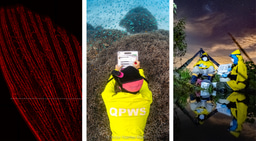
Highlights from the 70th Anniversary of Ecological Genetics Meeting (EGG 2026)
Published in Ecology & Evolution and Genetics & Genomics
The 70th Anniversary of Ecological Genetics (EGG2026) was held from April 15 to 17, 2026, at the University of Sheffield, UK. This hybrid event welcomed both in-person and online attendees. EGG 2026 attracted around 70 participants over three days. The meeting featured 24 talks and 18 poster presentations, encouraging lively discussions on important topics relating to ecological genetics. A breakout session specifically focused on the use of environmental DNA (eDNA) for population genomics, and there was also a tour of the NERC Environmental Omics Facility (NEOF). The diverse group of attendees included academics, conservationists, consultants, and policymakers.

Here, I share some of my highlights from the meeting.
The Role of Ecological Genetics in National Environmental Monitoring
Dr. Kirsten Miller, Head of Environmental Monitoring at Defra, kicked off the meeting with an insightful talk about Defra’s responsibility for protecting the environment in England, working across 24 ministerial departments and with around 34 partner organisations. Kirsten outlined the challenges posed by data gaps and emphasised the need for robust evidence to guide policy and decision-making across this complex landscape.
Kirsten introduced the Kunming-Montreal Global Biodiversity Framework, which outlines goals for 2050 to be achieved via quantitative targets actioned by 2030 to achieve its aims to catalyze, enable and galvanize urgent and transformative action by Governments, and subnational and local authorities, with the involvement of all of society, to halt and reverse biodiversity loss. Kirsten spoke about how genetic approaches are currently under‑used at a national scale, despite their potential value to generate data that support national and global environmental targets.
Drawing on recent examples, she outlined how ecological genetics could support national environmental monitoring. She described the use of environmental DNA, which is already being applied to detect great crested newts for planning decisions in the UK, as a scalable tool for biodiversity assessment. She also highlighted how genetic diversity within populations can act as an indicator of ecosystem health, noting for example that capercaillie populations in Scotland show markedly lower genetic diversity than those in other Scandinavian countries. Finally, she discussed how intraspecific genetic variation and single nucleotide polymorphism data can be used to assess the impacts of environmental pressures such as habitat modification, pollution and climate change, illustrated by studies of genetic adaptation to pollution in killifish.
Kirsten concluded with a call to action, stressing the need for better communication between researchers and policymakers to ensure that scientific evidence can effectively support environmental targets.
Using Environmental DNA to Monitor Elusive Whale Species
Another highlight came from Graziella Pupillo, a first-year PhD student in the Marine eDNA Group at the University of Milan Bicocca, supervised by Dr. Elena Valsecchi. Graziella presented findings from the EU-funded project -LIFE-Conceptu Maris- coordinated by the Italian Institute for Environmental Protection and Research (ISPRA), within which the research group was leading the collection and molecular analysis of large-scale Mediterranean eDNA sample set.
Graziella began by introducing LIFE-Conceptu Maris work and part of Dr. Alessia Rota's PhD Project, which focuses on the molecular detection of cetaceans and turtles species across the sample set. While analysing the results, a new species was found: the pygmy sperm whale (Kogia breviceps), never detected before in the Mediterranean Sea.
Pygmy sperm whale and dwarf sperm whale (Kogia sima, the other member of the Kogiidae family) are particularly difficult to study due to their elusive behaviour, deep‑diving habits and infrequent surface sightings. As a result, little is known about their abundance or population trends, and both are currently classified as Data Deficient by the IUCN. Their close physical similarity further complicates identification using visual surveys alone.
She then presented recently published results from the group’s work, reported in Mammal Review. The study analysed 393 seawater samples collected between 2022 and 2024 as part of a large‑scale monitoring programme that used commercial ferries as sampling platforms. Using mitochondrial genetic markers, the team detected pygmy sperm whale eDNA at multiple locations from the Strait of Gibraltar to the Tyrrhenian Sea. Repeated detections, high read counts and patterns of genetic variation suggest the presence of more than one individual.
Overall, her talk highlighted the potential for scientists and policy makers to make use of ferries and other commercial vessels to collect eDNA, enabling cost‑effective, large‑scale and low‑emissions monitoring of elusive marine biodiversity.
Graziella commented "EGG has been a wonderful experience that gave me the chance to meet an amazing community of scientists, receive valuable feedback and suggestions, and participate in inspiring discussions about how science may evolve and grow over the next 5–10 years."
Population Genomic Analysis for the Critically Endangered Bermuda Skink
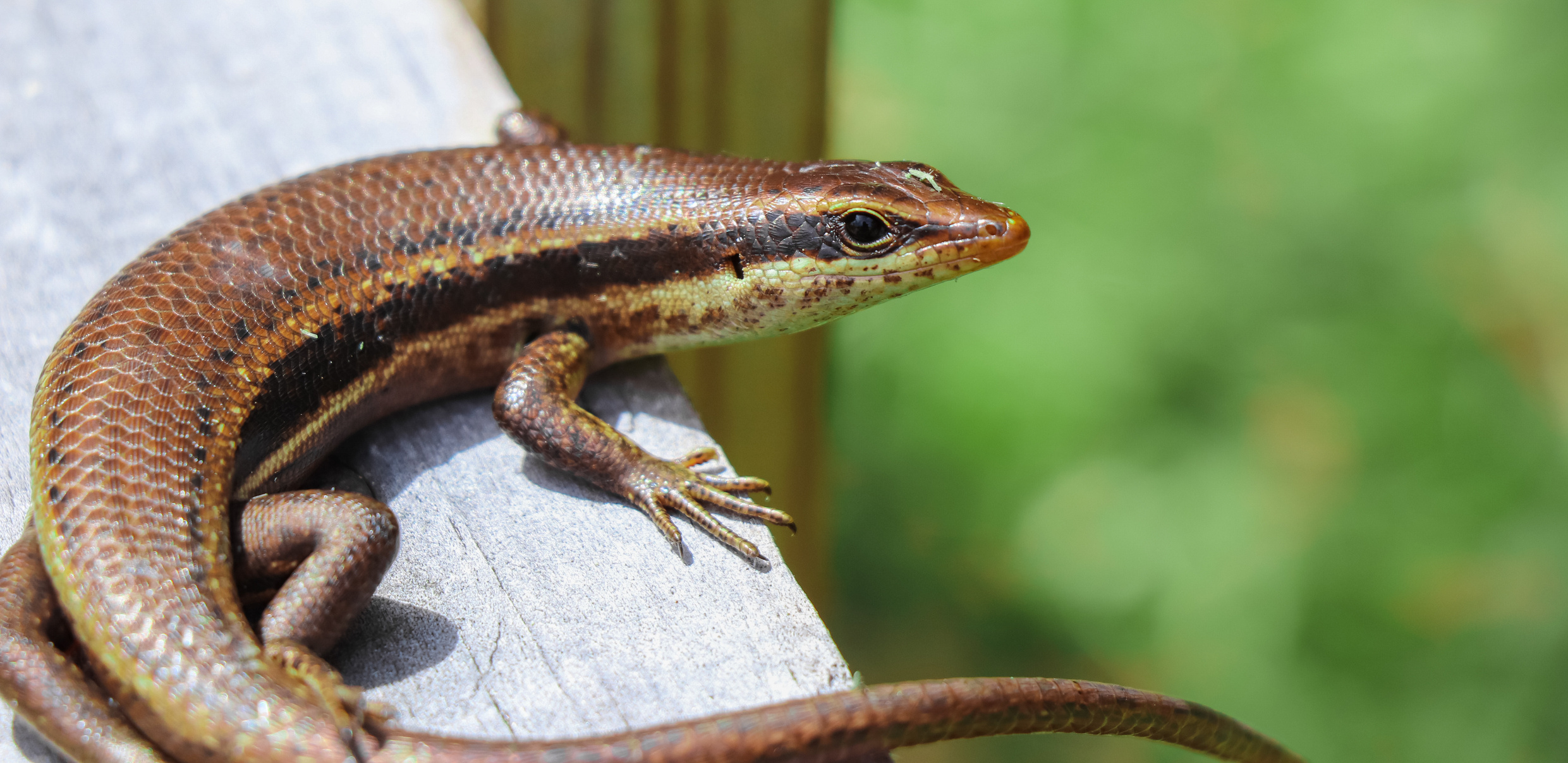
A third talk which I would like to highlight was presented by Owen Greenwood, a PhD student at Manchester Metropolitan University. Owen presented his work on the Critically Endangered Bermuda skink, Plestiodon longirostris, Bermuda’s only endemic terrestrial vertebrate.
Once widespread, the skink now numbers fewer than 2,500 individuals, with human impacts leaving populations small, isolated and fragmented across the islands. Habitat loss, invasive predators and ongoing human pressures have driven dramatic declines in skink numbers, prompting conservation action through a long-running captive breeding and reintroduction programme led by Chester Zoo and the Government of Bermuda.
What Owen’s work brings is the genetic evidence needed to support and expand these efforts. Using whole genome sequencing, he analysed DNA from 183 wild skinks sampled across seven populations, generating the most comprehensive genetic dataset for this species to date. His analyses revealed strong spatial genetic structure, with multiple admixture clusters identified, alongside evidence of low overall genetic diversity and a recent population contraction. Importantly, genetic differentiation between populations was low to moderate, with signs of connectivity among island sites and among mainland sites. These findings provide essential guidance for reintroductions and translocations, helping to balance genetic rescue against the risk of maladaptation.
Owen’s research demonstrates how fieldwork and genetic analysis can directly inform conservation decisions, and it is easy to see why his talk won runner-up for Best Student Talk.
When asked what Owen enjoyed most about the conference, he commented that he enjoyed "hearing about all the varied research going on in population genetics, from differing techniques to different systems and applications. My favourite talk was, perhaps unsurprisingly, the best student talk by Ana Sofia Carranco (Ulm University) on the resistance to fungal infections in turtle eggs through microbial communities due to the setting, thoroughness of the study, and the potential applications off the back of it."
EGG2026 highlighted the importance of ecological genetics in understanding how organisms adapt or face challenges in a changing world. It also emphasised its role in supporting conservation efforts, environmental monitoring, and informed decision-making. The conference stressed the need for ongoing collaboration between scientists and policymakers to address biodiversity decline.

Follow the Topic
-
BMC Ecology and Evolution
An open access, peer-reviewed journal interested in all aspects of ecological and evolutionary biology.
-
BMC Zoology
This is an open access, peer-reviewed journal that considers articles on zoology, including comparative physiology, mechanistic and functional studies, morphology, life history, animal behavior, signaling and communication, cognition, parasitism, systematics, biogeography and conservation.


Related Collections
With Collections, you can get published faster and increase your visibility.
Nighttime ecology and evolutionary adaptations to low-light environments
BMC Ecology and Evolution welcomes submissions of research exploring the remarkable adaptations and ecological dynamics that enable life to flourish in the dark and low light environments. Contributions will explore evolutionary adaptations such as sensory specialization (e.g., night vision, echolocation, bioluminescence, heat-sensitive pits, and specialized hairs) that allow organisms to navigate, forage, and communicate in low-light conditions from caves to the deep sea. The collection will also investigate behavioral and physiological mechanisms, including circadian rhythm adjustments and predator-prey interactions, that are essential for survival in nocturnal niches.
Submissions on the impact of anthropogenic influences, such as light pollution, on nocturnal ecosystems and biodiversity are encouraged. The Collection also welcomes research on nighttime bioacoustics and soundscapes, examining how sound is used to adapt to and shape nocturnal environments. Contributions discussing the role of citizen science in advancing our understanding of nighttime ecology are also encouraged.
Publishing Model: Open Access
Deadline: Nov 20, 2026
Evolution of disease: From pathogens to proliferating cells
Evolution of disease: From pathogens to proliferating cells is a special Collection that explores how evolutionary processes shape health and disease—from infectious microbes to cancerous cells. We invite research within the discipline of evolutionary medicine that examine how forces such as natural selection, genetic drift, host-pathogen coevolution, and environmental change contribute to disease susceptibility, resistance, and progression. We welcome submissions that deepen our understanding of disease as a dynamic outcome of evolutionary interactions.
Topics of research may include but are not limited to research which uses evolutionary principles to understand:
1. Pathogen evolution, resistance, and host interactions
•
The evolution of antibiotic, antiviral, antifungal, and antiparasitic resistance
•
Mechanisms of immune evasion, persistence, and transmission
•
Experimental evolution and molecular insights into pathogen adaptation
•
Host-pathogen coevolution and the impacts of medical or environmental interventions
•
Comparative host-pathogen dynamics across species
2. Evolutionary mismatch and modern disease
•
Evolutionary insights into metabolic disorders, autoimmune conditions and cancer
•
When a previously advantageous trait becomes maladaptive due to change in the environment
3. Evolution of cancer
•
Evolutionary and ecological models of cancer progression and resistance
•
Comparative oncology: insights from cancer-resistant and long-lived species
•
Somatic evolution, immune escape, and tumor heterogeneity
4. Genetic variation, adaptation, and disease susceptibility
•
Adaptive and maladaptive genetic variants in human and animal populations
•
Pleiotropy and trade-offs in immune function, metabolism, and reproduction
•
Population genetics, admixture, and the evolutionary roots of health inequality
5. Microbiome evolution and host symbiosis
•
Coevolution and community ecology of host-associated microbiota
•
Functional evolution in microbial genomes and implications for host health
•
Microbiome shifts due to modern environments, drugs, or host genetic factors
6. Viral evolution and endogenous elements
•
Evolutionary arms races between hosts and viruses
•
Evolution and function of endogenous viral elements in animal genomes
•
Phylogenomic approaches to uncover ancient viral influences on host evolution
7. Experimental and computational approaches
•
Experimental evolution in microbial or model systems
•
Genomics, phylogenomics, and systems biology in disease evolution
•
Machine learning and AI in evolutionary medicine research
Publishing Model: Open Access
Deadline: Dec 04, 2026