How the Metaverse Can Shape Sustainable Urban Planning
Published in Social Sciences, Earth & Environment, and Civil Engineering


Introduction
The rapid evolution of the Metaverse is no longer confined to gaming or social interactions—it’s reshaping real-world urban landscapes. In our recent study, "Sustainability and Urban Climate: How Metaverse Can Influence Urban Planning," published in EPB: Urban Analytics and City Science, we explore how virtual worlds can address pressing global challenges like climate change, poverty, and urban sustainability.
The Metaverse: Beyond Virtual Reality
The Metaverse, once a sci-fi concept, is now a transformative tool for urban planners. It offers a sandbox for testing innovative solutions, from reducing greenhouse gas emissions to improving public health. For example:
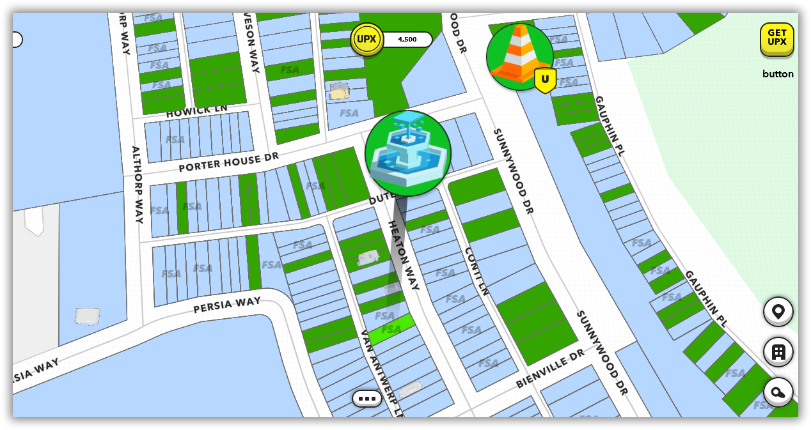
- India: Virtual platforms like Upland can fund renewable energy projects by trading carbon credits, reducing reliance on fossil fuels and creating rural jobs.
- Ghana: The Metaverse supports projects like Gyapa, promoting efficient cookstoves that cut fuel use by 50%, lower emissions, and protect forests.
These examples highlight how virtual actions can drive tangible, sustainable outcomes in the real world.
Key Insights from Our Research
Climate Action: The Metaverse enables global collaboration to combat climate change. Virtual investments can fund clean energy, while data modeling helps cities adapt to extreme weather.
Economic Equity: By creating jobs and reducing poverty (e.g., through Upland’s virtual land economy), the Metaverse fosters inclusive growth.
Urban Planning Reimagined: Planners can simulate city designs in virtual environments, optimizing for sustainability before implementation.
Why This Matters
With over half the world’s population in cities, climate change and resource inequality demand urgent action. The Metaverse bridges the gap between innovation and execution, offering a platform for:
- Global Scalability: Solutions tested virtually can be replicated across cities.
- Community Engagement: Citizens can co-create sustainable urban spaces.
- Data-Driven Decisions: Real-time analytics improve policy accuracy.
The Future of Urban Planning
Our study underscores the Metaverse’s potential to revolutionize urban governance. By integrating virtual tools, cities can:
- Reduce carbon footprints through smart simulations.
- Enhance resilience against climate disasters.
- Promote social equity by decentralizing economic opportunities.
As we argue in the paper, the Metaverse isn’t just a technological leap—it’s a lifeline for sustainable development.
Read the Full Study
Explore our findings in detail: https://journals.sagepub.com/doi/abs/10.1177/23998083231181596 . Let’s reimagine cities together—where virtual innovation meets real-world impact.
#Metaverse #UrbanPlanning #Sustainability #ClimateAction #SmartCities
Authors:
Ehsan Dorostkar, Ph.D., University of Guilan (ORCID)
Mahsa Najarsadeghi, Ph.D., Islamic Azad University
What’s your vision for the Metaverse in urban development? Share your thoughts below!
Note: Adapted from Dorostkar & Najarsadeghi (2023), "Sustainability and Urban Climate: How Metaverse Can Influence Urban Planning," EPB: Urban Analytics and City Science 50(7).
Follow our research on Twitter | LinkedIn.