Human Activities and Climate Disturbances Are Accelerating the Release of the World’s Largest Ocean Mercury Sink
Published in Earth & Environment

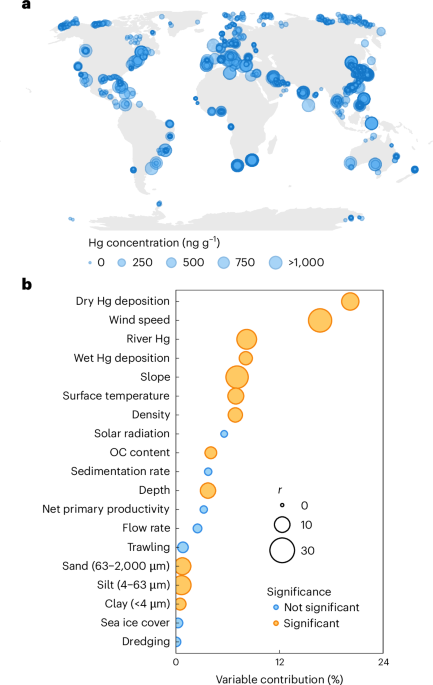

Mercury is a globally distributed toxic pollutant that can accumulate significantly through the food chain, posing threats to human health. Ocean sediments, as the final repository for mercury, were once thought to permanently isolate this hazardous element. However, the world’s largest marine mercury sink—continental shelf sediments—is now facing an unprecedented crisis of accelerated release.
**Continental Shelves: A Severely Underestimated Mercury Sink**
The study reveals that global continental shelves bury nearly 1,300 tons of mercury annually—six times more than previous estimates by the United Nations Environment Programme (UNEP) and 2–7 times the annual mercury burial in deep-sea sediments. Despite covering less than 10% of the ocean area, continental shelves account for approximately 80% of the total mercury sequestration in marine sediments. Furthermore, mercury concentrations in surface sediments of continental shelves have tripled since the Industrial Revolution, indicating the storage of large amounts of anthropogenically emitted mercury.
“Continental shelves act like the ‘kidneys’ of the ocean, efficiently filtering toxic mercury from the water and reducing its threat to coastal fisheries and human health,” explained Professor Xuejun Wang, a co-corresponding author of the paper. “However, our trawling vessels and dredging activities are becoming like ‘scalpels’ destroying this kidney function.”
**Double Threat: Synergistic Destruction from Trawling and Warming**
The research team further quantified the direct impact of human activities on mercury sequestration in continental shelves, revealing that bottom trawling and dredging disturb over 5,000 tons of sediment-bound mercury annually through physical resuspension—more than four times the annual burial amount. Notably, the Mediterranean and East Asian seas, which account for only 14% of global shelf area, bear 50% of this anthropogenic disturbance. In some European shelves, the amount of mercury transported to the open ocean annually due to trawling and dredging already exceeds the burial amount, signaling a transition of these seas from a “mercury sink” to a “mercury source” (Fig. 1). This shift directly threatens shelf ecosystems, which support 80% of global fishery production, and amplifies human health risks through seafood consumption.
Meanwhile, climate change exacerbates the dissolution and release of sediment mercury through rising temperatures. Model simulations indicate that with global warming of 1.5–5°C, the natural release of mercury from sediments into the water column could intensify by 6–21% by the end of the century. Ocean warming is also expected to enhance the degradation of organic matter in sediments, further promoting mercury dissolution and release. This process may synergize with more frequent climate events such as storms, aggravating the release of sediment mercury into the water.
“When trawlers plow the seabed, they may accelerate the release of historical mercury stored in sediments,” warned co-corresponding author Maodian Liu. “Once reactivated, this ‘legacy mercury,’ buried for decades to centuries, could re-enter the food chain and restart a vicious cycle.”
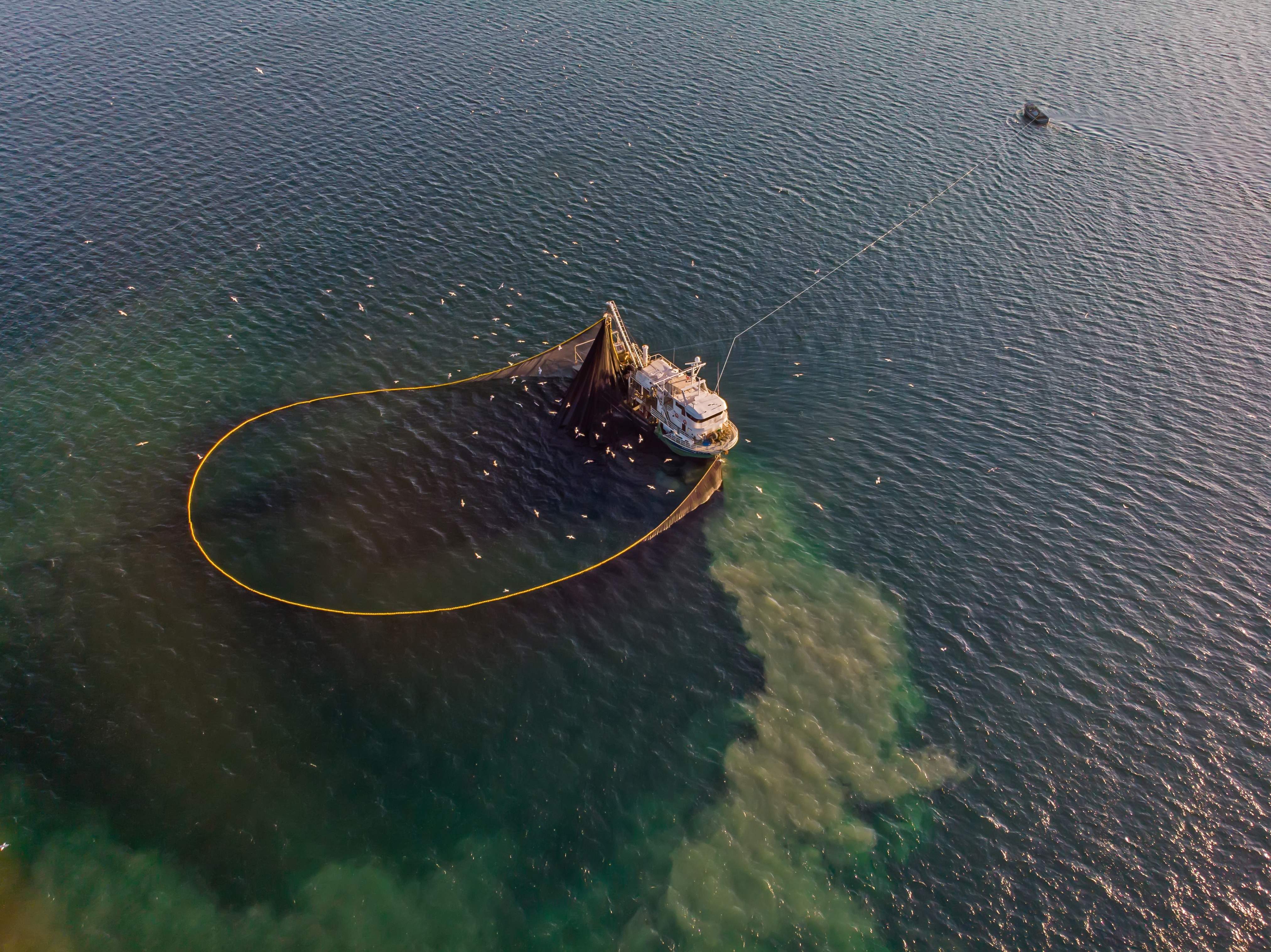
**Figure 1.** An aerial view of a fishing vessel casting nets into the sea for trawling, Turkey, Tamer Gunal (© 2020)
**How to Protect the Largest Marine Mercury Sink**
The authors call for multi-dimensional collaborative responses: (1) Implement the *Minamata Convention* to further reduce mercury emissions from sources such as coal combustion and mining; (2) Restrict trawling activities and establish marine protected areas in pollution-sensitive zones; (3) Curb global warming to reduce the rate of sediment mercury activation. “Protecting the continental shelf mercury sink is central to the United Nations Sustainable Development Goals (SDGs)—it serves as both a shield for human health and a guardian of marine ecosystems,” emphasized Researcher Maodian Liu. “Only by integrating mercury management, fisheries policies, and carbon neutrality goals can we safeguard this last line of defense.”
The study was led by Peking University, with Researcher Maodian Liu, former Ph.D. student Qianru Zhang, and Professor Xuejun Wang as co-corresponding authors. Maodian Liu, Chengzhen Zhou from the College of Urban and Environmental Sciences, and Qianru Zhang are co-first authors. Key collaborators include Researcher Guofeng Shen and Professor Dongqiang Zhu from the College of Urban and Environmental Sciences, Xiaolong Li, Hehao Qin, Junjie Wang from Utrecht University, Dr. Taylor Maavara from the Cary Institute of Ecosystem Studies, Professor Peter Raymond from Yale University, Professor Robert Mason from the University of Connecticut, and Professor Thomas Bianchi from the University of Florida.
Follow the Topic
-
Nature Sustainability
This journal publishes significant original research from a broad range of natural, social and engineering fields about sustainability, its policy dimensions and possible solutions.