Impact of colostrum-derived whey and beetroot powder on the nutritional, rheological and sensory characteristics of set-type yogurt

Bovine colostrum has become one of the emerging nutraceuticals, and it is being extensively utilized in nutraceuticals and healthcare products in the pre-treatment of numerous chorionic ailments as well as to improve the gut health owing to its nutrient-bioactive rich makeup
Like

Share this post

Choose a social network to share with, or copy the URL to share elsewhere

This is a representation of how your post may appear on social media. The actual post will vary between social networks

Explore the Research

SpringerLink
SpringerLink SpringerLink

Impact of colostrum-derived whey and beetroot powder on the nutritional, rheological and sensory characteristics of set-type yogurt - Journal of Food Science and Technology

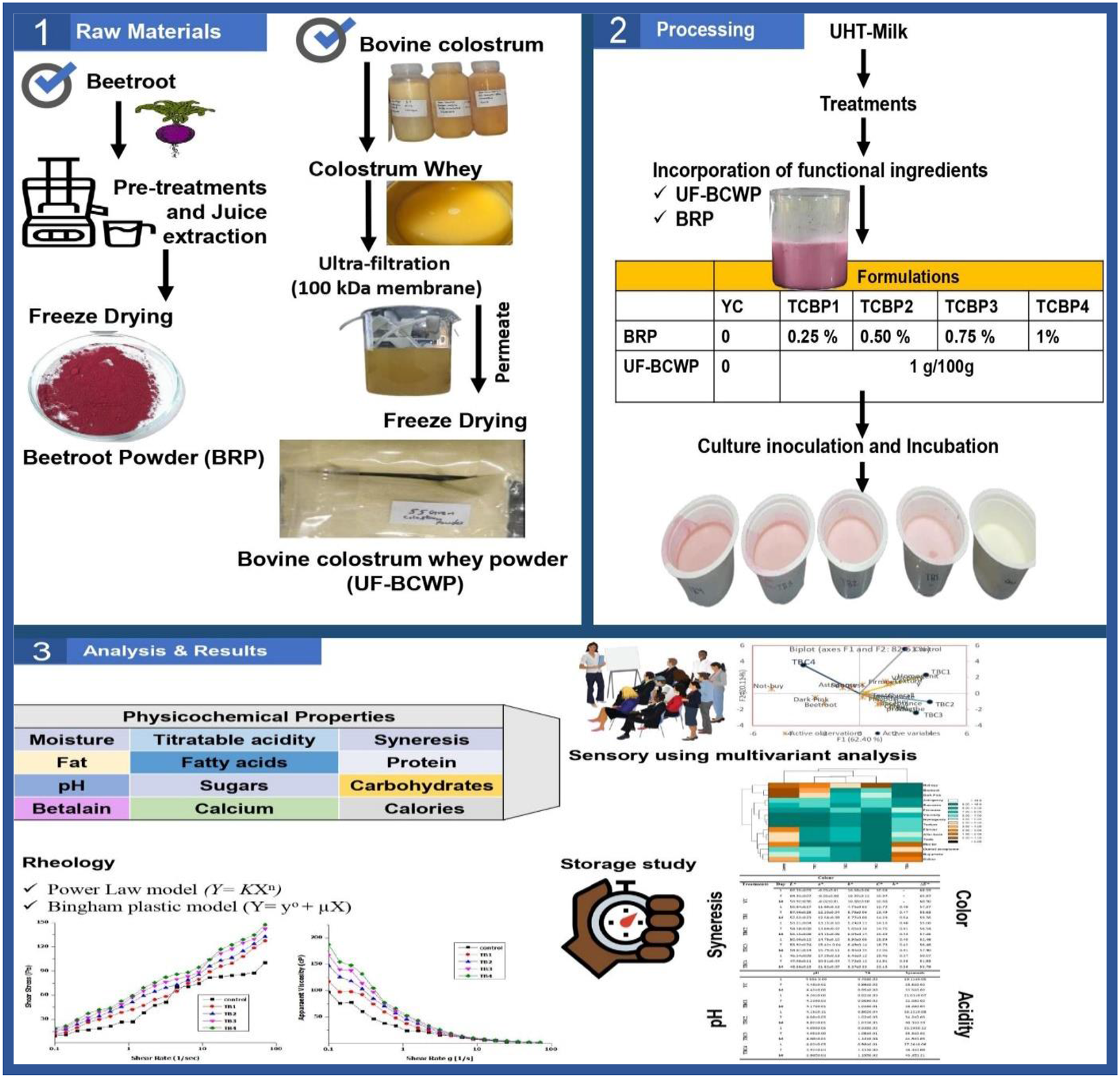
The utilizing bioactive compounds from natural sources is an increasingly popular approach to enhance dairy products’ nutritional profile and organoleptic properties. This study focuses on the standardization and quality characterization of set-type yogurt enriched with lyophilized beetroot powder (BRP) and ultra-filtrate bovine colostrum whey powder (UF-BCWP). The UF-BCWP was derived from Himachali Pahari cow colostrum processed via rennet coagulation and ultrafiltration (100 kDa membrane), followed by lyophilization. The set-type yogurt was prepared by incorporating UF-BCWP at a 1% concentration, while BRP was added at varying levels (0.25-1%), while the control (YC) was prepared without any adjunct. The prepared yogurts were analysed for their proximate composition, color profile, rheological properties, sensory evaluation using multivariate analysis, and storage stability (1, 7, and 14 days). The incorporation of BRP and UF-BCWP significantly (p ≤ 0.05) influenced the proximate composition, color profile (L*, a*, b*, C*, hue), rheological and organoleptic properties of yogurt. The Flow behavior index (n) values for all the yogurt samples is > 1, suggesting the shear thinning behavior, ultimately improving the spreadability and overall mouthfeel of yogurt. Multivariate analyses revealed distinct organoleptic profiles for the yogurts, with TPM2 demonstrating the highest overall acceptability. This study highlights the potential of utilizing bioactive compounds from natural sources to create innovative and nutritious dairy products that meet consumer demands. Graphical abstract

The utilizing bioactive compounds from natural sources is an increasingly popular approach to enhance dairy products’ nutritional profile and organoleptic properties.

Please sign in or register for FREE

If you are a registered user on Research Communities by Springer Nature, please sign in