Improving soybean yield and oil productivity: an integrated nutrient management approach for sustainable soybean production
Published in Earth & Environment, Sustainability, and Plant Science


Introduction
As global food demand continues to rise, the importance of sustainable agricultural practices becomes increasingly urgent. Among the essential crops contributing to food security, soybean (Glycine max) stands out as a vital source of protein and edible oil for both human and animal consumption. With its multifaceted utility in food products, feed, and industrial applications, soybean plays a critical role in the global agricultural economy.
Yet, despite its importance, soybean productivity in many regions remains suboptimal due to declining soil fertility, imbalanced nutrient use, and the unsustainable over-reliance on chemical fertilizers. These challenges are compounded by the adverse effects of climate change and land degradation. In this context, Integrated Nutrient Management (INM) emerges as a strategic, science-based approach to not only improve soybean yield and oil quality but also to foster long-term agricultural sustainability.
What is Integrated Nutrient Management (INM)?
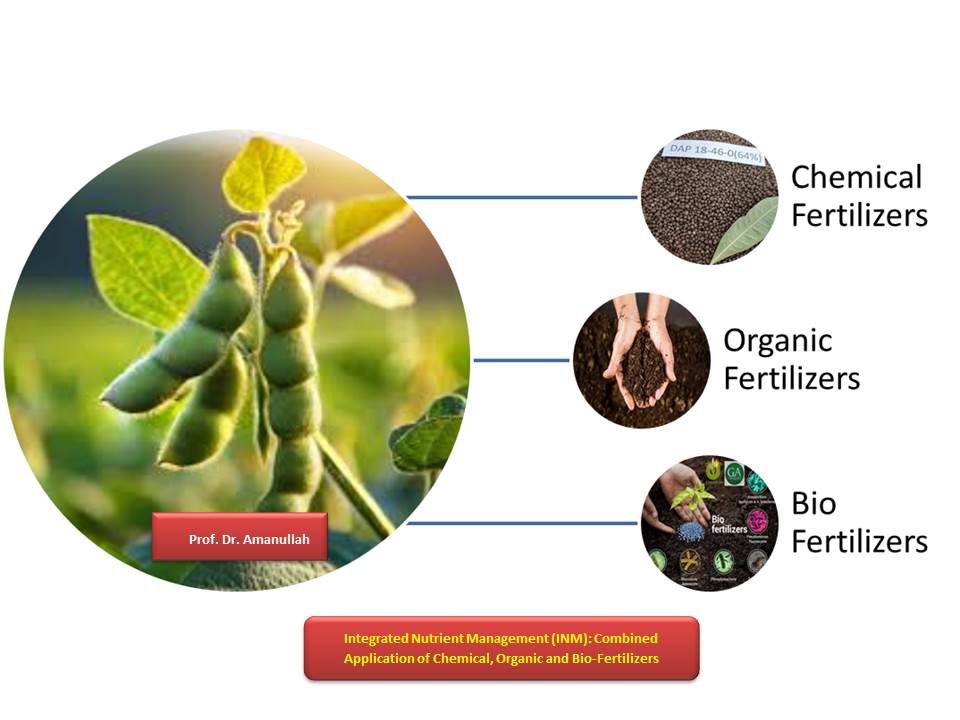
Integrated Nutrient Management is the practice of optimally combining organic, inorganic, and biological sources of plant nutrients to maintain or improve soil fertility and crop productivity. It emphasizes the balanced and site-specific application of:
-
Chemical fertilizers (e.g., nitrogen, phosphorus, potassium),
-
Organic manures (e.g., compost, farmyard manure),
-
Biofertilizers (e.g., Rhizobium, phosphate-solubilizing bacteria, mycorrhizae),
-
And in modern contexts, emerging tools like nanofertilizers and precision nutrient application technologies.
The goal of INM is to ensure that crops receive the right nutrient sources, in the right amounts, at the right time, and in the right manner—often referred to as the 4R Nutrient Stewardship principle (Right Source, Right Rate, Right Time, Right Place).
Why Focus on Soybean?
Soybean has a unique role in agriculture due to its nitrogen-fixing ability, thanks to its symbiotic relationship with Rhizobium bacteria, which reduces the need for nitrogen fertilizers. However, other nutrients like phosphorus, potassium, sulfur, and micronutrients are still crucial for optimal growth, flowering, pod development, and oil synthesis.
Additionally, soybean oil is one of the most consumed vegetable oils worldwide. Improving both yield and oil content is essential to meet increasing demands and ensure that soybean production remains profitable and competitive.
The Benefits of INM in Soybean Cultivation
-
Enhanced Yield and Oil Quality
Multiple studies have demonstrated that integrated nutrient application results in higher and more consistent soybean yields compared to exclusive reliance on either organic or chemical inputs. Biofertilizers improve root health and nutrient uptake, while compost and manures enhance soil organic matter and microbial activity, both of which contribute to better grain and oil quality. -
Improved Nutrient Use Efficiency (NUE)
INM optimizes the timing and form of nutrient delivery, reducing nutrient losses due to leaching, volatilization, or runoff. This leads to improved nutrient use efficiency, meaning more of the applied nutrients are taken up by the plant rather than lost to the environment. -
Soil Health and Fertility Restoration
Continuous application of only chemical fertilizers has led to soil acidification, compaction, and biological degradation in many regions. Integrating organic and biological sources replenishes soil carbon, enhances microbial biodiversity, and improves soil structure, aeration, and water retention—key components of long-term soil fertility. -
Reduced Environmental Impact
Excessive use of synthetic fertilizers contributes to greenhouse gas emissions, eutrophication of water bodies, and soil toxicity. INM reduces these risks by lowering chemical dependency and promoting eco-friendly alternatives. -
Cost-Effective and Farmer-Friendly
Incorporating farm-produced compost or locally available biofertilizers can reduce input costs. Moreover, improving yield stability and soil health translates into better returns over time, especially for smallholder farmers.
Relevance in the Era of Climate Change
Agriculture is both a victim and contributor to climate change. Extreme weather, erratic rainfall, and rising temperatures affect crop productivity and soil quality. On the other hand, unsustainable practices, including over-fertilization, contribute significantly to greenhouse gas emissions (e.g., nitrous oxide from nitrogen fertilizers).
INM offers a climate-smart solution, improving the resilience of soybean cropping systems while minimizing their carbon footprint. For instance, by encouraging biological nitrogen fixation and reducing synthetic nitrogen inputs, INM helps lower nitrous oxide emissions. Moreover, practices that build soil organic carbon through composting and cover cropping also contribute to carbon sequestration.
Challenges and Considerations
While the benefits are well-documented, successful adoption of INM in soybean cultivation faces several challenges:
-
Knowledge gaps among farmers regarding balanced nutrient management.
-
Limited access to quality biofertilizers and organic inputs.
-
Need for localized research to develop crop- and soil-specific INM recommendations.
-
Policy and subsidy structures that still heavily favor chemical fertilizer use.
Addressing these requires an integrated effort involving extension services, research institutions, policy reforms, and private sector partnerships to make INM technologies accessible, affordable, and scalable.
Moving Forward: Policy and Practice
To mainstream INM in soybean farming, especially in regions with fragile agro-ecosystems, the following steps are recommended:
-
Capacity Building and Farmer Training: Extension programs should focus on training farmers in INM principles and application techniques.
-
Incentives for Organic and Bio-based Inputs: Policies that promote composting, vermiculture, and biofertilizer production can support the availability of sustainable inputs.
-
Investment in Research and Innovation: Continuous R&D is needed to refine INM packages tailored to different soybean-growing zones.
-
Monitoring and Evaluation Tools: Implementing soil health cards and digital advisory platforms can guide farmers on nutrient needs more precisely.
Conclusion
Improving soybean yield and oil productivity through Integrated Nutrient Management is more than an agronomic technique—it is a pillar of sustainable agriculture. By blending tradition with technology, INM empowers farmers to increase productivity while preserving the environment. As the global community pushes toward food security, climate resilience, and ecological balance, INM stands out as a proven and scalable solution—especially in crops as strategically important as soybean.
Adopting and promoting this approach will not only help meet present demands but also secure a healthier planet for future generations.
Dr. Amanullah, a distinguished Professor in the Department of Agronomy at The University of Agriculture Peshawar, Pakistan, is an accomplished scientist with an impressive track record. With over 150 papers published in ISI impact factor journals and co-author/editor of more than 25 books/reports, Dr. Amanullah's expertise is highly regarded.
Notably, Dr. Amanullah has collaborated with esteemed organizations like UN-FAO, co-authoring books such as "Soil and Pulses: Symbiosis for Life" (2016), "Unlocking the Potential of Soil Organic Carbon" (2017), and "Soil Pollution: a hidden reality" (2018). Additionally, Dr. Amanullah's involvement with Intech Open includes editing books on diverse topics like "Rice - Technology and Production" (2017) and "Agronomy - Climate Change & Food Security" (2020).
Recognized for his research contributions, Dr. Amanullah has received three Research Productivity Awards from the Pakistan Council for Science and Technology (PCST). Furthermore, he represented Pakistan in the FAO Intergovernmental Technical Panel on Soil (ITPS) as part of the Global Soil Partnership from 2015 to 2018.
As an esteemed editor in a prominent scientific report journal focused on agriculture and related fields, Dr. Amanullah is passionate about the publication and encourages colleagues, students, and friends to submit their papers to this world-class journal.
Dr. Amanullah's areas of expertise encompass a wide range of topics, including agronomy, crop production, crop physiology, biodiversity, carbon estimation, greenhouse gas emissions in agriculture, crop nutrition, sustainable crop production, and environmental pollution control. His extensive knowledge and dedication to sustainable agricultural practices make him an invaluable contributor to the scientific community.
Follow the Topic
-
BMC Plant Biology
This is an open access, peer-reviewed journal that considers articles on all aspects of plant biology, including molecular, cellular, tissue, organ and whole organism research.

What are SDG Topics?
An introduction to Sustainable Development Goals (SDGs) Topics and their role in highlighting sustainable development research.
Continue reading announcementRelated Collections
With Collections, you can get published faster and increase your visibility.
Plant disease resistance - Part II
In nature, plants are constantly exposed to a multitude of microorganisms and pathogens, causing diseases that represent a major threat to agriculture, global food security and ecological biodiversity. To combat such diseases, plants have evolved a sophisticated innate immunity system capable of detecting and responding to pathogen infection, as well as acquired immune mechanisms that enable them to recognize and combat pathogens. Novel approaches and recent technological advances such as high‑throughput sequencing and (multi-)omics, single‑cell profiling, CRISPR/Cas9 genome editing, deep learning and precision breeding, among others, can help researchers investigating plant-pathogen interactions and plant diseases with unprecedented resolution and scale.
In support of United Nations' Sustainable Development Goal 2 (SDG 2: Zero Hunger), 13 (SDG 13: Climate action) and 15 (SDG 15: Life on Land), BMC Plant Biology presents the Collection Plant disease resistance - Part II. This Collection invites research that can improve our understanding of disease resistance in plants and plant-pathogen interactions and builds towards the sustainable breeding for disease-resilient crops. Research without a clear focus on plants and crops or plant-microbe interactions will not be considered. We invite submission of research articles that explore, but are not limited to, the following topics:
- Mechanisms and evolution of plant disease resistance: regulation and evolution of resistance genes (R genes), their mode of action, and how R genes initiate immune signaling
- Plant immune systems, immune mechanisms, signaling, systemic acquired resistance, immune priming and immune memory
- Immune surveillance systems in crops
- Biological control agents and induced systemic resistance (ISR)
- Cell-surface immune receptors (e.g. receptor-like kinases (RKs or RLKs) and receptor-like proteins (RPs or RLPs)), and intracellular immune receptors (e.g. the nucleotide-binding domain and leucine-rich repeat-containing protein (NLR) family)
- Mechanisms and regulation of plant hypersensitive response (HR)
- Resistance genes and elicitors of plant immunity
- Plant resistomes (genome-wide repertoires and diversity of plant immune receptors and resistance-associated genes)
- Cell and molecular biology of plant disease resistance
- Plant-pathogen interactions
- Emerging and re-emerging plant pathogens and resistance strategies
- Plant microbiome and endophyte-mediated disease resistance
- The role of rhizosphere microbiome in disease suppression
- Plant secondary metabolites and natural products in disease resistance
- Epigenetic regulation of plant disease resistance
- Small RNAs, RNA silencing and cross-kingdom RNA communication in plant immunity
- RNA-based disease management including RNAi, spray-induced gene silencing (SIGS), host-induced gene silencing (HIGS)
- Cross-kingdom RNA trafficking and RNA-mediated plant-pathogen communication
- Pattern-triggered immunity (PTI) and effector-triggered immunity (ETI)
- Multi-omics approaches, single-cell and spatial transcriptomics and gene-editing for understanding disease resistance
- Spatial, single-cell and cell-type-specific approaches to plant immunity
- Extracellular vesicles and intercellular communication during plant–pathogen interactions
- The influence of climate change and combined abiotic–biotic stresses on disease resistance
- Novel breeding strategies for plant disease resistance
- Bioengineering, genetic modifications and synthetic biology applied to crops to improve disease resistance
- Nanotechnology in plant disease resistance (use of immunity booster nanoparticle formulations)
- Artificial intelligence in plant disease resistance, including plant-microbe interactions
- Technological and methodological advances applied to plant disease resistance research
All manuscripts submitted to this journal, including those submitted to collections and special issues, are assessed in line with our editorial policies and the journal’s peer-review process. Reviewers and editors are required to declare competing interests and can be excluded from the peer review process if a competing interest exists.
Publishing Model: Open Access
Deadline: May 18, 2027
Plant carbon metabolism
Carbon metabolism is central to the growth, development and productivity of photosynthetic organisms. It involves dynamic regulation and interplay between a number of complex processes (e.g. photosynthesis, carbon use and storage, respiration, nutrient metabolism), response and adaptation to environmental cues and stress (e.g. light, CO2 content, temperature), as well as the integration of fine-tuned enzymatic activity, post-translational modifications and signalling pathways.
Over the past decades, much research has been carried out to understand carbon fixation and utilization in model plants/crops, as well as other photosynthetic organisms. Advancing our understanding of the working principles and regulation of key enzymes like Rubisco, the Calvin–Benson–Bassham (CBB) cycle, C3, C4, and CAM metabolism, carbon concentrating mechanisms (CCMs), or how specific micro-compartments and organelles facilitate carbon concentration, has fundamental relevance. Moreover, the engineering of carbon metabolism has the potential to help addressing current global challenges linked to food security and climate change. For instance, novel insights into carbon metabolism regulation can inform breeding strategies to enhance crop yield and resilience by optimizing photosynthetic efficiency and carbon utilization, and lead to metabolic engineering of photosynthetic (micro)organisms with improved carbon fixation.
In support of the United Nations' Sustainable Development Goal 2 (SDG 2: Zero Hunger), BMC Plant Biology launches the Collection Plant carbon metabolism. This Collection invites research addressing the mechanisms and regulation of plant carbon metabolism, including research that explores new applications and approaches to modulate carbon metabolism and enhance the yield and stress resilience in crops and photosynthetic organisms (e.g. micro/macroalgae, cyanobacteria). We invite researchers and experts in the field to submit research articles that explore, but are not limited to, the following topics:
- C3, C4 and CAM metabolism in photosynthetic organisms: diversity, regulation and evolution
- Mechanisms and regulation of the Calvin-Benson-Bassham (CBB) cycle in photosynthetic organisms
- Synthesis, assembly, mechanisms and activity regulation of Rubisco
- Functions and diversity of carbon-concentrating mechanisms (CCMs) in photosynthetic organisms
- Functions, working principles and diversity of micro-compartments and organelles that facilitate carbon concentration in photosynthetic organisms (e.g. carboxysome, pyrenoid)
- Mechanisms and regulation of carbon allocation (e.g. starch and sucrose metabolism)
- Mechanisms and regulation of the central carbon metabolism, e.g. glycolysis, Oxidative Pentose Phosphate pathway, the Tricarboxylic Acid (TCA) cycle in photosynthetic organisms
- Metabolic engineering of carbon metabolism to enhance yield and stress resilience in photosynthetic organisms
- Synthetic biology approaches to enhance carbon fixation
- Impact of environmental stress on carbon metabolism
- Regulation of plant carbon assimilation metabolism by post-translational modifications
- Role of plant secondary metabolites in carbon metabolism regulation
All manuscripts submitted to this journal, including those submitted to collections and special issues, are assessed in line with our editorial policies and the journal’s peer-review process. Reviewers and editors are required to declare competing interests and can be excluded from the peer review process if a competing interest exists.
Publishing Model: Open Access
Deadline: Dec 04, 2026