Interconnected Epidemics: The Impact of My Research on Obesity, Metabolic Syndrome, Diabetes, and cardiovascular diseases
Published in Biomedical Research and Public Health
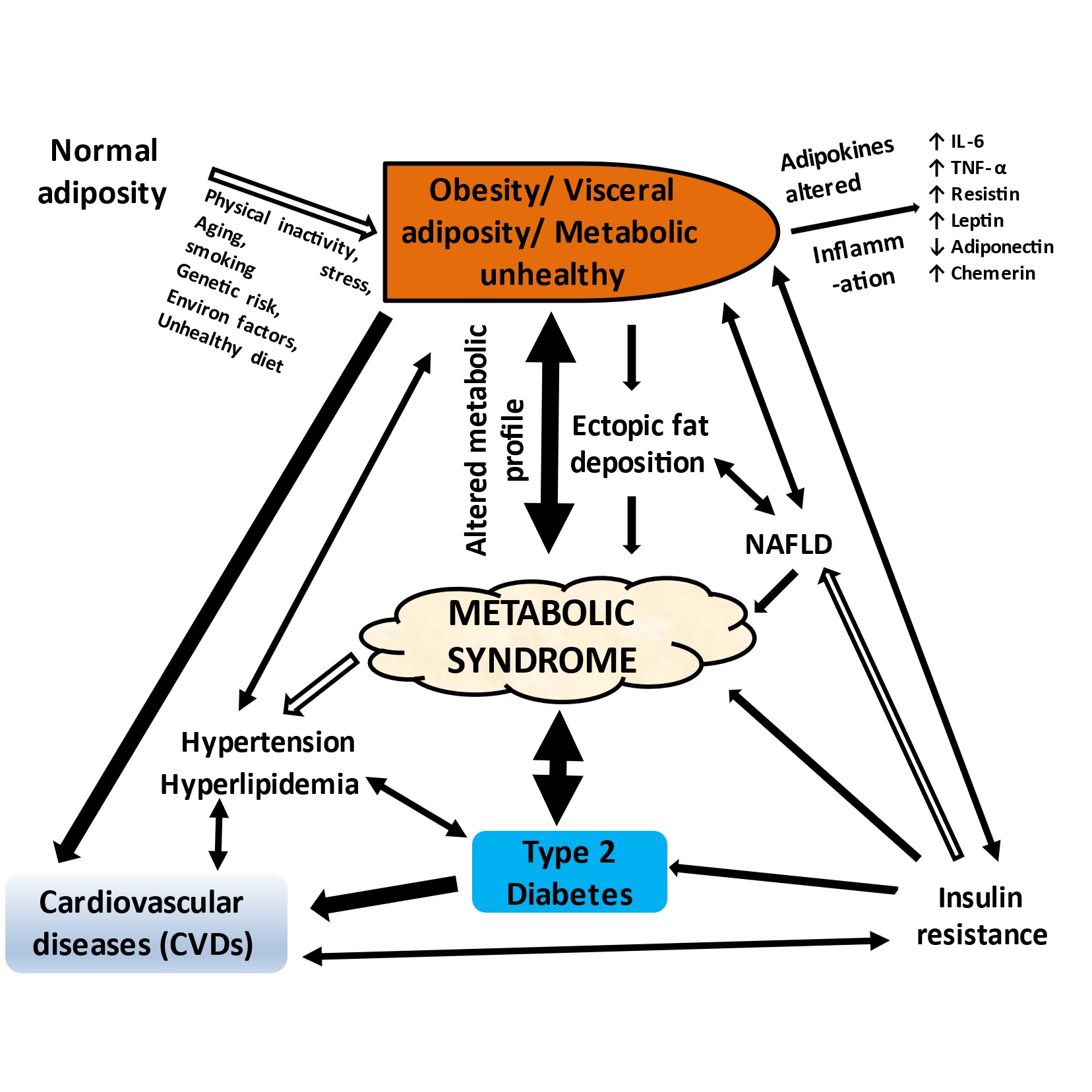


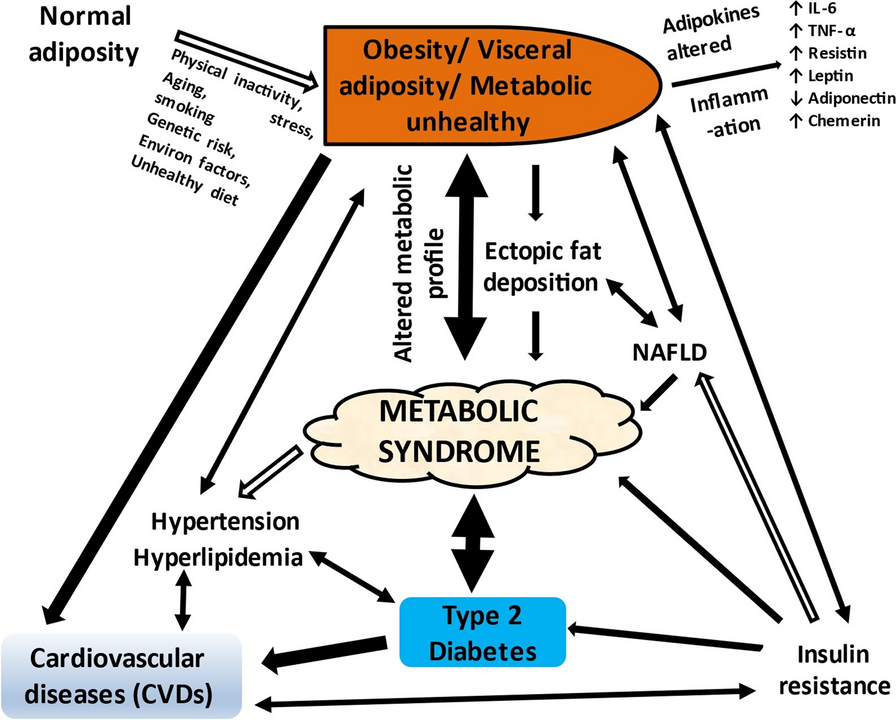

The publication of my perspective article, Interconnected Epidemics: Obesity, Metabolic Syndrome, Diabetes, and Cardiovascular Diseases: Insights from Research and Prevention Strategies, in the Discover Public Health journal is a significant milestone in my scientific journey. An article, a culmination of years of dedicated research, sheds light on the intricate web of non-communicable diseases (NCDs) and their overlapping risk factors, providing critical insights into prevention and intervention strategies. Here, I share the story behind this work, the challenges faced, the successes achieved, and its broader implications for future research and public health policies.
The Genesis of the Study
My research career has been shaped by an enduring commitment to understanding obesity and its related metabolic disorders study at King George’s Medical University, Lucknow, UP, India. The increasing global prevalence of obesity and metabolic syndrome is alarming, with these conditions acting as precursors to diabetes and cardiovascular diseases (CVDs). While working across clinical, preclinical, and public health settings, I observed a critical gap: despite extensive research on individual diseases, there was a lack of comprehensive studies integrating their interconnected nature.
This realization sparked the idea for my study-to bridge the gap between metabolic disorders and cardiovascular conditions by evaluating their shared pathophysiological mechanisms, genetic predispositions, and lifestyle-related risk factors. I envisioned a perspective that would not only analyse the published and existing data but also propose holistic prevention strategies aimed at mitigating the burden of NCDs globally.
Overcoming Challenges in Research
Every impactful study comes with its share of challenges, and mine was no exception. The interdisciplinary nature of this research required synthesizing findings from various scientific domains, including endocrinology, cardiology, genetics, and public health. Integrating these perspectives while maintaining scientific rigor was a formidable task.
Another challenge was the complexity of analysing multifactorial interactions. The interplay between adipokines, insulin resistance, chronic inflammation, and genetic predisposition required a robust statistical approach. Collaborating with experts from diverse fields helped refine our analytical framework, ensuring that our conclusions were both scientifically sound and practically relevant.
Access to diverse population datasets was also a hurdle. Given the variations in genetic and environmental factors influencing metabolic disorders, it was crucial to use that data from different ethnic backgrounds. I worked with international research collaborators to include multiethnic cohorts, strengthening the study's applicability to global health challenges.
Key Findings and Contributions
Our research underscores the bidirectional relationship between metabolic syndrome and cardiovascular diseases, emphasizing that interventions targeting one condition must consider the broader metabolic landscape. Some key findings include:
- Adipokine Dysregulation and Cardiovascular Risk: We highlighted the role of adipokines such as adiponectin and leptin in modulating insulin sensitivity, inflammation, and vascular health. Dysregulation of these biomarkers serves as a critical link between obesity and CVDs.
- Genetic Predisposition and Lifestyle Factors: While genetic variations significantly influence metabolic syndrome risk, our study found that lifestyle modifications-such as diet, physical activity, and stress management-can mitigate genetic susceptibility, reinforcing the importance of preventive healthcare.
- Public Health Strategies for Disease Prevention: We proposed an integrated approach that combines early screening, community-based interventions, and policy-level changes to curb the rising tide of NCDs. A multi-sectoral strategy involving healthcare professionals, policymakers, and local communities is essential for impactful prevention.
Personal Anecdotes and Untold Stories
Scientific research is not just about numbers and analyses; it is also about the human stories that fuel our passion for discovery. I vividly recall a visit to a healthcare center, where I met patients struggling with multiple metabolic conditions due to limited access to healthcare. Their resilience and willingness to adapt to healthier lifestyles reaffirmed the importance of public health interventions.
Another defining moment was a conversation with a young researcher during an international conference, webinars, postdoctoral studies and various Institutional visits. They shared how the earlier publications on adipokine biomarkers had inspired them to pursue research in metabolic diseases. Such encounters remind me that our work extends beyond laboratories-it shapes the next generation of scientists and influences real-world health outcomes.
Implications for Future Research
While this study provides critical insights, it also opens doors for future research avenues. Advancements in precision medicine, gut microbiome studies, and digital health interventions hold immense promise for tailoring prevention strategies to individual risk profiles. Future studies should explore how emerging technologies, such as artificial intelligence and wearable health devices, can optimize early disease detection and intervention.
Additionally, given the increasing prevalence of metabolic disorders in younger populations, longitudinal studies tracking metabolic health from childhood to adulthood are imperative. Understanding early-life determinants of metabolic dysfunction will help design targeted preventive strategies.
A Call to Action for Public Health
The findings from my research (https://scholar.google.co.in/citations?user=xxFWuZUAAAAJ&hl=en) and https://www.researchgate.net/profile/Abhishek-Gupta-66 reaffirm the urgency of tackling obesity, metabolic syndrome, diabetes, and cardiovascular diseases as interconnected epidemics. Governments, healthcare institutions, and researchers must collaborate to implement sustainable policies that promote healthier lifestyles, enhance access to quality healthcare, and encourage early screening programs.
Moreover, the general public plays a crucial role in combating NCDs. Simple lifestyle modifications, such as adopting a balanced diet, engaging in regular physical activity, and managing stress, can collectively contribute to reducing disease burden. As researcher, it is our responsibility to do not only advance research but also translate our findings into actionable health strategies for communities worldwide.
Conclusion
My research journey has been one of perseverance, interdisciplinary collaboration, and a deep-seated commitment to public health. The acceptance of my study in Discover Public Health is not just a professional achievement but a testament to the collective efforts of researchers worldwide striving to combat the global NCD crisis.
As I look ahead, I am excited to explore new frontiers in metabolic disease research, mentor aspiring scientists, and contribute to shaping evidence-based public health policies. The battle against obesity and related metabolic disorders is far from over, but with continued research, innovation, and public engagement, we can make meaningful strides toward a healthier world.

Dr. Abhishek Gupta's academic journey commenced with a Master's in Biochemistry, CSJMU (2001) and Doctoral Degree from KGMU, India. His professional trajectory spans over two decades, characterized by multifaceted roles in academia, research, and scientific consultancy. His expertise has been acknowledged through various senior positions of responsibility such as Professor, Associate Dean, Head & Senior Principal Scientist, and Sr. Team Lead. His research interests encompass a wide array of areas including biochemical, cellular, and molecular biology, genetics, toxicology, and immunology and made significant contributions to preclinical approaches particularly in herbal research. His work has embraced both clinical and preclinical realms, encompassing in-vitro, in-vivo, and ex-vivo research methodologies. His contributions have been recognized through numerous awards, honors, and achievements. His expertise is sought after globally, as evidenced by his involvement in various editorial boards, advisory roles, and memberships in professional organizations. Dr. Gupta's research output (total of 963 citations including 18 h-index and 22 i10-index for his 90+ publications) has been widely cited in academic literature, reflecting the impact and relevance of his work in the scientific community.
Follow the Topic
-
Discover Public Health
This is an open access journal publishing research from all fields relevant to public health.

Related Collections
With Collections, you can get published faster and increase your visibility.
The Economics of Longevity: Health Expenditure and Societal Implications for Public Health Systems
The relationship between health investment and life expectancy has long been a focal point in public health research and policy. As nations grapple with rising healthcare costs and varying health outcomes, understanding how financial allocations influence population health becomes increasingly critical. Numerous studies have illustrated that increased spending on health services often correlates with improvements in life expectancy; however, the complexities of this relationship are not fully understood. Factors such as socioeconomic status, healthcare accessibility, and the efficiency of health systems play significant roles in determining how investments translate into health outcomes.
At the national level, health investments primarily encompass government expenditure on healthcare systems, public health initiatives, and health infrastructure. Nations that allocate substantial resources toward healthcare often experience better health outcomes and increased life expectancy among their populations. For instance, countries with robust healthcare funding tend to provide more comprehensive services, including preventive care, chronic disease management, and health promotion programs, all of which contribute to enhanced population health. However, it is crucial to consider how these investments are distributed across different segments of the population. Inequities in health spending can exacerbate existing disparities, leading to significant differences in life expectancy among various demographic groups. Effective health investment strategies must address these disparities to ensure that improvements in life expectancy are equitable and inclusive.
The motivation for this Collection arises from the urgent need to bridge the gap between health expenditures and tangible improvements in life expectancy. Recent global health crises and ongoing disparities in health outcomes across different populations have underscored the necessity for a deeper exploration of how resource allocation affects health dynamics. This Collection seeks to provide a platform for researchers and practitioners to discuss empirical evidence, theoretical frameworks, and innovative approaches to understanding these critical interactions. By fostering dialogue around effective health investment strategies, we aim to contribute to the development of more equitable and efficient health systems worldwide.
The purpose of this Collection is to gather comprehensive research that elucidates the dynamics between health investment and life expectancy across diverse contexts. We welcome contributions that analyze historical trends, comparative studies, and policy evaluations, as well as those that explore the implications of financial investments on health equity. By highlighting interdisciplinary perspectives and fostering collaboration, this Collection aspires to advance the discourse on optimizing health investments for improved population health outcomes.
Topics of interest include, but are not limited to:
- Economic evaluations of health interventions
- Policy impacts on health spending and life expectancy
- Health equity and investment disparities
- Longitudinal studies on health expenditures and population health
This Collection supports and amplifies research related to SDG 3.
Keywords: health expenditure; healthcare economics; life expectancy; economic evaluation; population health; health investment; health policy
Publishing Model: Open Access
Deadline: Dec 31, 2026
Improving Maternal and Infant Health: The Key for Future Wellness
Optimizing health across the life course begins with ensuring equitable, high-quality care during pregnancy, childbirth, and early infancy. Evidence increasingly demonstrates that early-life exposures and experiences are critical determinants of long-term health, shaping risks for chronic disease, developmental outcomes, and overall well-being. Despite progress, disparities in maternal and infant health outcomes persist globally, underscoring the need for innovative, scalable, and evidence-based public health interventions.
This Collection aims to highlight interdisciplinary research and practice-based efforts that advance maternal and infant health from a public health perspective. We welcome contributions that examine population-level strategies, health systems strengthening, community-based interventions, and policy approaches designed to improve care during pregnancy, the birth hospitalization, and early infancy.
Submissions may include original research, implementation studies, and quality improvement initiatives that address prevention, access, equity, and health outcomes across diverse settings. By emphasizing early prevention and system-level improvements, this Collection seeks to contribute to reducing the burden of chronic disease and improving health trajectories across the lifespan.
Topics of interest include, but are not limited to:
--Public health initiatives to improve maternal and pregnancy outcomes
--Community- and population-level strategies to enhance infant health and early development
--Health system and quality improvement interventions in maternal and neonatal care
--Educational and behavioral interventions targeting pregnant individuals, families, and caregivers
--Policies and programs addressing disparities in maternal and infant health
--Preventive approaches to improve early-life health and long-term outcomes
This Collection supports and amplifies research related to SDG 3: Good health and Well-Being.
Keywords: Maternal health; Infant health; Safer motherhood; Early-life health; Health services; Healthcare system; Public health
Publishing Model: Open Access
Deadline: Mar 17, 2027