Methods for Adjusting the pH Value of Ashes in Tree Burials and Reshaping Their Image
Published in Earth & Environment and Agricultural & Food Science
As is well known, human cremated bone ash is strongly alkaline, with most tests recording a pH value ranging from 11.5 to over 14. If ashes are not properly treated before tree burial, they will cause serious damage to the soil and trees, and may also threaten the skin and corneas of on-site operators and participating family members. Tree burial will lose its environmental protection significance.
To properly resolve this issue, we conducted an 18-month study on the project with the support of relevant organizations. The pH of cremated ashes is adjusted to approximately 6 using an acidic solvent, and potential undesirable components in the ashes are removed via sedimentation.
Next, rhizosphere growth-promoting bacteria, medicinal adhesives, and edible pigments are added to the treated ashes. The resulting mixture is compressed with a tablet press to form a biodegradable ash preparation that has favorable sensory properties and stable color. This product is currently used in some regions, and the finished product is selected by the majority of bereaved families (including some living organ donors themselves).
Pictures are attached.
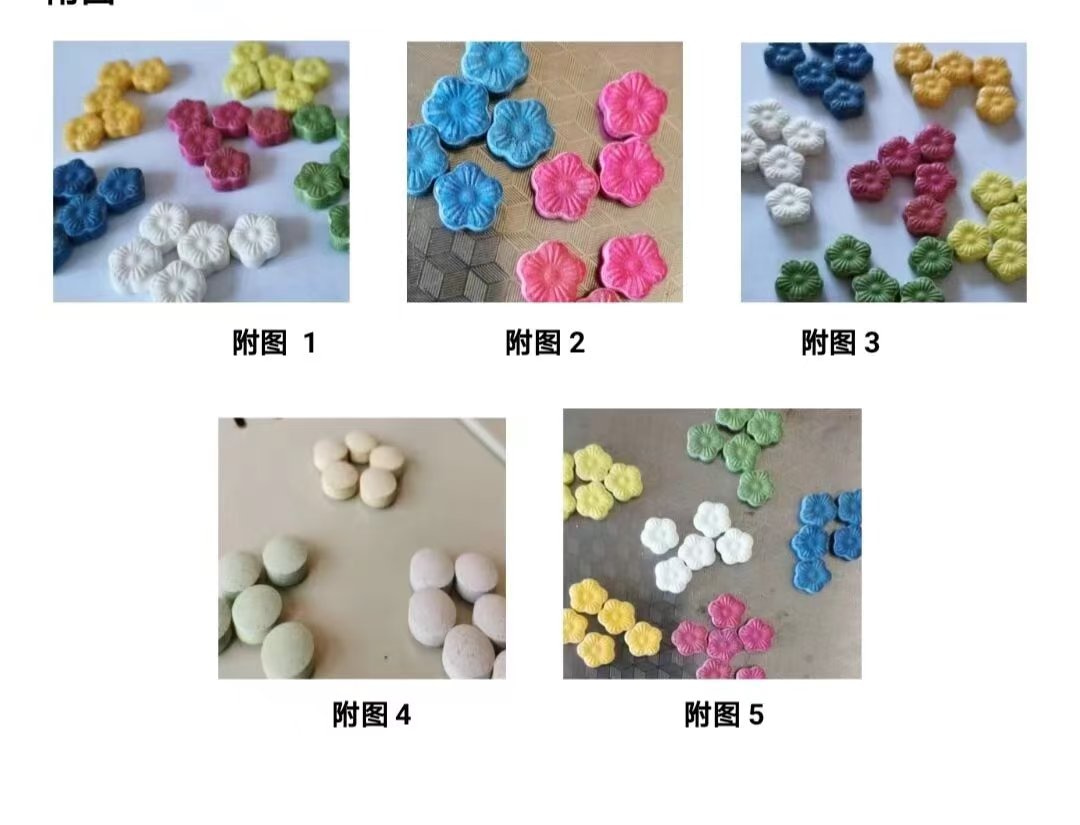
Evidence from the bone ash degradation test: Bone ash tablets (including plant probiotics) treated by the above method were subjected to a water degradation test.
Under the same conditions, bone ash slices containing 15% plant probiotics degraded into a black clay mixture after 45 days at an average room temperature of 25 ℃. After testing, it was found that the contents of potassium ions K⁺, sodium ions Na⁺, and phosphorus pentoxide P₂O₅ decreased significantly, with the pH value ranging between 5 and 6. The degradation rate of the bone ash slices is directly proportional to the content of plant probiotics and temperature.
In contrast, the control group without added plant probiotics remained grayish-white. We were very surprised when we first measured the pH value of the ashes and found it to be greater than 14. Multiple volunteers and family members of the deceased have been recorded suffering from corneal and skin burns, and trees in many tree burial areas have exhibited stunted growth or died. If ashes are buried directly at tree roots, this practice not only damages soil structure but also inhibits the activity of native beneficial microorganisms already present in the soil.
This outcome is not only unfavorable to tree growth, but also prevents tree burials from achieving their intended environmental protection goal, nor can it sustain the cycle of life. In recent years, the number of people choosing tree burial has increased year by year in many countries. This approach does not occupy land, conforms to the concepts of environmental protection and the cycle of life, and has been widely praised. We hope to continue researching this project under appropriate conditions to make tree burial more scientific, safer, and more feasible. It is intended to provide humanity with an ideal option for the final journey of life.
Tong Chen and Rong Chen
Department of Basic Medical Sciences Xi'an Medical University Shaanxi, China
Research on retractable tentacles inside the abdominal tube of the springtail beetle, a study on the microbial community associated with biodegradable plastics in yellow mealworms, and research on the treatment of harmful substances from tree burial ashes.



Please sign in or register for FREE
If you are a registered user on Research Communities by Springer Nature, please sign in