Microbially mediated mechanisms underline soil carbon persistence by climate-smart agriculture
Published in Earth & Environment, Ecology & Evolution, and Microbiology




Making sure that soil acts as a sink for atmospheric carbon at the same time as growing food is fundamental to developing climate-smart agriculture essential for future food security. The ploughing of soils (also known as tillage) is a primary driver of historical soil organic carbon (SOC) loss as CO2 emissions to the atmosphere, estimated at 0.3–1.0 Pg C year-1 globally. Returning organic carbon to the soil to rebuild SOC that has been lost, by drawing down atmospheric CO2 via crop plants, is a leading principle of ‘conservation agriculture’ now practiced across up to 9-15% of global arable land. This land management strategy is typically represented by reducing tillage and retaining crop residues on the soil surface. However, warmer temperatures accelerate the loss of SOC as microbial respiration is stimulated by warmer temperatures, and furthermore, this effect is more pronounced in soils with high SOC contents. This means that the SOC increased by conservation agriculture could be more vulnerable to loss as the planet gets warmer. This led us to question whether climate warming could threaten our ability to rebuild SOC in soils as part of climate-smart agriculture.
Microbes that live in the soil not only decompose SOC to CO2; some of the decaying remains of soil microbes, called the ‘necromass’, are very resistant to decomposition. Microbial carbon use efficiency (CUE) describes a microbial control point between SOC loss and accumulation that is a measure of the balance between these two processes, i.e., the fraction of carbon used for respiration (to provide energy) versus making new microbial biomass (some of which becomes necromass). However, we have a poor understanding of how global warming will affect these microbial processes.
Previous long-term studies have demonstrated that it can take more than a decade to reliably observe the effects of changing land management on SOC content. There have also been previous experiments that have warmed soils to simulate the effects of climate change, but so far these have been too short-term to understand how climate change will affect SOC at the timescales that matter for carbon sequestration. So, we set up a long-term experiment on the North China Plain in 2011 to answer our question about the effect of climate warming on the potential of conservation agriculture to sequester SOC. This field experiment simulated predicted soil warming levels using aboveground heaters placed over arable crops that were managed using conservation agriculture or conventional agriculture approaches (Fig.1). This allowed us to investigate the interactive effects of changing management and predicted warming on SOC and the underlying microbial mechanisms.
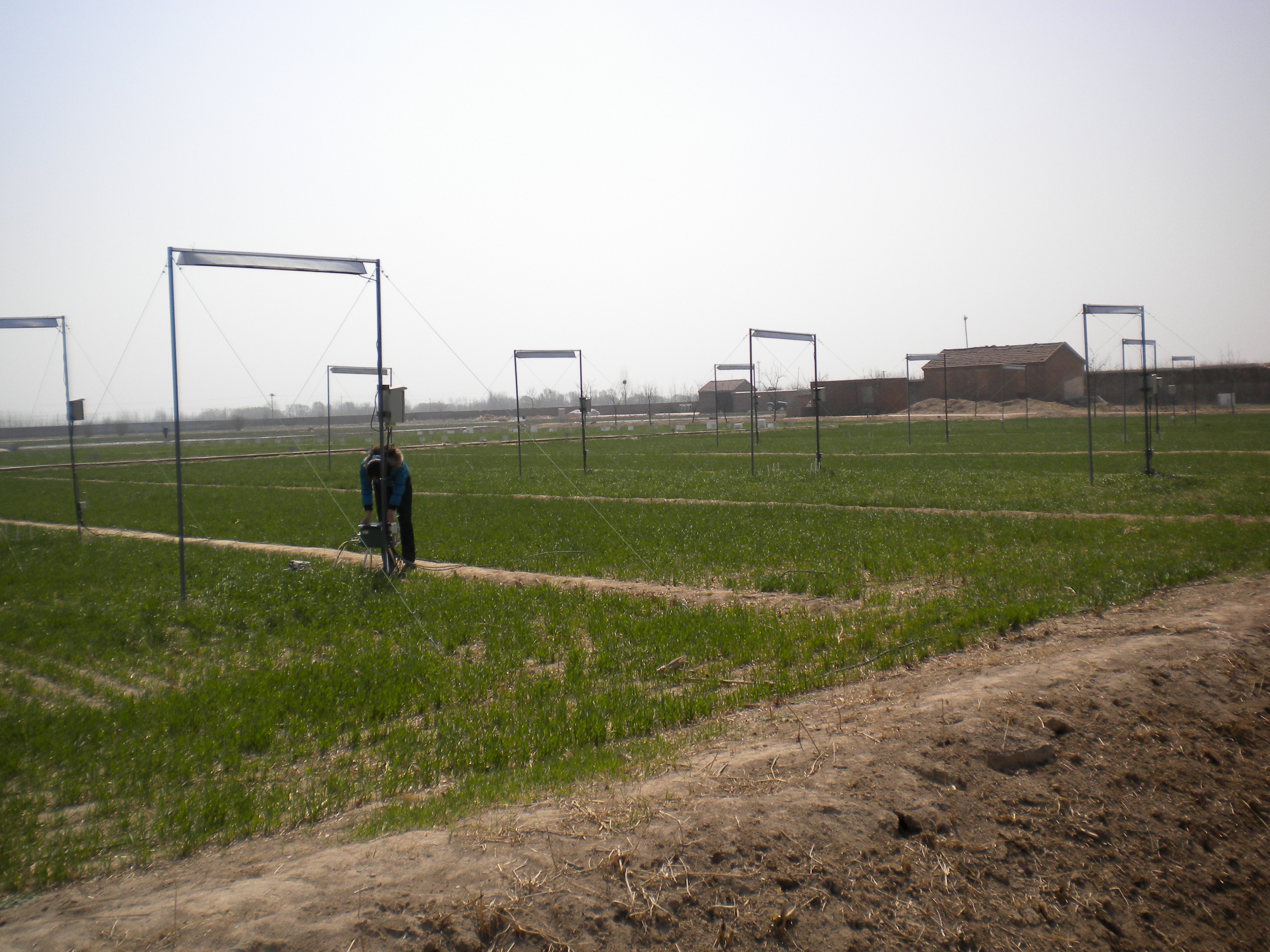
Figure 1. Long-term field warming experiment on the arable (wheat-maize) cropping system located in North China Plain established in 2011.
We showed that on balance warming progressively increased SOC content under conservation agriculture because microbial CUE and growth increased linearly over time, with the strongest response after 5 years. We observed acceleration in soil microbial abundance, growth and death that led to a very large increase (77%) in SOC derived from microbial necromass. Most of the new necromass carbon was from soil fungi whose community altered and adapted to the change in management and soil temperature. We think this happened because of the positive effect of conservation management to increase SOC and maintain soil moisture under warmer, drying conditions, that enhanced crop growth both aboveground and belowground (root biomass and root exudates). The increase in crop carbon inputs accelerated fungal succession and enhanced microbial growth efficiencies, leading to a progressive increase of microbially-derived carbon contributions to SOC formation and accrual over a decade (Fig.2). We concluded that under conditions of predicted warming, long-term conservation agriculture has the potential for climate change mitigation in contradiction of a predicted negative feedback effect of warming to promote SOC loss.
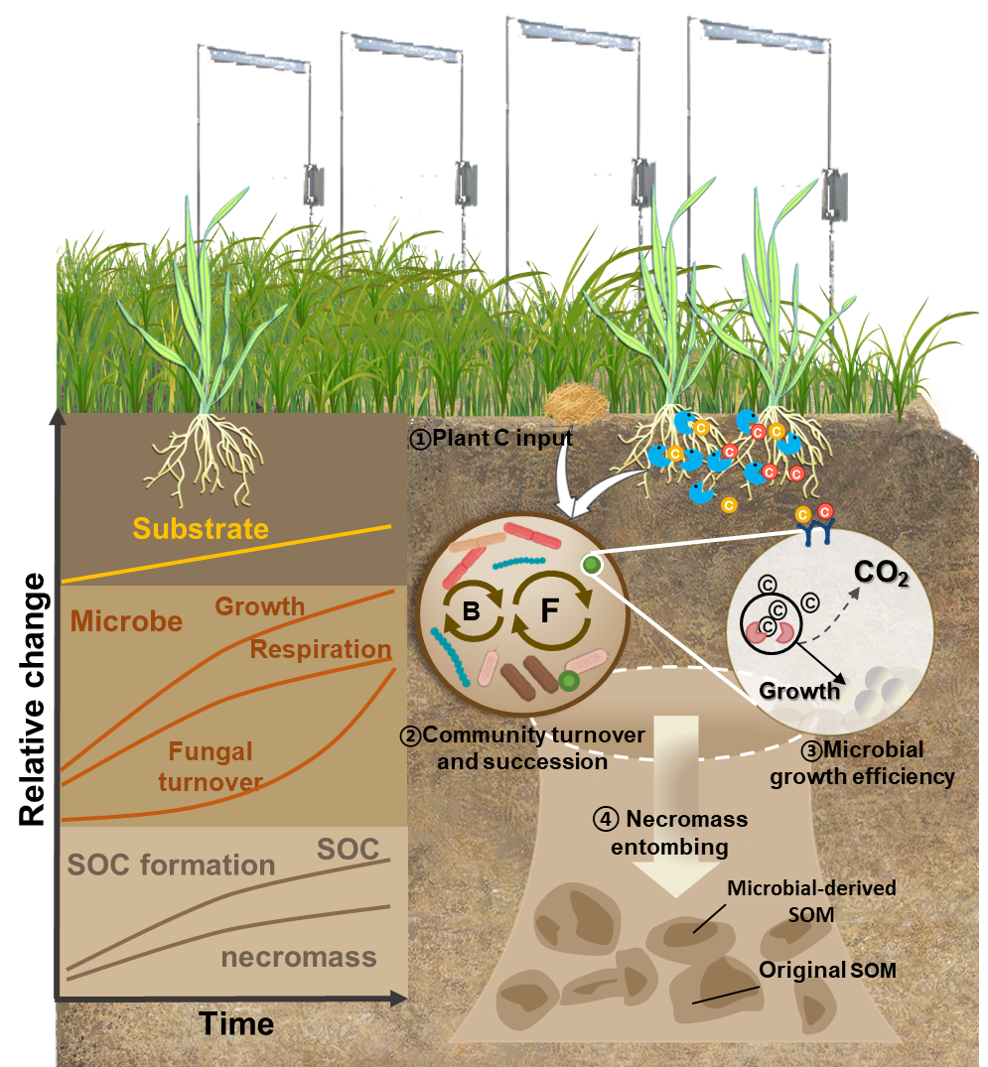
Figure 2. Conceptual diagram illustrating the microbial mechanisms underlying the impact of warming on SOC formation and accrual via increased plant carbon inputs, community succession, physiology adjustment and necromass production under conservation agriculture at decadal timescales.
For details, please refer to our paper at: https://www.nature.com/articles/s41467-023-44647-4#Ack1
Follow the Topic
-
Nature Communications
An open access, multidisciplinary journal dedicated to publishing high-quality research in all areas of the biological, health, physical, chemical and Earth sciences.

Related Collections
With Collections, you can get published faster and increase your visibility.
Women's Health
Publishing Model: Hybrid
Deadline: Ongoing
Tumor Microenvironment Crosstalk and Therapeutic Implications
Publishing Model: Hybrid
Deadline: Nov 02, 2026