More Than One Microbe: A Genomic Framework for Gardnerella
Published in Microbiology, Protocols & Methods, and Genetics & Genomics




For women enrolled in our study, BV is more than a diagnosis—it means unpleasant odor, discharge, repeated courses of antibiotics, and a well-founded concern about recurrence. For our research team, each participant visit to the clinic created a narrow window. The vaginal bacteria had to be isolated quickly, under carefully controlled conditions that mirrored the vaginal environment, and banked in a way that would support analyses years later.
These isolates grew into a collection that supported the broader NIH Human Microbiome Project, which was an effort to define the human microbiome using well-characterized reference strains and complete genome sequences. Within that larger effort, we focused on Gardnerella in the vaginal microbiome.
Gardnerella was first isolated and described by Gardner and Dukes in 1955 as Haemophilus vaginalis and was one of the first vaginal bacteria formally linked to BV. For decades afterward, it was considered one of the causative agents of BV. As more data showed that Gardnerella is also common in women without BV, a simple presence/absence model became increasingly hard to Gardnerella was initially considered a single bacterial species, but genetic markers, like cpn60, provided substantial evidence of multiple distinct lineages (i.e. species and subspecies). In our own cpn60-based studies, greater Gardnerella lineage diversity was associated with higher BV risk. The remaining problem was resolution. Individual marker genes could show that species variation existed, but they could not define the full chromosomal structure of each lineage. To do that, we needed complete genomes from the bacterial isolates we had cultivated.
Why complete genomes mattered
Draft (partial) genomes support many types of genomic comparative analyses, but in order to fully characterize the gene content that defined specific lineages, we required complete chromosomes. We wanted to evaluate both gene content together with gene order (synteny), as neighboring bacterial genes often encode related biological functions, including putative co-regulated operons.
Long-read sequencing allowed us to generate complete, high-quality Gardnerella genomes and analyze them using PPanGGOLiN, a bioinformatic tool that preserves synteny, allowing us to assess gene neighborhoods and ask which genes were present or absent across lineages (Figure 1).
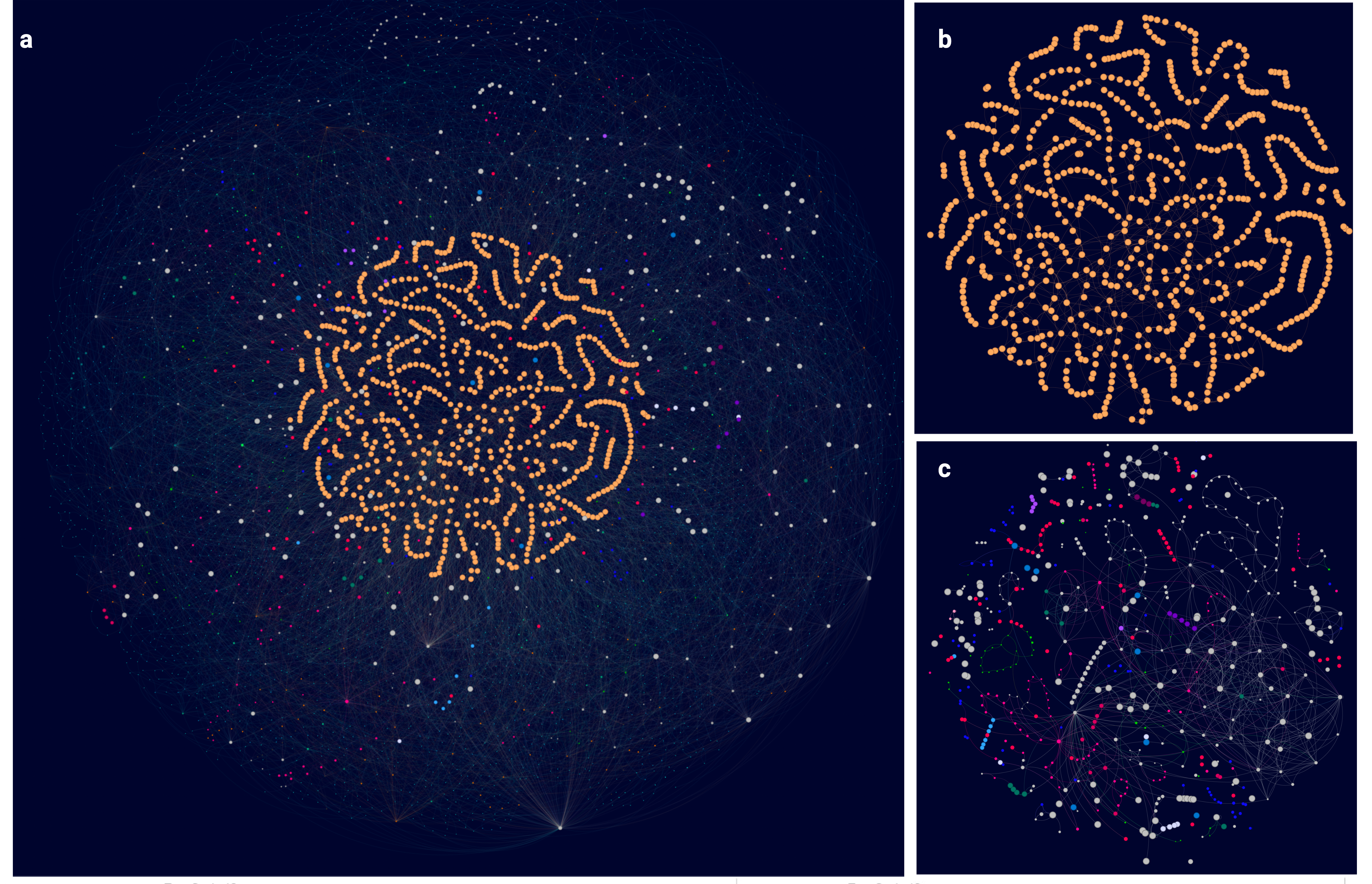
Our first pangenome analysis revealed that, while most Gardnerella genomes separated into two broad groups, several isolates carried distinct syntenic gene blocks, and these blocks fell outside of those groups. These outlier strains appeared to represent additional, under-resolved Gardnerella diversity.
We then expanded the dataset using publicly available genomes from the National Center for Biotechnology Information (NCBI) and unpublished genomes contributed by our collaborators. The expanded collection was curated to remove incomplete or contaminated genomes, duplicates, or strains that had been substantially modified through laboratory manipulation. With that larger and cleaner dataset, the same results held. The outlier groups remained distinct, and multiple species-delimitation approaches converged on a more complex genus structure than the existing nomenclature captured.
The result was a revised view of Gardnerella diversity as a set of genomic lineages, with species- and subspecies-level structure.
Names that carry information
Bacterial names should carry biological information. If two strains share a name, researchers assume that they are equivalent. If they have different names, researchers assume those differences matter.
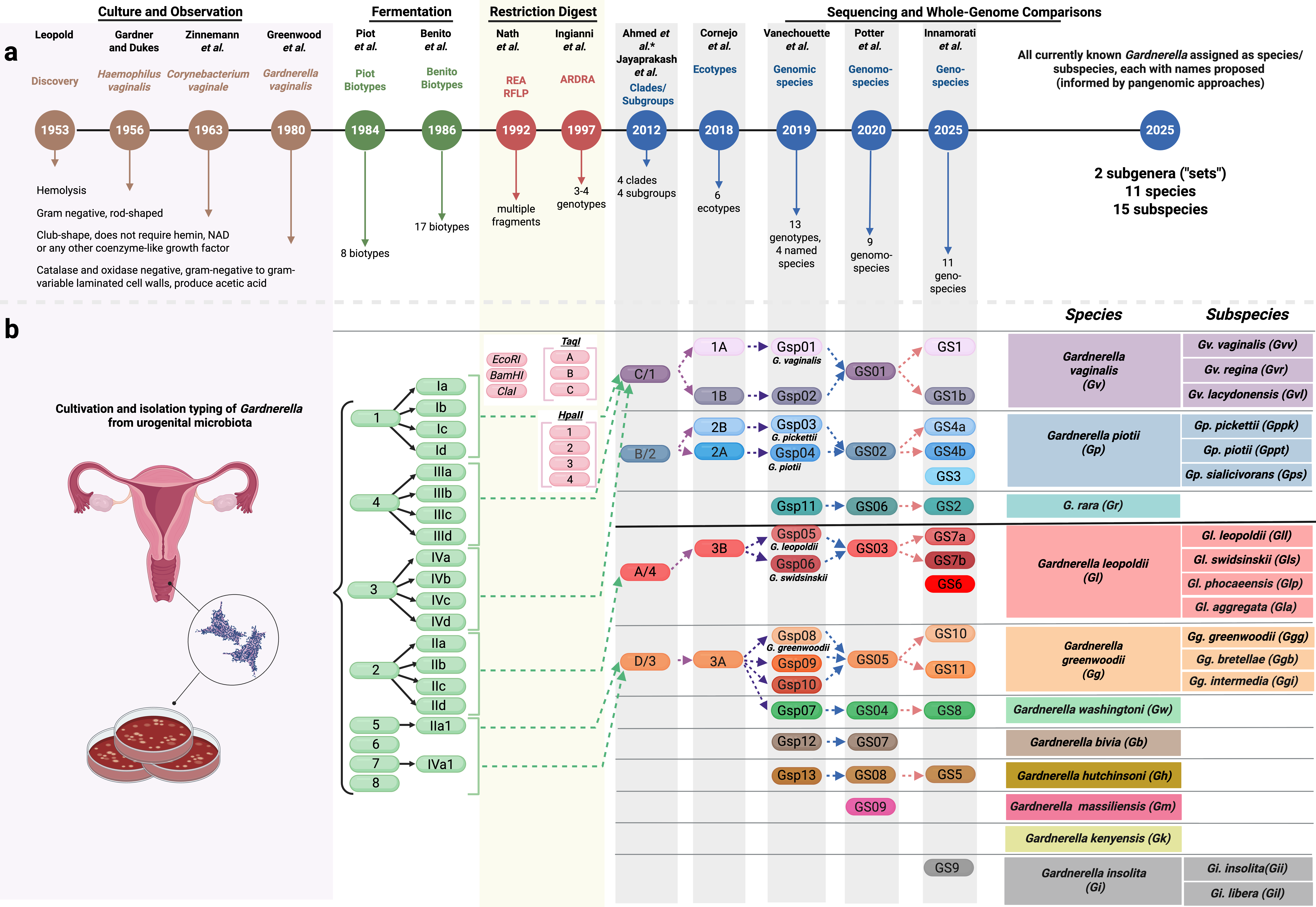
Over the last 70 years, Gardnerella nomenclature changed repeatedly as isolate collections grew and typing methods improved (Figure 2). Many earlier studies detected subsets of the genus diversity with different levels of resolution. However, to connect naming schemes from prior studies to these updated lineages, a unified framework was needed.
Using the curated Gardnerella genome collection, we built a high-confidence phylogeny that resolved 21 genomic lineages across 11 species. We then assigned provisional names to those lineages, drawing from existing nomenclature where possible so that prior work was preserved. The goal was to provide a consistent framework that allows findings from different studies to be mapped onto the same lineage structure.
With defined group boundaries and names, we were then able to ask: how biologically diverse are these lineages?
Virulence-associated traits were unevenly distributed across the lineages. Vaginolysin, a pore-forming toxin, and sialidases, enzymes which degrade the protective mucus layers of the vaginal epithelium, were found more often in some lineages or at low frequency or even absent in others. Metabolic traits showed similar frequency differences across lineages, including predicted differences in the ability to produce certain amino acid and to breakdown small carbon molecules. These traits may influence how different Gardnerella lineages interact with each other, compete for resources, and persist within the vaginal environment.
A strain that actively degrades the protective mucus lining of the vaginal epithelium is different from a strain that lacks this capability. Collapsing both under a single label makes it harder to ask if some or all Gardnerella contribute to the development of BV, if certain lineages are found only in asymptomatic individuals, which combinations in the microbiome matter, and why recurrence so often occurs post-treatment. A taxonomy that tracks with genomic and predicted functional differences gives the field a better way to connect microbial identity to phenotype.
Mobile genetic elements exposed
The pangenome also revealed mobile genetic elements that were previously missed or under-annotated in prior datasets.
One long syntenic region formed a loop-like structure in the pangenome. The genes within this loop contained a previously described Gardnerella phage and a distinct phage group that had not been recognized within the genus.
During genome assembly of one strain, we identified a circular contig with gene content consistent with a plasmid. When those genes were examined in the pangenome, they clustered with related sequences in other strains. This led us to the identification of two additional plasmids in publicly available Gardnerella genomes that had not been annotated as plasmids in previous studies.
As genetic tools to study Gardnerella remain limited, plasmids and other mobile elements may provide practical entry points for direct experiments that enable us to test rather than infer the biological role of Gardnerella.
A foundation, not a finish line
This study provides a curated Gardnerella reference genome collection, a reproducible taxonomic framework, a syntenic pangenome, and an initial path towards genetic manipulation. These resources should make it easier to compare results across studies and move from association towards biological mechanism.
Our isolate collection also matters—not just for what it contains, but for how it came together. Behind every bacterial isolate is a woman who donated a sample, clinical coordinators who made same-day isolations possible, and microbiologists who processed the samples quickly enough to culture and preserve these organisms. While those contributions are easy to compress into a methods paragraph, they are the reason bioinformaticians had the high-quality data required to make the genomic analysis possible. This was a collaboration that spanned four institutions, and it is not unlike the microbial ecosystems we study, where diversity and cooperation make the community thrive.
The conclusion is clear: Gardnerella is a group of related organisms with distinct genetic repertoires, different functional capacities, and likely different roles in vaginal health and disease. While this framework will not solve BV on its own, it gives the field a more accurate map of the organisms involved which is necessary for understanding why BV develops, why it recurs, and how it might be treated more effectively.
Follow the Topic
-
Nature Communications
An open access, multidisciplinary journal dedicated to publishing high-quality research in all areas of the biological, health, physical, chemical and Earth sciences.

Related Collections
With Collections, you can get published faster and increase your visibility.
Women's Health
Publishing Model: Hybrid
Deadline: Ongoing
Tumor Microenvironment Crosstalk and Therapeutic Implications
Publishing Model: Hybrid
Deadline: Nov 02, 2026