Towards dynamic resilience on urban rainfall-induced pollution control via Sponge Cities approach in China
Published in Earth & Environment and Arts & Humanities
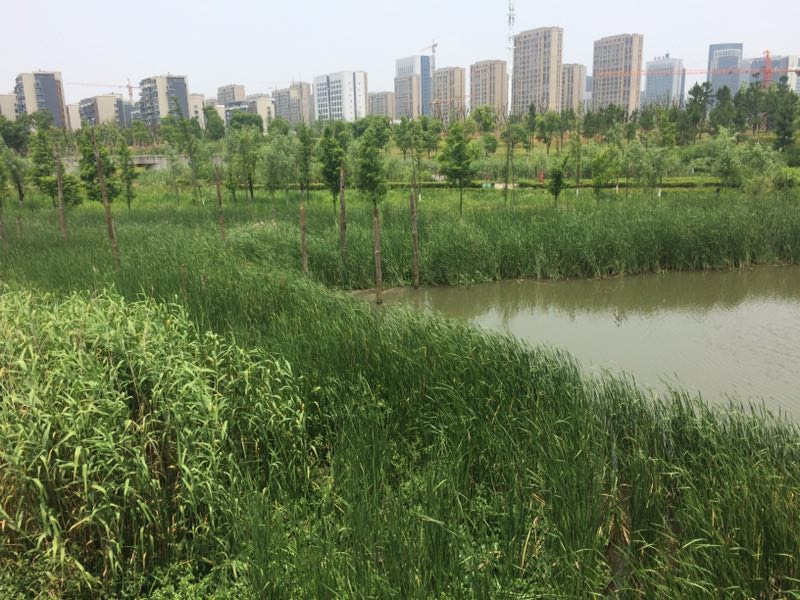







With rapid urbanisation and ongoing climate change, rainfall-induced urban water pollution has become a pressing global concern. Over decades, progress has been made in curbing traditional pollution sources, such as industrial point sources and municipal sewage. However, rainfall-induced pollution persists and worsens.
In response to this challenge, Nature-based Solutions (NbS), which position ecological infrastructure (EI) as a core component, have gained increasing traction in urban water management due to their potential to align with natural processes. EI mimics natural hydrological processes to reduce runoff and improve water quality, but flood-season water quality degradation linked to rainfall remains severe.
This undermines urban water management goals and threatens Sustainable Development Goal 6, which aims to ensure universal access to clean water and sanitation by 2030. China has set an ambitious target: by 2030, 80% of built-up areas in the country are expected to meet the standards of the Sponge City initiative.
However, the efficacy of these Sponge City projects in controlling flood-season pollution remains uncertain. An official assessment revealed that 15 of the 50 rivers with the most severe pollution in China were located within Sponge City demonstration areas, underscoring the need for targeted research to address this discrepancy.
Cities in the plain river-network regions of eastern China represent ideal study sites: as early implementers of the Sponge City initiative, they possess long-term, high-density monitoring datasets. Furthermore, their small drainage basins, high river density, and gravity-driven hydrological systems enable precise spatial correspondence between land-based pollution sources and receiving water bodies.
In the mid-part of E China, Wuxi’s Binhu District is a particularly representative case: since 2017, it has implemented 133 Sponge City projects, exhibits distinct seasonal rainfall patterns, and contains 250 rivers, many of which experience recurrent water quality degradation during flood seasons.
This combination of extensive EI implementation, diverse hydrological conditions, and robust monitoring data makes Binhu District an optimal site for investigating the mechanisms underlying EI performance decline during flood seasons.
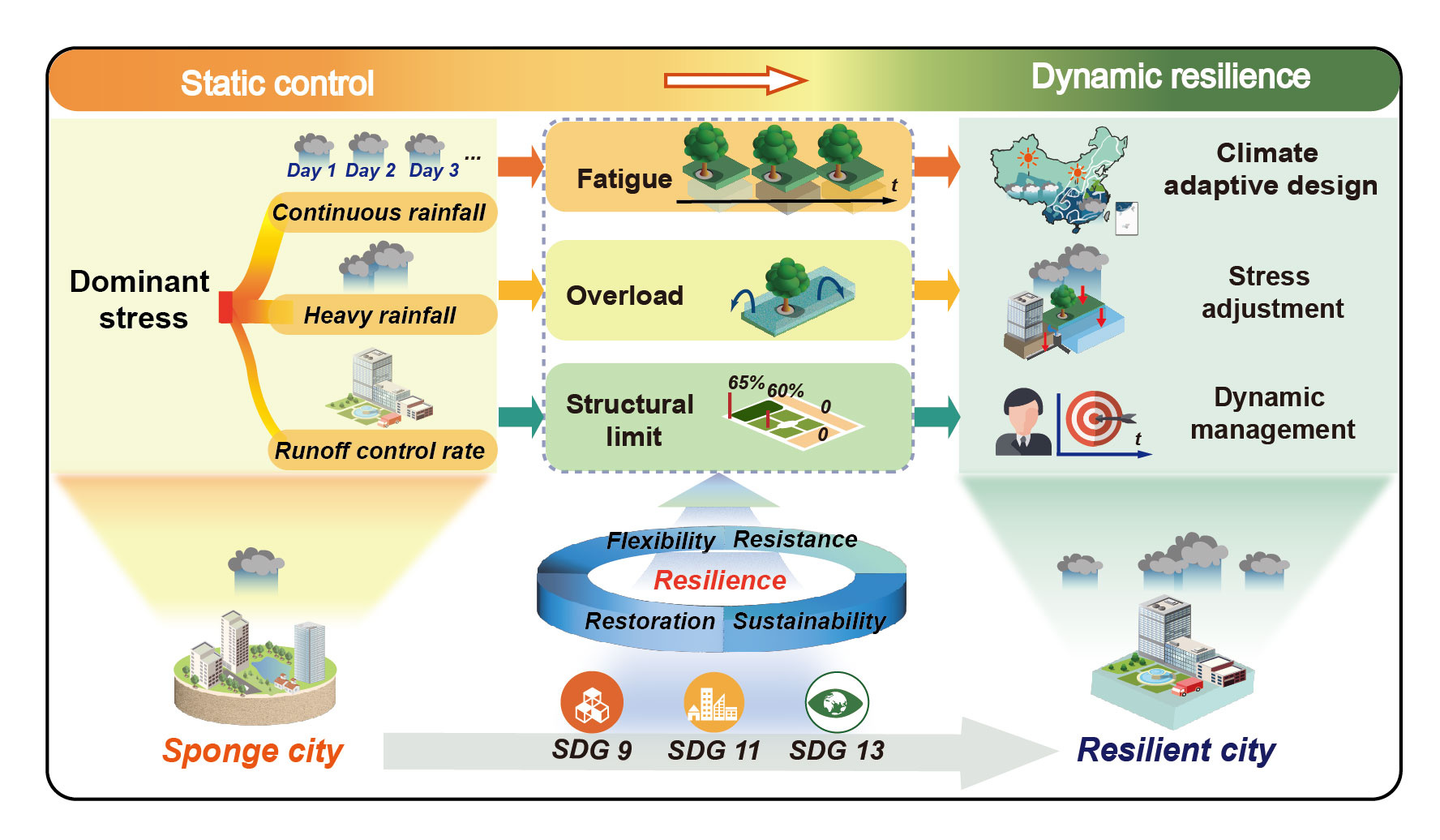
Building on this context, the objectives of this study are threefold:
(1) Decipher the dominant stress pathways that lead to functional failure of EI during flood seasons; (2) Develop a Multi-Stress Pathway Resilience Framework capable of quantifying the adaptive capacity of EI under these concerted stresses; (3) Apply this framework to identify critical resilience bottlenecks in existing EI systems and propose a paradigm shift towards dynamic resilience management for Sponge Cities, establishing science-based priorities across China’s climate zones.
By meeting the above objectives, this study develops the first dedicated resilience assessment framework for EI in addressing urban flood-season pollution, which serves as a scientific tool to identify EI resilience bottlenecks and optimise Sponge City construction.
These findings provide decision support for prioritising resilient Sponge City construction across China’s climate zones and a transferable template for global cities tackling rainfall-induced pollution, advancing EI’s role in stormwater management and climate adaptation.
For more information, please feel free to read our paper, first authored by Jiali Li, Prof Hongtao Zhao (corresponding author) and our team, here: https://www.nature.com/articles/s42949-026-00400-6#citeas

Prof Dr Faith Chan specialises in international water management policies, particularly in sustainable flood management and planning practices, and he is an associate editor of npj Climate Action and Climate Risk Management.
Follow the Topic
-
npj Urban Sustainability
An open access, online-only journal for urban scientists, policy makers and practitioners interested in understanding and managing urbanization processes.

Related Collections
With Collections, you can get published faster and increase your visibility.
Regenerative Development: Design Applications in the Urban Environment
Publishing Model: Open Access
Deadline: Nov 24, 2026
AI for Sustainable Urban Planning
Publishing Model: Open Access
Deadline: Mar 01, 2027