New Article on Expert Interaction with Medical AI
Published in Social Sciences and Computational Sciences
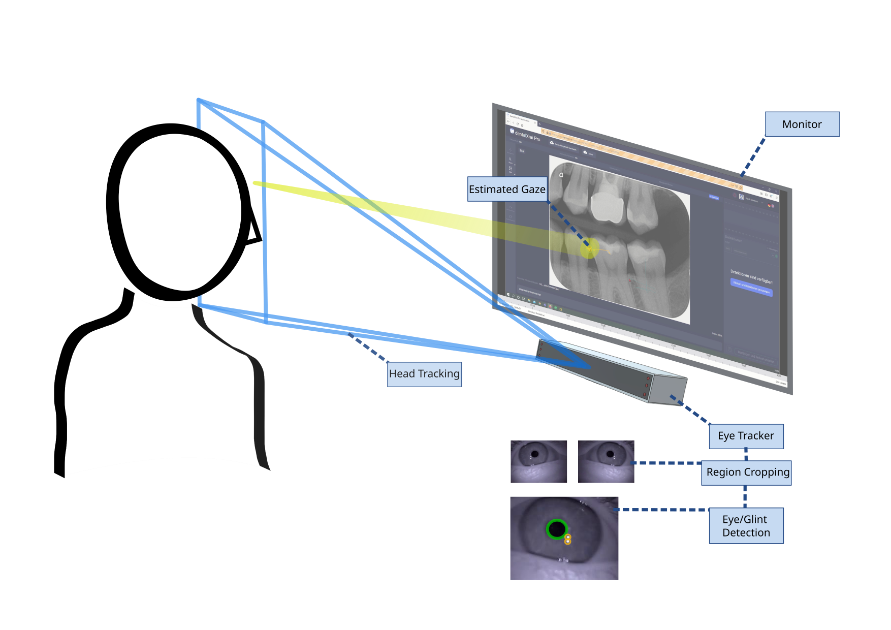
Medical AI becoming increasingly pervasive in professional workflows, but collaboration between the expert and these systems are still preferred by regulatory bodies, experts, and even patients. Yet little effort has been directed towards improving the interaction between expert and system. When AI interaction is uncomfortable for the user, trust is diminished regarding the system's performance and practicality. Interaction between the professional and AI decision support systems can be improved with input from experts. Their insight can help create better, more usable systems that are designed to promote the best abilities of both expert and AI, which ultimately benefits patient care. With this goal, we used eye tracking technology to investigate how dental professionals use a commercially available AI decision support system for bitewing x-ray interpretation. We employed gaze behavior as an indicator of the visual strategies related to clinical decision-making when using AI support versus not using AI support. We found that expert visual search strategies when interacting with an AI support differed from their standard strategies when inspecting medical images without any AI support. This distinction was reflected in the attention to interface elements of the AI support and how they could accommodate the extra visual overlay information provided by the support.




Please sign in or register for FREE
If you are a registered user on Research Communities by Springer Nature, please sign in
Paper can be found here: https://doi.org/10.1038/s41746-024-01192-8