Revealing left and right brain differences
Published in Neuroscience and Anatomy & Physiology


Brain asymmetries
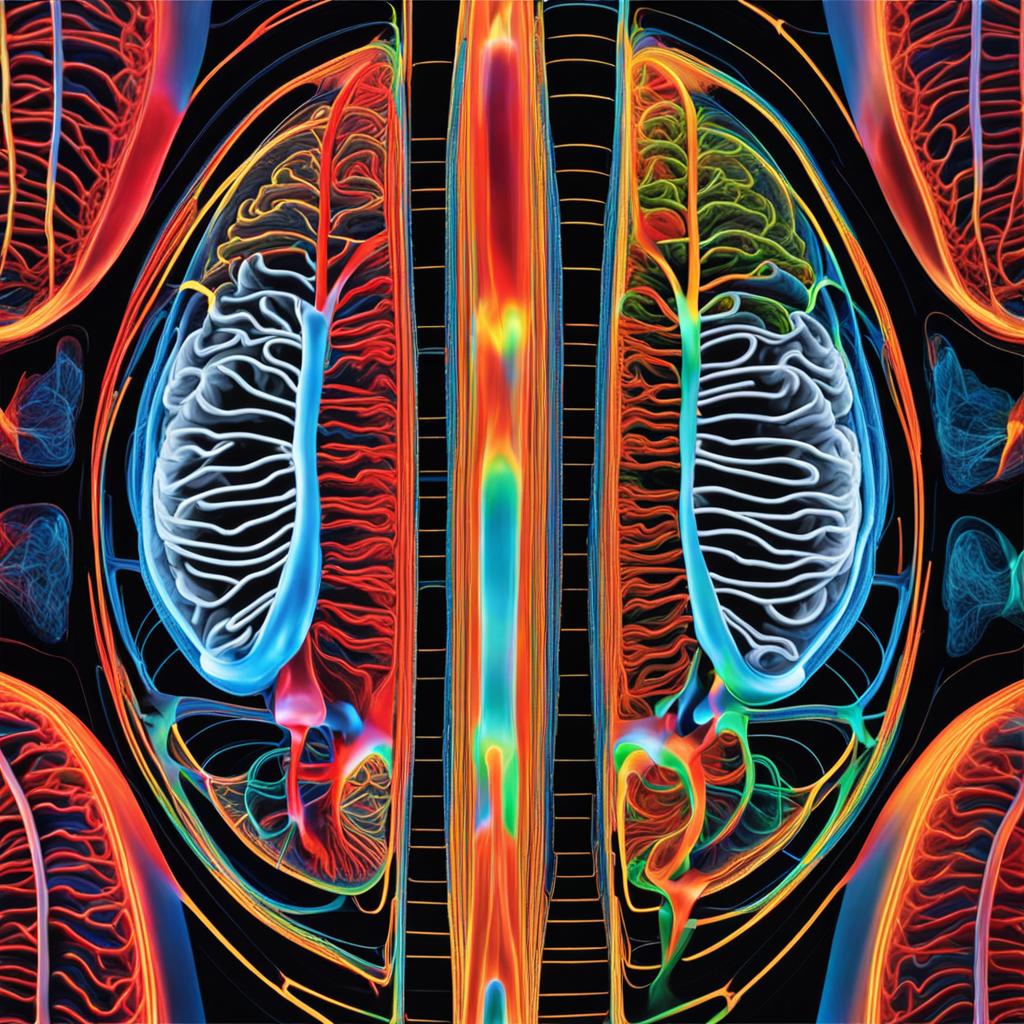
Our understanding of the human brain is constantly evolving. One topic of interest are asymmetries between left and right halves of the brain. Such asymmetry can be observed in structural and functional brain physiology. Brain asymmetry does not only seem to influence behaviour, for example our handedness preference, but holds also clinical importance, with observable differences between healthy individuals and various disease groups. This includes neurodegenerative diseases such as Alzheimer’s, Parkinson’s, and psychiatric disorders like obsessive–compulsive disorder and schizophrenia. Notably, one previous study by James Roe and colleagues shows that cortical thickness asymmetry tends to decrease with age, potentially accelerating in the development of neurodegenerative disorders, such as Alzheimer’s disease.
Brain age predictions
A recent method to assess brain health is the concept of brain age. This metric uses scalar metrics derived from brain scans to predicted age. The age prediction can then be contrasted with chronological age. Discrepancies can inform about a person’s health and are particularly large in neurodegenerative diseases. Brain age is commonly estimated from the entire brain. However, considering that the brain is highly asymmetric, we propose a novel way of estimating brain age: hemisphere-specific brain age estimating separate brain ages for each hemisphere. Such approach offers insights into the integrity of individual hemispheres and overall brain asymmetry by comparing left and right brain ages.
The current study
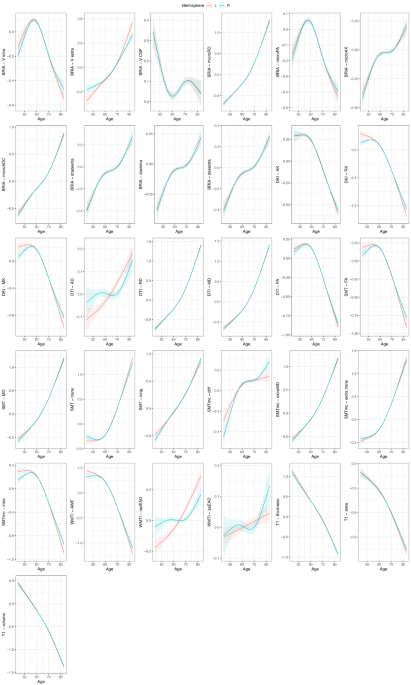
While previous evidence provide a general understanding of brain asymmetries, a comprehensive overview of structural asymmetries in a large sample was still missing. Hence, the current study set out to examine both asymmetries in 1) brain physiology, such as the volume of the amygdala, and 2) brain age predictions, as well as their age-dependencies. We further explored how brain age from both hemisphere relates to hemisphere-specific brain age, and whether brain ages are influenced by the magnetic resonance imaging (MRI) modality,
brain hemisphere, handedness, and health-and-lifestyle factors previously linked to brain age.
Higher physiological asymmetry but lower brain age asymmetry later in life
Our findings suggest strong asymmetries across the brain, which appeared even stronger later in life. We find especially central and low areas’ asymmetries to be age-sensitive. These findings were concordant for males and females. In contrast to stronger asymmetries in brain physiology later in life, the difference between left and right brain age appear smaller later in life. Brain ages from a single hemisphere were similar to conventional brain age predictions from both
hemispheres.
The findings can inform further exploration of the clinical utility of hemisphere specific brain predictions, for example, in unilateral stroke. Regional asymmetries which were especially high later in life might be markers of ageing and potentially indicative of disease development when asymmetries appear particularly high before senescence.
Sex-specific effects
When estimating brain age from both sexes together, there seems to be no effect of MRI modality, brain hemisphere, handedness. However, considering males and females separately reveals unique effects of all three factors. These sex-specific effects helped to identify, unique relationships of health-and-lifestyle factors and brain age predictions for males and females. Our analyses also confirm previous study results showing higher brain age estimates in males compared to females.
Conclusion
The study presents a significant step towards characterising brain asymmetries and introduces an extension of the concept of brain age predictions. Both advance our understanding of ageing processes in the brain, and provide useful information for further explorations of asymmetries and the development of various psychiatric and brain diseases.

Follow the Topic
-
Nature Communications
An open access, multidisciplinary journal dedicated to publishing high-quality research in all areas of the biological, health, physical, chemical and Earth sciences.

Related Collections
With Collections, you can get published faster and increase your visibility.
Women's Health
Publishing Model: Hybrid
Deadline: Ongoing
Tumor Microenvironment Crosstalk and Therapeutic Implications
Publishing Model: Hybrid
Deadline: Nov 02, 2026