Teaching Robots to Grasp What Matters: Bringing Real-World Objects into Robotic Rehabilitation
Published in Healthcare & Nursing, Social Sciences, and Bioengineering & Biotechnology





The motivation
Upper extremity rehabilitation after stroke and spinal cord injury focuses on restoring the ability to reach, grasp, and manipulate everyday objects—skills that are essential for independence.
Robotic therapy has advanced significantly in delivering high-intensity, repetitive training, offering objective feedback while reducing the burden on therapists. Yet, despite these advantages, improvements in functional outcomes do not translate into meaningful functional gains.
One reason may be a fundamental disconnect: many robotic systems rely on virtual or simplified tasks that do not reflect how we actually use our hands in daily life. As a result, gains achieved during therapy may not always translate into meaningful functional improvements.
Our work began with a simple but important question: Can we bring real-world objects into robotic rehabilitation without compromising safety, usability, or performance?
More importantly, we began to ask:
- What if robotic therapy focused on retraining the grasp types people use to manipulate everyday objects?
- What if we present these tasks in a manner that will encourage users to attempt movements they are currently unable to perform?
- What if the therapy encouraged users to make mistakes—and learn from them—to improve their reaching and grasping?
- What if the therapy is “patient” and offers the user “unlimited time” to figure out the best way to approach and grasp an object?
- What if the therapy could eliminate fear of failure in front of therapists or bystanders, creating a stress-free environment where users are essentially competing with themselves and are motivated solely by their desire to do better? No social pressure whatsoever.
Our idea
We set out to bring real-world function back into robotic rehabilitation. To do this, we turned to
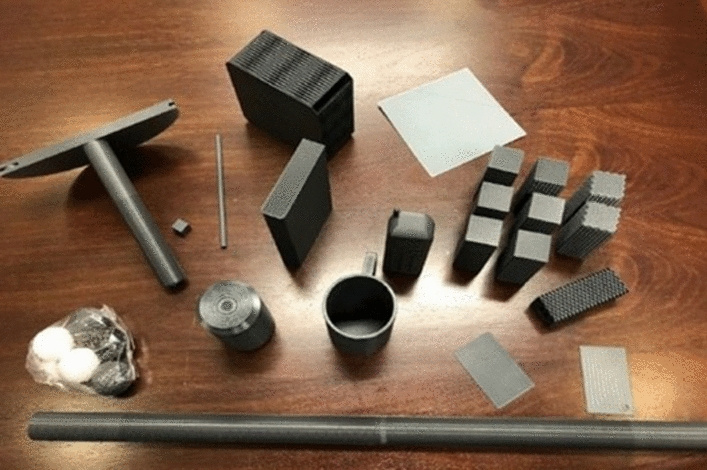
the Toronto Rehabilitation Institute—Hand Function Test (TRI-HFT), which includes everyday objects such as a mug, a sheet of paper, and a credit card. These objects are familiar and clinically meaningful—but they were never designed to be used with robotic systems.
Adapting them proved more challenging than we initially expected. Very quickly, we realized this was not just an engineering problem—it was a design problem. Each modification required us to balance robot compatibility with clinical relevance, constantly asking ourselves, "Will this
still feel natural for the user?"
We explored several design strategies, including internal and external handles and subtle geometric modifications depending on the object. Some designs worked immediately, while others required multiple iterations. Even small changes—such as weight distribution or handle placement—could significantly affect how reliably the robot grasped the object.
Alongside the objects, we developed a custom support shelf that stores each item in fixed positions. This ensured that the robot could consistently locate, pick up, and return each object, creating a structured and repeatable therapy setup.
Testing the Concept
To evaluate the system, we used a six-degree-of-freedom collaborative robotic arm equipped
with a gripper. Participants sat in front of the robot while it presented objects for reach-and-grasp tasks.
One of the most interesting aspects of this work was observing how people interacted with the
system. Before presenting objects, the robot assessed each participant’s extent of reach and then adapted object placement within—and slightly beyond—their workspace. This allowed us to explore not only performance, but also how participants responded to increasing task demands.
We recorded reach extent, time to grasp, and grasp force in three-dimensional space, while also paying close attention to the user experience.
What stood out to us was how seamlessly the system performed during the pick-and-place. The robot consistently manipulated all modified objects without slippage or breakage while capturing detailed performance data. At the same time, participants described the experience as engaging and intuitive, often noting that interacting with real objects felt more meaningful than virtual tasks.
Why it matters
This work represents a shift in how we think about robotic rehabilitation. Rather than focusing solely on movement, it emphasizes function, interaction, movement planning and execution, error correction, “zero-pressure” learning, real-world relevance, and “allowance to fail” as a strategy to enable incremental and persistent learning. DARA emphasizes all aspects of sensorimotor integration, learning, self-motivation, and neuroplasticity—all packaged into one safe and effective therapy strategy.
For us, it reinforced an important idea: recovery is not just about moving the arm—it is about being able to use the arm and hand in meaningful, everyday ways.
Next steps
This study is an early step. We are now extending this work to individuals with stroke and spinal cord injury to better understand how this approach influences functional recovery.
We also plan to refine the object designs, expand compatibility with different robotic systems, and further optimize how task difficulty is adapted to each user.
Ultimately, our goal is simple: to make rehabilitation more meaningful and more connected to everyday life. By combining familiar objects with robotic precision, self-motivation, learning, and neuroplasticity, we hope to help individuals practice what truly matters—one mug, one page, and one grasp at a time.

Follow the Topic
-
BioMedical Engineering OnLine
BioMedical Engineering OnLine is an open access, peer-reviewed journal that is dedicated to publishing research in all areas of biomedical engineering.

Related Collections
With Collections, you can get published faster and increase your visibility.
Conductive Biomaterials and Advanced Fabrication for Next-Generation Tissue Regeneration
Advances in conductive biomaterials and modern fabrication methods are reshaping how we approach tissue regeneration. Materials that can carry electrical signals are drawing growing interest because they influence key cellular behaviours that support healing. In recent years, researchers have shown that conductive polymers, hydrogels, and nanoscale materials can boost cell adhesion, growth, and differentiation—pushing tissue engineering solutions closer to real clinical impact.
Moreover, our understanding of how electrical cues interact with biological systems is expanding quickly, and the implications for regenerative medicine are substantial. Bioactive scaffolds that incorporate conductive nanoparticles, for example, have produced encouraging results in nerve repair and cardiac tissue recovery. These developments are not just theoretical; they point toward therapies that could meaningfully improve outcomes for patients with spinal cord injuries, heart damage, and other severe conditions.
Looking forward, the field is moving toward multifunctional biomaterials that can adapt to their environment in real time. Materials capable of responding to electrical or biochemical signals could open the door to highly personalized regenerative treatments. Successfully bringing these technologies into clinical practice would also support broader global health goals by improving long term patient well being.
For this collection, we welcome original research and review in the following topics:
- Conductive polymers in regeneration
- Smart biomaterials for tissue engineering
- 3D bioprinting techniques
- Electrospun nanofibres
- Bioactive scaffolds for nerve repair
- Hybrid hydrogel systems
- Nanoparticle integration in biomaterials
- Embedded conductive micro- or nano-fibers
Publishing Model: Open Access
Deadline: Mar 15, 2027
Advanced Biomaterials and Biofabrication Strategies for Corneal and Ocular Tissue Engineering
This collection will focus on recent advances in the design, fabrication, and functional evaluation of biomaterials for ocular applications, with particular emphasis on corneal tissue regeneration. Key topics may include electrospun and hydrogel-based scaffolds, biofabrication approaches such as 3D bioprinting and multilayer constructs, surface functionalization strategies to enhance cellular response, in vitro and in vivo corneal models, and mechanistic insights into cell–material interactions. The collection will also highlight translational perspectives and current clinical challenges in corneal repair and regeneration. The aim of this Collection is to bring together interdisciplinary contributions that bridge fundamental biomaterials research with clinically relevant solutions in ophthalmology.
All submissions in this Collection undergo the journal’s standard peer review process. Similarly, all manuscripts authored by a Guest Editor(s) will be handled by the Editor-in-Chief. As an open access publication, this journal levies an article processing fee (details here). We recognize that many key stakeholders may not have access to such resources and are committed to supporting participation in this issue wherever resources are a barrier. For more information about what support may be available, please visit OA funding and support, or email OAfundingpolicy@springernature.com or the Editor-in-Chief.
Publishing Model: Open Access
Deadline: Apr 30, 2027